Published: October 26, 2023
When it comes to establishing a high-performance synthetic gypsum grinding operation, selecting the right equipment partner is critical to achieving consistent product fineness, operational reliability, and long-term cost efficiency. Synthetic gypsum—a byproduct of flue gas desulfurization (FGD) in coal-fired power plants, as well as from chemical production and other industrial processes—has become a valuable raw material for the construction and cement industries. However, converting this material into a market-ready product requires robust, energy-efficient grinding technology capable of handling moisture, abrasiveness, and variable feed characteristics. Liming Heavy Industry Co., Ltd., a modern joint-stock enterprise founded in 1987, offers complete synthetic gypsum grinding plants for sale, integrating decades of manufacturing expertise with advanced European and Swedish-derived grinding technologies. Our plants are designed for capacities ranging from small pilot operations to large-scale industrial production, covering the entire process from primary crushing to fine powder collection. Each system is engineered to meet stringent environmental standards, featuring enclosed circuits, pulse dust collection, and intelligent control systems. This article provides a comprehensive overview of the key grinding mills available for synthetic gypsum processing, their working principles, application areas, and how Liming Heavy Industry’s integrated solutions can help you turn industrial byproducts into profitable commodities.
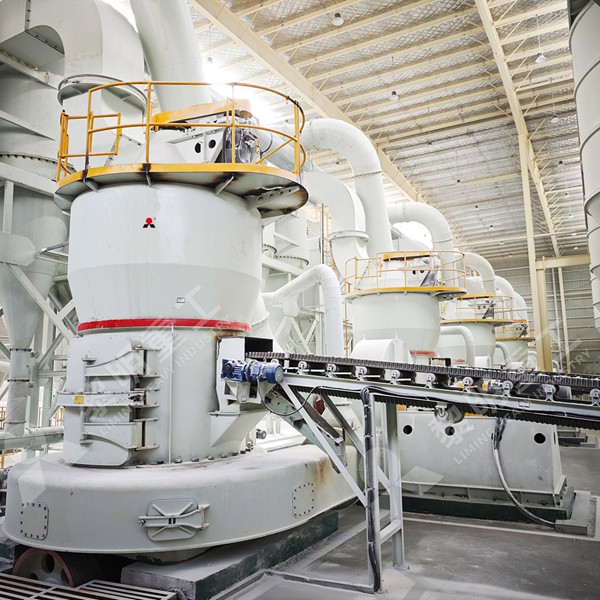
Why Liming Heavy Industry for Your Synthetic Gypsum Grinding Plant?
Liming Heavy Industry Co., Ltd. was founded in 1987 and has since grown into a leader in the manufacturing of large and medium-sized crushing and grinding equipment. Our headquarters, located in the HI-TECH Industry Development Zone of Zhengzhou, covers 80,000 m², while our workshop in the Shangjie Industry Park occupies an additional 67,000 m². Over more than three decades, we have adhered to a modern scientific management system, precision manufacturing, and a culture of pioneering innovation. Our scientific research strategy focuses on improving product competitiveness through tackling key technical problems, advancing technological progress, and fostering collaboration between production, learning, and research. This approach has enabled us to develop a mature scientific research team that consistently targets the technological frontier of the industry. For synthetic gypsum grinding, we offer several proven mill types, each optimized for specific capacity ranges, fineness requirements, and material characteristics.
Key Grinding Mills for Synthetic Gypsum Processing
1. LM Vertical Roller Mill – For High-Capacity, Large-Scale Production
The LM Vertical Roller Mill is the flagship product for large-scale synthetic gypsum grinding plants. It integrates drying, grinding, powder selection, and conveying into a single unit, dramatically simplifying the process flow. The mill employs a new milling device and an automatic electric control system, making it ideal for continuous, unattended operation. With a capacity range of 10 to 400 T/H and an input size of 30 to 55 mm, the LM mill is perfectly suited for cement plants, power plant desulfurization systems, and large non-metallic mineral processing facilities. The mill’s ability to handle materials with high moisture content—common in synthetic gypsum—is a key advantage. The hot air inside the mill simultaneously dries the feed while grinding takes place, eliminating the need for separate drying equipment. Applications include cement, electricity, metallurgy, chemical, and non-metallic mineral ore industries, with a particular focus on non-metallic minerals, coal, and slag.
2. MTW European Type Trapezium Mill – The Upgrade from Traditional Raymond Mills
For medium-scale synthetic gypsum processing with higher fineness requirements, the MTW European Type Trapezium Mill is the preferred choice. This mill is the upgrade product of traditional Raymond mill and pendulum mill, featuring patented technology that ensures stable performance, high productivity, and significant energy savings. Its capacity ranges from 3 to 55 TPH, with an input size of 30 to 50 mm. The MTW mill is particularly effective in applications such as limestone desulfurization in power plants, heavy calcium carbonate processing, non-metallic mineral powder making, solid fuel grinding, and building materials. The entire system consists of the grinding mill, separator, air blower, jaw crusher, vibrating feeder, hopper, dust collector, pipes, powder collector, electric cabinet, and motors. Big lump materials are first crushed to the required size by the jaw crusher. Then, through a variable-frequency belt feeder, the material is evenly and continuously fed into the mill. Grinding occurs between the ring and rollers, and particles move upward with the airflow. Oversized particles that cannot pass the separator fall back for further grinding, while fine particles are collected as finished product. The air flows through a closed-loop system back to the air blower, and the pulse dust collector ensures compliance with national environmental standards.
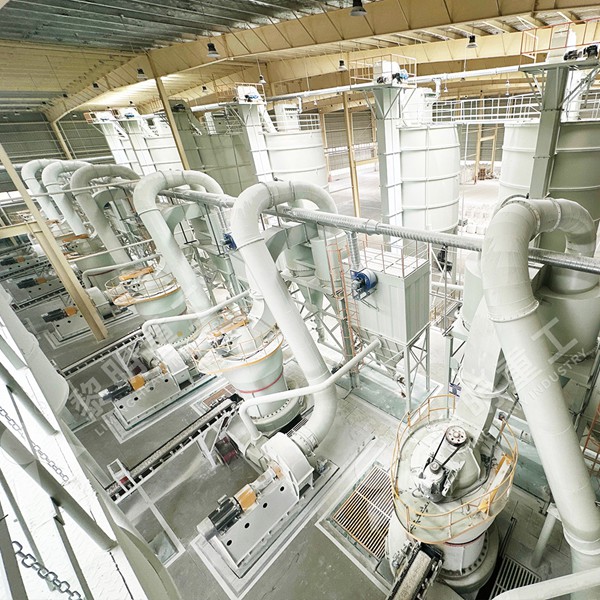
3. Raymond Mill – Reliable and Cost-Effective for Small to Medium Plants
The traditional Raymond Mill remains a versatile and economical solution for smaller synthetic gypsum grinding operations. It is widely used in minerals grinding processes across metallurgy, building materials, chemicals, and mining. The mill is suitable for processing non-flammable and non-explosive materials with a Mohs hardness under 7 and humidity less than 6%. The output fineness ranges between 613 μm to 44 μm, which can be adjusted to meet different user requirements. With a capacity of 1.2 to 4.5 T/H and an input size of 15 to 25 mm, this mill is ideal for calcium carbonate crushing processing, gypsum crushing processing, power plant desulfurization, non-metallic ore pulverizing, and pulverized coal preparation. Its simple structure, low maintenance costs, and proven reliability make it a strong candidate for startups or facilities with moderate throughput needs.
4. MW Micro Powder Mill – For Superfine Synthetic Gypsum Powder
When the application demands superfine powder—such as in high-grade building materials, fillers, or specialty chemical products—the MW Micro Powder Mill is the solution. This medium-speed micro-grinding mill absorbs advanced Swedish grinding technology and is designed for superfine powder processing. The finished product can reach d97 ≤ 5 μm, and the fineness is adjustable between 325 mesh and 3250 mesh. The capacity ranges from 0.5 to 25 T/H, with an input size of 10 to 20 mm. The MW mill is equipped with a pulse precipitator, making the production process greener and more environmentally friendly. Its working principle involves the motor driving the main shaft and turnplate through a reducer, which in turn drives dozens of rollers to rotate against the raceway of the ring. Small material is first crushed by a hammer crusher, then transported to a hopper by an elevator. A vibrating feeder feeds the material evenly to the central part of the upper turnplate, where it falls under centrifugal force and enters the raceway to be crushed into fine powder.
5. Ball Mill – The Traditional Workhorse for Gypsum Grinding
For facilities that prefer the proven reliability of ball milling technology, Liming Heavy Industry offers ball mills with capacities from 0.65 to 50 T/H and an input size of ≤ 25 mm. The ball mill is a horizontal rotating device transmitted by an outer gear. Materials are transferred to the grinding chamber uniformly through the quill shaft. Inside the chamber, ladder liners, ripple liners, and steel balls of various specifications are present. The centrifugal force generated by the rotation of the barrel lifts the steel balls to a certain height, from which they impact and grind the material. Ground materials are discharged through the discharging board. Ball mills are widely used in cement, coal, power plant desulfurization, metallurgy, chemical industry, non-metallic mineral processing, construction materials, and ceramics.
Complete Synthetic Gypsum Grinding Plant Design
A typical synthetic gypsum grinding plant from Liming Heavy Industry includes not only the main mill but also auxiliary equipment such as jaw crushers, vibrating feeders, elevators, dust collectors, powder collectors, air blowers, pipe systems, and automated control panels. Each component is sized and selected to match the specific throughput, fineness, and moisture content of the synthetic gypsum feed. The plant can be configured for open or closed-circuit operation, and the pulse dust collector system ensures that emissions comply with the strictest environmental regulations. Our engineering team provides full layout design, installation supervision, and commissioning support to ensure a smooth startup.
Applications of Synthetic Gypsum Grinding
Synthetic gypsum powder produced by our grinding plants is widely used in: manufacture of wallboard and plasterboard, cement retarder additive, agricultural soil conditioner, self-leveling floor compounds, and as a filler in plastics and paints. The ability to precisely control the particle size distribution and purity of the final product makes our mills a preferred choice for companies seeking to replace natural gypsum with a sustainable, consistent alternative.
Scientific Research and Quality Assurance
Liming Heavy Industry persists in implementing a strategy of scientific research and development centered on improving product competitiveness. We rely on a mature scientific research team to develop innovations that target the technological frontier of the industry. Our manufacturing process adheres to precision standards, and every component is tested before shipment. This commitment to quality has made Liming a recognized leader in both domestic and overseas machinery manufacturing industries.
Frequently Asked Questions (FAQ)
Q1: What is the typical moisture content range of synthetic gypsum that your grinding plants can handle?
A: Our LM Vertical Roller Mill can handle synthetic gypsum with moisture content up to 15-20% by utilizing integrated hot air drying during the grinding process. For other mill types like MTW or Raymond, pre-drying is recommended if moisture exceeds 6-8%.
Q2: Can the fineness of the finished gypsum powder be adjusted easily?
A: Yes. All of our mills are equipped with adjustable classifiers or separators. For the Raymond mill, fineness can be set between 613 μm and 44 μm. For the MW Micro Powder Mill, fineness is adjustable from 325 mesh to 3250 mesh. Adjustments can be made by changing the speed of the classifier rotor or the internal blade angle.
Q3: What is the recommended grinding plant configuration for a cement plant producing 100 tons per day of synthetic gypsum powder?
A: For a 100 TPD (approximately 4.2 TPH) synthetic gypsum grinding requirement, an MTW European Type Trapezium Mill (model MTW138 or MTW175) would be a cost-effective choice. This configuration would include a jaw crusher, vibrating feeder, the MTW mill, a pulse dust collector, a powder collector, and a centralized control cabinet. The total installed power would be approximately 200-300 kW.
Q4: Does Liming Heavy Industry provide after-sales service and spare parts support for overseas customers?
A: Absolutely. Liming Heavy Industry has a dedicated international service team that provides installation guidance, operator training, and routine maintenance support. We stock critical spare parts such as grinding rollers, rings, classifiers, and bearings at our warehouse and can ship them to most international destinations within 48 hours.
Q5: How long does it take to deliver and commission a complete synthetic gypsum grinding plant?
A: Lead time varies based on the plant capacity and configuration. For a standard MTW series plant, manufacturing typically takes 30-45 days. Shipping time depends on the destination. Commissioning on-site, including installation, testing, and training, usually requires an additional 2-4 weeks depending on site conditions and local labor availability.


