Published on October 26, 2023
In the realm of industrial flue gas desulfurization (FGD), the selection of an efficient and reliable limestone pulverizer is paramount for achieving optimal sulfur dioxide removal rates and operational cost-efficiency. Limestone, as the primary sorbent in wet and dry FGD systems, must be ground to a precise fineness to maximize its reactive surface area. An industrial limestone pulverizer designed for desulfurization must integrate robust crushing capabilities, precise particle size control, high throughput, and environmental compliance. Our company, Liming Heavy Industry Co., Ltd., with over 30 years of expertise in manufacturing large and medium-sized crushing and grinding equipment, offers a comprehensive suite of advanced pulverizers tailored for this critical application. From robust vertical roller mills and high-efficiency European trapezium mills to flexible Raymond mills and micro-grinding solutions, our equipment ensures consistent, high-quality limestone powder for power plants and industrial boilers, while adhering to stringent environmental standards through closed-loop systems and pulse dust collectors. This article provides an in-depth analysis of industrial limestone pulverizers for desulfurization, exploring key technologies, selection criteria, and the operational advantages of our flagship products.
Understanding the Desulfurization Process and Limestone Preparation
Flue gas desulfurization is a critical process in coal-fired power plants and industrial facilities to reduce sulfur dioxide emissions. The most common method is wet limestone-gypsum FGD, where a slurry of finely ground limestone reacts with SO₂ in the flue gas to produce gypsum. The efficiency of this reaction is highly dependent on the particle size distribution of the limestone powder. Typically, a fineness of 250 mesh (about 60 microns) or finer is required, with a high percentage passing through the sieve. This demands a pulverizer that can consistently produce fine, uniform particles while handling varying input sizes and moisture levels. Industrial limestone pulverizers for desulfurization are therefore engineered with features such as adjustable grinding pressures, classifier rotors for precise separation, and drying capabilities to handle moisture content up to 10-15%. At Liming Heavy Industry, our experience spanning over three decades has allowed us to refine our machines to meet these exacting demands, offering both capacity and reliability.
Key Equipment for Limestone Desulfurization
1. LM Vertical Roller Mill
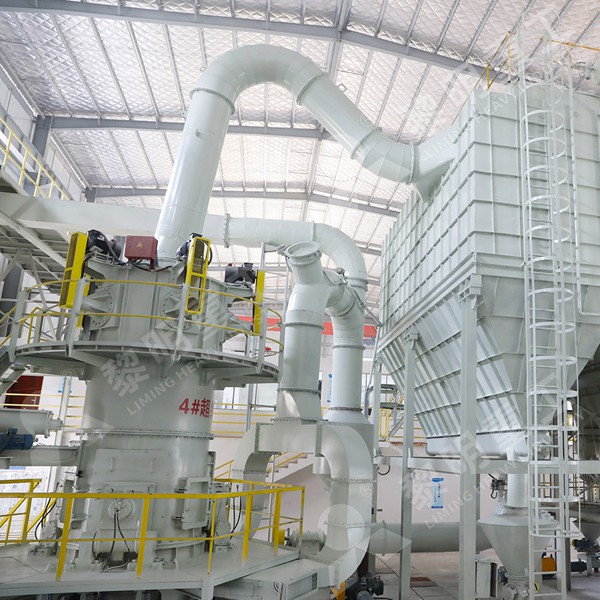
Our LM Vertical Roller Mill is a flagship product for large-scale desulfurization projects. It integrates drying, grinding, powder selection, and conveying in a single unit, significantly simplifying the process flow. With a capacity range of 10-400 T/H and input sizes up to 55mm, the LM mill is ideal for central power stations requiring high throughput. The vertical mill design features a grinding roller and table system that reduces material through compression and shear. A built-in classifier ensures that only particles meeting the fineness specification (typically 80% passing 200 mesh for desulfurization) are collected, while oversize material is returned for further grinding. The automatic electric control system optimizes operation, reducing specific power consumption by up to 10-15% compared to traditional ball mills. Additionally, the closed-loop pneumatic system with a pulse dust collector ensures zero emission, complying with national environmental standards.
2. MTW European Type Trapezium Mill
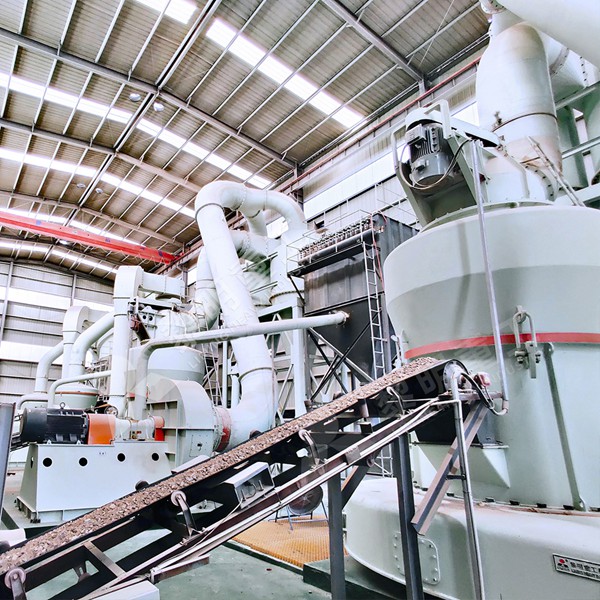
For medium to large-scale desulfurization operations, the MTW European Type Trapezium Mill offers a perfect balance of performance and cost. As the upgraded successor to traditional Raymond and pendulum mills, the MTW mill features patented technology including a bevel gear drive, thin oil lubrication system, and a curved air duct. It handles limestone with input sizes up to 50mm and produces powders with a fineness adjustable from 80 to 400 mesh, making it extremely versatile for different FGD system requirements. The capacity of 3-55 TPH suits both utility boilers and smaller industrial plants. The working principle involves a jaw crusher for primary reduction, then a variable-frequency belt feeder ensures even material flow into the mill. Material is ground between ring and rollers, and moved upward by airflow. The dynamic separator allows fine-tuning of the final product, while the pulse dust collector captures all fines, ensuring a clean operation. For desulfurization, the MTW mill can consistently produce a 250-mesh product with high surface area, enhancing SO₂ absorption rates.
3. Raymond Mill
The Raymond Mill remains a popular choice for smaller-scale desulfurization or as a backup unit due to its simplicity and reliability. Suitable for non-flammable and non-explosive materials under 7 Mohs hardness and less than 6% humidity, it is ideal for limestone preparation. Its output fineness ranges from 613 μm to 44 μm (30-325 mesh), which covers typical desulfurization specs. With a capacity of 1.2-4.5 T/H, it is often used in industrial boilers or as part of a dual-feed system. The mill operates on the principle of grinding between a stationary ring and rotating rollers, with an integral air classifier. While its capacity is lower, its low initial investment and ease of maintenance make it a practical solution for many clients. It is particularly effective in gypsum crushing processing and power plant desulfurization auxiliary lines.
4. MW Micro Powder Mill
For applications requiring ultra-fine limestone powder (e.g., D97 ≤ 5 μm), the MW Micro Powder Mill is the expert choice. This medium-speed micro-grinding mill, based on advanced Swedish grinding technology, can produce very narrow particle size distributions between 325 and 3250 mesh. In desulfurization, ultra-fine powders can significantly enhance reaction kinetics, reducing the amount of limestone needed and improving gypsum quality. The capacity ranges from 0.5 to 25 T/H. Its working mechanism involves a motor driving the main shaft, which rotates a turnplate with dozens of rollers that press against the ring. Small material crushed by a hammer crusher is fed evenly via a vibrating feeder, then pulverized through centrifugal force and raceway compression. This system is especially valuable for chemical-grade desulfurization where product purity and fineness are critical.
5. Ball Mill
The traditional Ball Mill is still widely used in the industry, particularly in cement and desulfurization applications. It is key equipment for milling after primary crushing, capable of grinding all kinds of ores. With a capacity up to 50 T/H and input size ≤ 25mm, ball mills are robust and reliable. For power plant desulfurization, a ball mill can produce a consistent limestone slurry. The horizontal rotating barrel, with ladder liners and steel balls, uses impact and grinding to reduce material size. While energy efficiency is lower than vertical mills, the ball mill's durability and ability to handle wet grinding make it suitable for certain FGD system designs.
Selection Criteria for an Industrial Limestone Pulverizer
Choosing the right industrial limestone pulverizer for desulfurization involves evaluating multiple factors: required capacity (T/H), feed particle size, final product fineness (mesh), moisture content of limestone, hardness (Mohs), and the specific FGD technology employed. For large-scale power plants with high SO₂ loads, the LM Vertical Mill or MTW Mill is often recommended due to their high capacity, low energy consumption, and integrated drying. For medium or industrial sites, the Raymond or Ball Mill may suffice. Environmental regulations also drive the choice—machines equipped with pulse dust collectors and closed-loop systems, like our MTW and LM mills, ensure compliance. Our company, Liming Heavy Industry, with its headquarters in Zhengzhou's HI-TECH Industry Development Zone (80,000 m²) and an additional workshop in Shangjie Industry Park (67,000 m²), has the manufacturing capacity and R&D strength to customize solutions. Over the past 30 years, our scientific research team has focused on technological improvement, production-learning-research integration, and innovation, making us a leader in the domestic and overseas machinery manufacturing industry.
Conclusion
In summary, the industrial limestone pulverizer for desulfurization is a cornerstone of modern emission control systems. With the right equipment—be it a LM Vertical Mill, MTW European Mill, Raymond Mill, MW Micro Powder Mill, or Ball Mill—power plants and industries can achieve high SO₂ removal efficiency, lower operational costs, and meet strict environmental regulations. Liming Heavy Industry Co., Ltd. offers a complete range of pulverizers backed by decades of experience, advanced manufacturing facilities, and ongoing innovation. As the industry moves towards greater efficiency and sustainability, our machines are designed to deliver reliable performance and long service life. For those involved in desulfurization projects, investing in a high-quality limestone pulverizer is not just an operational decision, but a commitment to cleaner air and environmental responsibility.
Frequently Asked Questions (FAQ)
- What is the typical fineness requirement for limestone powder used in wet FGD systems?
For most wet flue gas desulfurization systems, limestone powder needs to have a fineness of at least 250 mesh (about 60 microns). Often, 90% passing 325 mesh is desired to maximize surface area. Our MTW and LM mills can be easily adjusted to meet these specifications. - Can your Raymond mill handle limestone with high moisture content?
The Raymond mill is designed for materials with less than 6% humidity. For limestone exceeding this moisture level, we recommend the LM Vertical Roller Mill, which features an integrated drying system capable of handling up to 15% moisture. However, a pre-drying step or a different mill may be necessary for very wet feed. - How do you ensure the pulverizer complies with environmental regulations?
Our mills are equipped with high-efficiency pulse dust collectors that capture fine particles, ensuring that the exhaust air meets national emission standards. Additionally, the MTW and LM mills operate in a closed-loop pneumatic system, minimizing dust leakage and noise pollution. - What is the maintenance like for a vertical roller mill compared to a ball mill?
Vertical roller mills generally have lower wear rates and require less maintenance than ball mills because grinding takes place via compression rather than impact. Our LM and MTW mills use durable materials for rollers and liners, and they are designed for easy access to wear parts. Ball mills, while robust, require regular liner and ball replacement. - Can you provide a custom solution for a small-scale industrial boiler desulfurization project?
Absolutely. For smaller projects with capacities below 5 T/H, we often recommend the Raymond Mill or MW Micro Powder Mill. Both are flexible, compact, and can be integrated with existing feeding and dust collection systems. Our engineering team can design a complete line tailored to your specific feed size and product requirements.


