Published: October 26, 2023
In modern industrial processing, the demand for high-capacity limestone powder making machines has surged due to the essential role of limestone powder in sectors like construction, power plant desulfurization, metallurgy, and chemical manufacturing. A high-performance limestone powder grinding system must deliver consistent output, fine particle size control, energy efficiency, and environmental compliance. LIMING HEAVY INDUSTRY CO., LTD., with over 30 years of expertise in crushing and grinding equipment, offers a comprehensive range of machines specifically engineered for large-scale limestone powder production. From the robust LM Vertical Roller Mill with capacities up to 400 T/H to the versatile MTW European Type Trapezium Mill and the superfine MW Micro Powder Mill, these integrated solutions ensure optimal grinding, drying, and classifying in one streamlined process. This article delves into the technical specifications, working principles, and application advantages of these high-capacity limestone powder making machines, providing engineers and plant managers with actionable insights for selecting the right equipment.
Why High Capacity Matters in Limestone Powder Production
Limestone powder is a critical raw material for flue gas desulfurization (FGD) in coal-fired power plants, cement manufacturing, steel making, and construction fillers. High-capacity machines reduce processing time, lower operational costs per ton, and enable plants to meet large-scale demand without multiple parallel lines. A single high-throughput grinder like the LM Vertical Roller Mill can replace several smaller mills, simplifying maintenance and reducing footprint. Additionally, modern high-capacity systems integrate automation for real-time adjustment of fineness (from 44μm to 5μm) and moisture control, ensuring product quality while maximizing uptime.
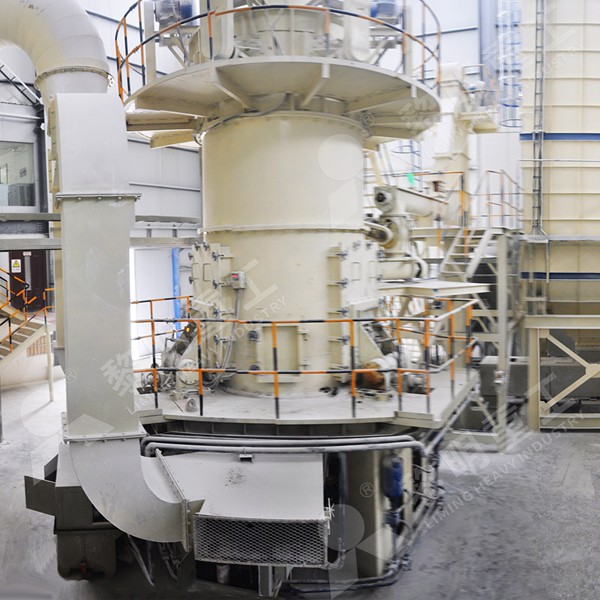
Core Equipment for High Capacity Limestone Grinding
1. LM Vertical Roller Mill
The LM Vertical Roller Mill is the flagship solution for bulk limestone powder processing, integrating drying, grinding, powder selection, and material conveying. It handles input sizes up to 55mm and delivers a capacity range of 10-400 T/H. The mill's new milling device and automatic electric control system ensure stable operation under heavy loads. It is especially suited for non-metallic minerals, coal, and slag, making limestone desulfurization powder preparation highly efficient. The vertical structure occupies 50% less space than traditional ball mills, and the built-in classifier produces uniform fineness (80μmR 3%).
Key Advantages:
- Low energy consumption: 30-40% lower than ball mills.
- High drying capacity: Can handle materials with up to 15% moisture.
- Simple operation: Automatic start/stop and remote monitoring.
2. MTW European Type Trapezium Mill
As the upgrade from traditional Raymond mill, the MTW series is engineered for large-scale limestone grinding with capacities from 3-55 T/H. Its patented technology includes a bevel gear overall drive, thin oil lubrication, and arc air channel design. The system uses a jaw crusher to reduce limestone to 30-50mm, then a variable-frequency feeder supplies the mill uniformly. The grinding process between ring and rollers separates fine powder via an air classifier. Oversized particles are returned for regrinding, while finished product is collected by a dust collector. This mill is ideal for limestone FGD in power plants and heavy calcium carbonate processing.
Key Advantages:
- High productivity: Output fineness adjustable from 1.6mm to 0.045mm.
- Environmental protection: Pulse dust collector meets stringent emission standards.
- Closed system: Air is recycled, reducing energy waste.
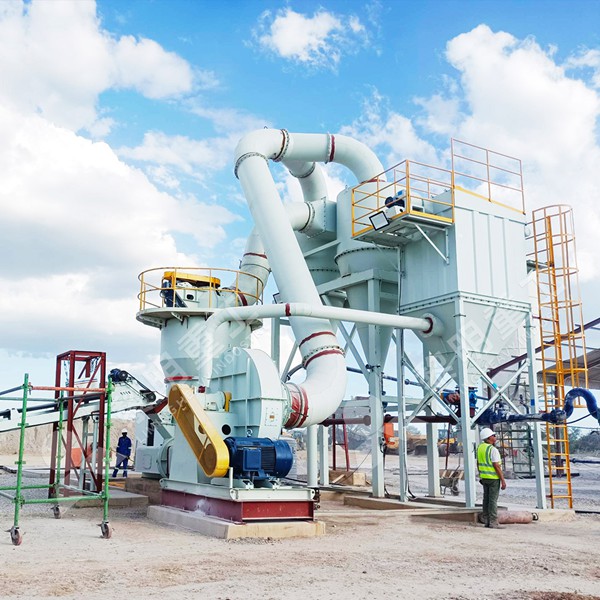
3. MW Micro Powder Mill
For ultra-fine limestone powder applications, the MW Micro Powder Mill achieves d97 ≤ 5μm (325-3250 mesh). With a capacity range of 0.5-25 T/H, this mill employs Swedish grinding technology and a multi-roller design that rotates against a raceway via a pin mechanism. The material is crushed by a hammer crusher, elevated to a hopper, and fed evenly onto a turntable. Centrifugal force distributes material to the grinding raceway. The built-in pulse precipitator ensures green production. This mill is perfect for producing high-value limestone powder for plastics, rubber, and paints.
4. Ball Mill
Although traditional, the Ball Mill remains a workhorse for limestone grinding with capacities from 0.65-50 T/H. It features a horizontal rotating drum with steel balls of varying sizes. As the barrel rotates, centrifugal force lifts and drops the balls, impacting and grinding limestone to desired fineness. The ball mill is suitable for materials up to 25mm input size and is widely used in cement and desulfurization plants. Its simple structure and low maintenance make it a reliable choice for smaller high-capacity needs.
Selecting the Right High Capacity Limestone Powder Machine
Choosing the optimal machine depends on several factors:
- Target capacity: For massive output (above 100 T/H), LM Vertical Mill is preferred. For medium capacities (3-55 T/H), MTW provides flexibility. For superfine and lower volumes, MW Micro Mill excels.
- Required fineness: Standard cement or FGD needs 200 mesh (74μm), while high-end fillers require 1250 mesh (10μm) or finer.
- Moisture content: If limestone has over 10% moisture, the LM Vertical Mill with integrated drying is optimal.
- Plant footprint: Vertical mills save space; ball mills require larger areas.
LIMING HEAVY INDUSTRY provides engineering support to customize the grinding line with feeders, crushers, elevators, and dust collection systems, ensuring seamless integration into existing operations.
Working Principle: Closed Loop Efficiency
High capacity limestone powder making machines typically operate on a closed-loop principle. For example, in the MTW system, limestone is first crushed by a jaw crusher, then fed into the mill via a variable-frequency belt feeder to ensure uniform flow. Inside the mill, grinding rollers press material against a rotating ring. An air stream carries ground particles upward to a separator; coarse particles fall back for regrinding, while fine powder passes through and is collected by a pulse dust collector. Clean air is recirculated via the blower. This closed system minimizes dust emissions and energy loss, achieving higher efficiency than open-circuit mills.
Environmental and Economic Benefits
Modern high capacity limestone powder machines are designed with environmental compliance in mind. Pulse dust collectors capture over 99% of particulates, and closed air systems reduce exhaust. Noise levels are controlled through soundproofing and vibration dampening. Economically, these machines lower power consumption per ton by up to 40% compared to older models, and reduced wear parts (especially in vertical mills) cut maintenance costs. The ability to produce consistent fineness also reduces waste and improves downstream process efficiency, such as faster reactions in FGD systems.
Conclusion
Investing in a high capacity limestone powder making machine from LIMING HEAVY INDUSTRY ensures reliable, efficient, and environmentally responsible production. Whether you need massive throughput for power plant desulfurization or ultra-fine powder for specialty chemicals, the range of LM Vertical Mill, MTW Trapezium Mill, MW Micro Mill, and Ball Mill offers tailored solutions. With over three decades of engineering excellence and a commitment to scientific innovation, LIMING provides not just equipment but complete turnkey systems including jaw crushers, feeders, separators, and dust collectors. Contact our team to discuss your specific limestone powder production goals.
Frequently Asked Questions (FAQ)
Q1: What is the maximum capacity for limestone powder production using your vertical mill?
A: The LM Vertical Roller Mill can achieve a capacity range of 10 to 400 T/H, depending on the limestone hardness and required fineness. For very high throughput, multiple mills can be configured in parallel.
Q2: Can your MTW mill handle limestone with high moisture content?
A: Yes, the MTW European Type Trapezium Mill can process materials with moisture up to 6% without pre-drying. For higher moisture, we recommend using the LM Vertical Mill which has integrated hot air drying capabilities.
Q3: What is the typical fineness range for limestone powder suitable for FGD in power plants?
A: For flue gas desulfurization (FGD), the typical fineness requirement is 250 mesh (60μm) with a passing rate of 90% or higher. Our mills can easily adjust to this specification using the built-in classifier.
Q4: Do you provide a complete grinding line including crushers and dust collectors?
A: Absolutely. LIMING HEAVY INDUSTRY supplies complete systems, including jaw crusher, vibrating feeder, bucket elevator, grinding mill, separator, blower, pulse dust collector, pipes, and electric control cabinet. We tailor the line to your site conditions.
Q5: How does your MW Micro Powder Mill achieve ultra-fine limestone powder?
A: The MW Micro Powder Mill uses a multi-stage grinding mechanism with rollers and rings operating at medium speed, combined with a high-efficiency classifier that can separate particles down to d97 ≤ 5μm (approximately 3250 mesh). The system also includes a pulse precipitator for clean operation.


