In the modern cement manufacturing process, limestone grinding stands as a critical operation that directly influences clinker quality, energy consumption, and overall plant profitability. As the primary raw material for cement production, limestone must be reduced to a fine powder with precise particle size distribution—typically 80% passing 90 microns—to ensure optimal kiln feed reactivity and burnability. Choosing the right grinding mill for this task is not merely a technical decision; it is a strategic investment that impacts maintenance costs, throughput stability, and environmental compliance. Drawing from over three decades of expertise in crushing and grinding equipment, Liming Heavy Industry offers a comprehensive portfolio of mills specifically engineered for cement plant limestone grinding. This article provides an in-depth exploration of the key mill types, their working principles, selection criteria, and operational advantages, empowering plant managers and process engineers to make informed decisions for their specific production scenarios.
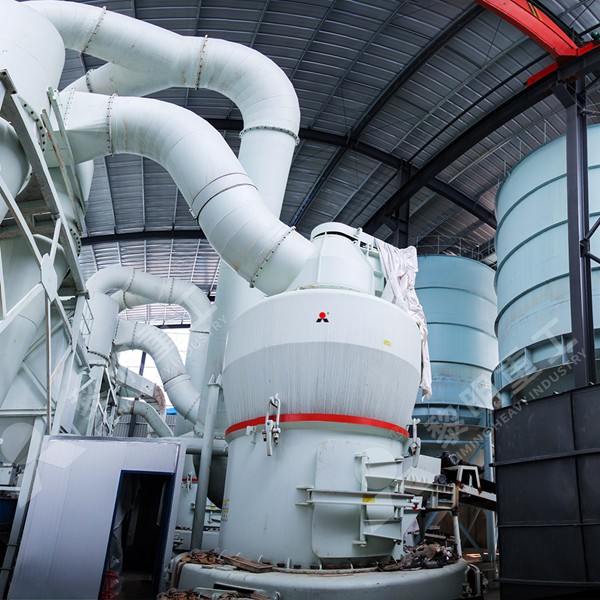
Why Limestone Grinding Matters in Cement Plants
Limestone constitutes about 70-80% of the raw mix for Portland cement. After quarrying and primary crushing, the material—often with a top size of 30-55 mm—must be ground to a fineness of around 10-15% residue on a 90-micron sieve. Inefficient grinding leads to coarse particles that resist calcination, increasing fuel consumption in the kiln and lowering clinker strength. Conversely, over-grinding wastes energy and reduces mill throughput. A well-matched limestone grinding mill ensures consistent fineness, minimizes specific energy consumption (typically 25-35 kWh/t for ball mills, lower for vertical mills), and delivers a homogenous raw meal that stabilizes kiln operation.
Key Mill Types for Limestone Grinding
1. LM Vertical Roller Mill – The Modern Workhorse
Liming’s LM Vertical Roller Mill has become the preferred choice for large-scale cement plants due to its ability to integrate drying, grinding, and classification into a single unit. With a capacity range of 10-400 T/H and feed sizes up to 55 mm, this mill uses a dynamic grinding table and stationary rollers to grind limestone through compression and shear. The hot gas system can dry moisture content up to 20% in a single pass, eliminating the need for a separate dryer. For cement plants processing wet limestone or those seeking to reduce energy costs by 30-40% compared to ball mills, the LM vertical mill offers a compelling solution. Its automatic electric control system maintains stable product fineness under varying feed conditions.
2. MTW European Type Trapezium Mill – High Efficiency for Medium Scale
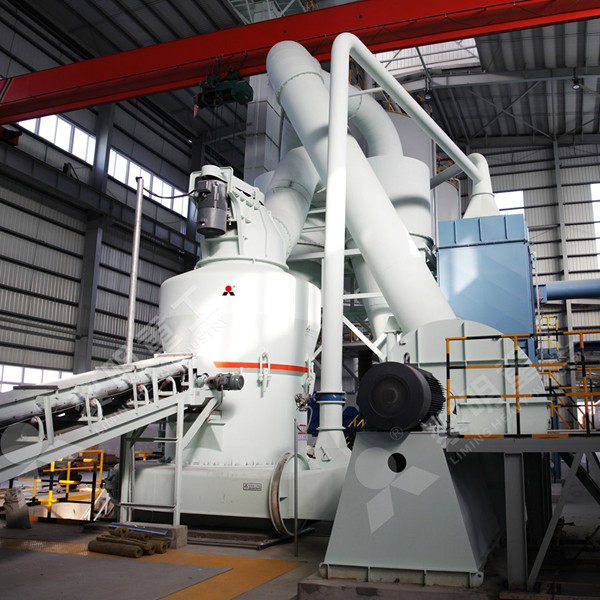
An upgrade of traditional Raymond and pendulum mills, the MTW European Type Trapezium Mill is ideal for cement plants with capacities between 3-55 TPH and feed sizes of 30-50 mm. Its trapezium-shaped grinding ring and roller increase the grinding area, improving efficiency by 20-30% over older designs. The mill operates in a closed system with a pulse dust collector, ensuring compliance with strict emission norms. Limestone desulfurization in power plants also benefits from this mill’s stable fineness control. For a cement plant expanding its raw meal preparation line, the MTW mill combines reliability with moderate capital investment.
3. Ball Mill – The Classic Solution
Despite the rise of vertical mills, ball mills remain widely used in cement plants, especially for smaller capacities (0.65-50 T/H) or when grinding additives like gypsum. Liming’s ball mill features a horizontal rotating drum with steel balls that cascade and impact the limestone. Its simple operation and high reliability make it a safe choice for plants with variable raw material quality. However, energy efficiency is lower than vertical mills, and the noise level is higher. Many cement plants employ ball mills in closed circuit with a dynamic separator to improve efficiency.
4. Raymond Mill and MW Micro Powder Mill – Niche Applications
For cement plants requiring fine limestone powder for specific applications (e.g., mineral fillers or desulfurization), the Raymond Mill (1.2-4.5 T/H, fineness 613-44 μm) and the MW Micro Powder Mill (0.5-25 T/H, fineness up to 5 μm) offer precision. The MW mill, using advanced Swedish grinding technology, achieves superfine powders (325-3250 mesh) with a pulse precipitator for clean operation. These mills are often deployed in cement plants’ auxiliary lines rather than main raw meal grinding.
Selection Criteria for Cement Plant Linestone Mills
Choosing the right mill requires balancing several factors:
- Capacity requirements: For lines above 100 T/H, LM vertical roller mill is typically most economical. For 10-50 T/H ranges, MTW or ball mills are competitive.
- Feed moisture: Wet limestone (12-20% moisture) favors vertical mills with hot gas drying. Ball mills require pre-drying or high air flow.
- Product fineness: Standard cement raw meal (80% passing 90 μm) can be achieved by most mills. For finer products, the MW micro powder mill excels.
- Energy costs: Vertical mills consume 25-35% less energy per ton than ball mills, a critical factor in regions with high electricity prices.
- Maintenance philosophy: Ball mills require frequent liner and media replacement but have simpler maintenance. Vertical mills need roller and table refurbishment every 8000-12000 hours.
Working Principle in Practice
Take the MTW mill as an example: limestone from the hopper is first crushed by a jaw crusher to 30-50 mm. Through a variable-frequency belt feeder, the material enters the mill evenly. Inside, rollers press against the ring, grinding the limestone into powder. Air flow carries the fine particles upward to a separator; oversized particles fall back for re-grinding while the finished product is collected by a dust collector or powder collector. The air is then recycled, maintaining a closed system that minimizes dust emissions. This integrated design not only reduces the plant’s equipment footprint but also lowers installation costs and simplifies operation.
Liming Heavy Industry’s Commitment to Quality
Founded in 1987 and headquartered in Zhengzhou’s Hi-Tech Zone, Liming Heavy Industry has grown into a modern joint-stock enterprise with an 80,000 m² headquarter and a 67,000 m² workshop. Over 30 years of persistent innovation have positioned our company as a leader in the machinery industry, particularly in the cement sector. We adhere to modern scientific management and precision manufacturing, with a dedicated scientific research team focused on improving product competitiveness through continuous technological advancement. Every limestone grinding mill is designed to meet the highest standards of reliability, efficiency, and environmental stewardship.
Conclusion
Choosing the correct limestone grinding mill for a cement plant is a decision that affects production efficiency, energy consumption, and long-term profitability. Whether you opt for the high-capacity LM vertical roller mill, the versatile MTW trapezium mill, or the classic ball mill, Liming Heavy Industry provides proven solutions backed by decades of engineering experience. Our mills are engineered to handle the toughest limestone feed conditions while meeting modern environmental standards. For plant managers seeking to optimize their raw meal preparation, consulting with our technical team can reveal tailored configurations that unlock hidden capacity and reduce operating costs.
Frequently Asked Questions (FAQs)
1. What is the recommended mill type for a cement plant processing 150 T/H of limestone?
For a capacity of 150 T/H, the LM Vertical Roller Mill from Liming Heavy Industry is the most suitable choice. It offers high efficiency, low energy consumption, and the ability to handle feed sizes up to 55 mm, making it ideal for large-scale cement raw meal preparation.
2. Can the MTW trapezium mill handle limestone with 10% moisture?
Yes, the MTW European Type Trapezium Mill can handle limestone with up to 10-15% moisture when equipped with appropriate hot gas supply. However, if moisture exceeds 15%, pre-drying or a dedicated drying system may be recommended to maintain grinding stability.
3. How does the ball mill compare to the vertical roller mill in terms of maintenance frequency?
Ball mills require more frequent maintenance due to liner and grinding media wear, typically needing inspection every 2000-4000 operating hours. Vertical roller mills have longer intervals (8000-12000 hours) for roller and table refurbishment, but specialized skills are required for repairs.
4. What fineness can be achieved with the MW Micro Powder Mill for limestone?
The MW Micro Powder Mill can produce limestone powder with fineness adjustable between 325 mesh (44 μm) and 3250 mesh (5 μm), with d97 ≤ 5 μm achievable. This makes it suitable for superfine applications such as cement additives or desulfurization sorbents.
5. Is it necessary to install a pulse dust collector with the grinding mill?
While not mandatory in all regions, Liming Heavy Industry recommends equipping mills with a pulse dust collector to comply with environmental regulations and recover valuable fine powder. All our vertical mills, MTW mills, and micro powder mills are designed to be integrated with efficient dust collection systems.


