Published on: October 26, 2023
For industries ranging from construction and agriculture to manufacturing and environmental technology, processed limestone powder is a fundamental raw material. Achieving the precise fineness and consistent quality required for these diverse applications demands a robust, efficient, and reliable grinding system. This article explores the specialized process of limestone size reduction, focusing on the design and advantages of a complete Raymond Mill-based grinding circuit. Drawing on the extensive engineering expertise and product portfolio of Liming Heavy Industry, we will outline how a modern, integrated system—from primary crushing to fine powder collection—ensures high productivity, energy efficiency, and operational stability for limestone processing plants worldwide.
Limestone processing begins with the primary crushing of quarried rock. Large limestone blocks, often up to several hundred millimeters in size, are first reduced to a manageable feed size for the grinding mill, typically below 50mm. This stage is crucial for optimizing the downstream grinding efficiency. A robust jaw crusher, known for its high reduction ratio and reliability, is commonly employed for this task. The crushed material is then conveyed to a storage hopper, which acts as a buffer to ensure a continuous and steady feed to the grinding mill system, preventing bottlenecks and maintaining consistent operation.
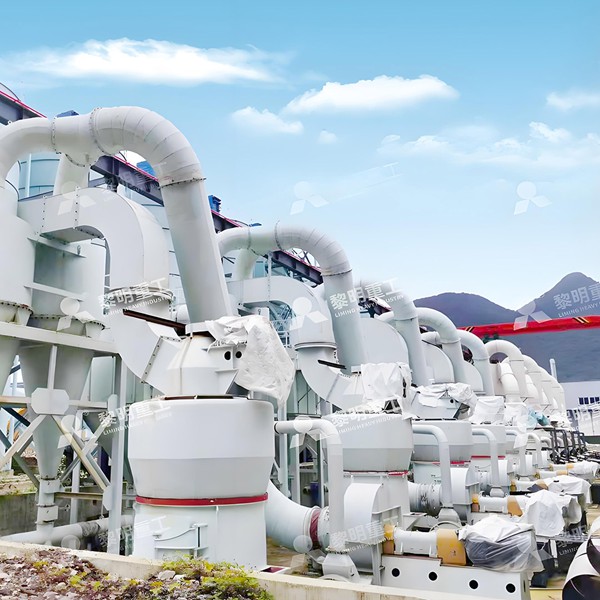
The heart of the system is the grinding mill itself. For limestone applications requiring a fineness between 44μm (325 mesh) and 613μm, the Raymond Mill (Roller Mill) remains a proven and highly efficient choice. Its working principle is elegant and effective: the crushed limestone is fed into the grinding chamber where it is pulverized between rotating rollers and a stationary grinding ring. The ground material is carried by an air stream generated by an integrated blower to a classifier. Here, a critical separation occurs. Oversized particles are rejected by the classifier's rotating blades and returned to the grinding chamber for further milling, while particles meeting the target fineness proceed as final product. This internal circulation mechanism is key to achieving a uniform product size and high grinding efficiency.
Liming Heavy Industry's Raymond Mill systems are engineered for more than just grinding. They are integrated processing lines. The system incorporates a closed-loop air circuit. After the classifying step, the air carrying the fine powder passes through a high-efficiency cyclone collector and/or a pulse-jet baghouse dust collector. These components ensure over 99% collection efficiency, maximizing product yield and creating a clean, dust-free work environment that meets stringent environmental standards. The collected limestone powder is then conveyed to storage silos via screw conveyors or elevators, ready for packaging or bulk loading.
The advantages of such a tailored system are manifold. First, it offers remarkable energy efficiency. The internal recycling of coarse material and the closed air system minimize waste. Second, the system provides exceptional stability and consistency in product quality. The automatic control system monitors key parameters, allowing for precise adjustment of fineness and output. Third, the system's modular design, based on Liming's mature product lines like the Raymond Mill and MTW European Type Grinding Mill, ensures ease of maintenance, with wear parts like grinding rolls and rings designed for long service life and straightforward replacement.
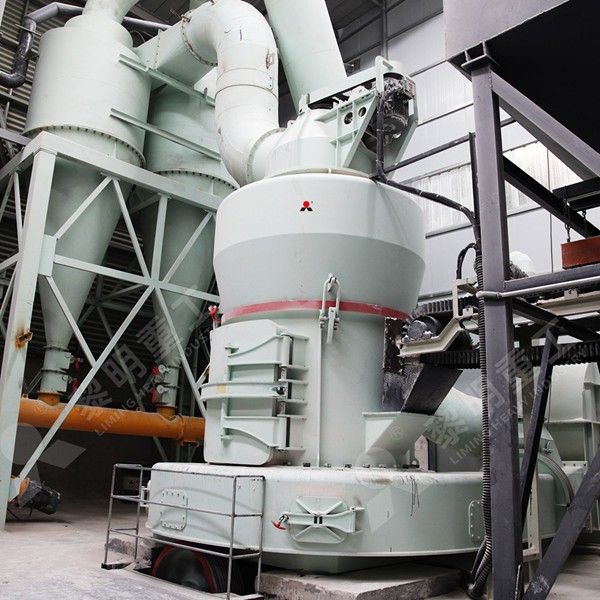
For projects requiring even finer powders or dealing with higher moisture content, Liming's portfolio offers complementary technologies. The LM Vertical Roller Mill integrates drying and grinding, making it ideal for materials with slight moisture. For superfine limestone powder (d97 ≤ 5μm), the MW Micro Powder Mill, incorporating advanced grinding technology, is the optimal solution. The selection of the core mill—whether a traditional Raymond Mill, the larger-capacity MTW European Type Mill, or a vertical mill—is determined through expert consultation based on the specific capacity, input size, and desired fineness of the client's project.
In conclusion, a successful limestone powder production line is a symphony of coordinated equipment. By leveraging decades of experience in manufacturing crushing and grinding machinery, Liming Heavy Industry provides not just individual machines, but complete, optimized system solutions. From the initial jaw crusher to the final bag filter, every component is selected and engineered to work in harmony, delivering a reliable, economical, and high-performance operation for transforming raw limestone into a valuable industrial powder.
Frequently Asked Questions (FAQ)
- What is the typical fineness range achievable for limestone with a standard Raymond Mill system?
The standard Raymond Mill system is highly effective for producing limestone powder in the range of 44μm (about 325 mesh) to 613μm. The fineness can be precisely adjusted within this spectrum by modifying the speed of the integrated classifier. - How does the system handle variations in the feed size or hardness of the limestone?
The system is designed with robustness in mind. The primary jaw crusher ensures a consistent feed size to the mill. Furthermore, the grinding force of the rollers can be adjusted, and the system's automatic controls can compensate for minor variations to maintain stable output quality. - What measures are in place to ensure environmental compliance regarding dust?
The system operates as a negative-pressure, closed-loop air circuit. High-efficiency cyclone collectors and pulse-jet baghouse filters are integral parts of the design, capturing over 99% of airborne particles. This ensures the plant operates cleanly and complies with international environmental protection standards. - Can the system process limestone with a certain moisture content?
While the standard Raymond Mill is suitable for materials with humidity less than 6%, if the limestone feedstock has higher moisture, a system centered on an LM Vertical Roller Mill is recommended. This type of mill integrates a hot air source, enabling simultaneous drying and grinding within the same chamber. - What are the key factors in choosing between a Raymond Mill and an MTW European Type Grinding Mill for a limestone project?
The choice primarily depends on required capacity and desired technological level. The traditional Raymond Mill is a proven solution for medium to fine grinding. The MTW European Type Grinding Mill, as an upgraded version, often offers higher capacity, greater energy efficiency, and more advanced features like curved air duct design for lower flow resistance, making it suitable for larger-scale, modern production lines.


