Published on: October 26, 2023
For industries requiring consistent, high-volume production of fine limestone powder, selecting the right grinding equipment is paramount to operational efficiency and product quality. Among the array of milling solutions, the Raymond Mill stands out as a time-tested and highly effective technology specifically engineered for processing non-metallic minerals like limestone. With its robust construction, reliable performance, and adaptability to various fineness requirements, it serves as a cornerstone in applications ranging from construction materials and industrial fillers to power plant desulfurization. This article delves into the operational principles, technical advantages, and specific suitability of Raymond Mill technology for limestone grinding, highlighting why it remains a preferred choice for modern processing plants seeking a balance of productivity, precision, and cost-effectiveness.
At its core, the Raymond Mill is a vertical structure milling system designed for grinding materials with hardness less than 7 on the Mohs scale and humidity below 6%. For limestone, which typically falls well within these parameters, the mill operates on a closed-circuit grinding and classifying principle. The process begins with crushed limestone of a specified feed size (typically 15-25mm) being uniformly and continuously fed into the grinding chamber via a vibrating feeder. Inside the chamber, the material is ground between the stationary grinding ring and the rotating grinding rollers, which are forced outward against the ring by centrifugal force.
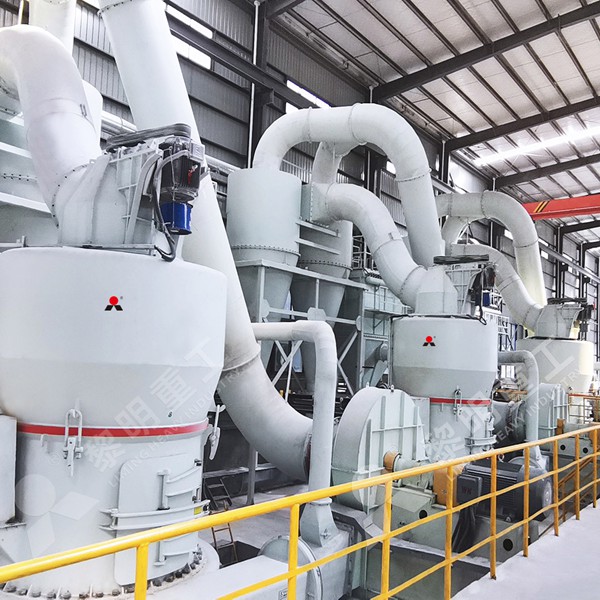
The ground particles are carried upward by the airflow generated by an integrated blower into a classifier. This is a critical component for limestone processing, as it ensures precise particle size control. The classifier rotor spins at an adjustable speed, allowing only particles that meet the target fineness to pass through and be collected as final product via a cyclone collector and bag filter system. Oversized particles are rejected by the classifier and fall back onto the grinding ring for further milling. This continuous circulation within a closed, negative-pressure system not only enhances grinding efficiency but also minimizes dust emission, contributing to a cleaner plant environment.
Founded in 1987, Liming Heavy Industry Co., Ltd. has built its reputation on manufacturing large and medium-sized crushing and grinding equipment. With a modern joint-stock structure integrating research, manufacturing, and sales, and sprawling facilities covering over 80,000 square meters in Zhengzhou's HI-TECH Industry Development Zone, the company adheres to a philosophy of precision manufacturing and continuous innovation. This commitment to R&D, focused on improving product competitiveness, directly informs the design and evolution of its grinding mills. Liming's engineering team persistently tackles technological frontiers, ensuring their equipment, including the Raymond Mill series, incorporates mature, reliable, and advanced features to meet the rigorous demands of global industries.
The primary advantage of using a Raymond Mill for limestone lies in its exceptional stability and ability to produce a uniform powder within a specific fineness range, typically from 44μm to 613μm (approximately 325 mesh to 30 mesh). This range perfectly covers the specifications needed for most industrial limestone powders, such as those used in manufacturing paints, plastics, rubber, and as a filler in paper. The system's integrated design—combining drying (for materials with minimal moisture), grinding, powder selection, and conveying into a single, coherent unit—simplifies plant layout, reduces footprint, and lowers investment in auxiliary equipment.
Furthermore, modern iterations of the Raymond Mill technology, such as Liming's upgraded models, focus heavily on energy saving and environmental protection. The closed-circuit airflow system recycles air, reducing thermal energy loss. Advanced pulse dust collectors are integrated to ensure the entire production process complies with stringent environmental standards, capturing over 99.9% of particulate matter. For limestone processing plants, especially those located near urban areas or with strict emission controls, this feature is indispensable.
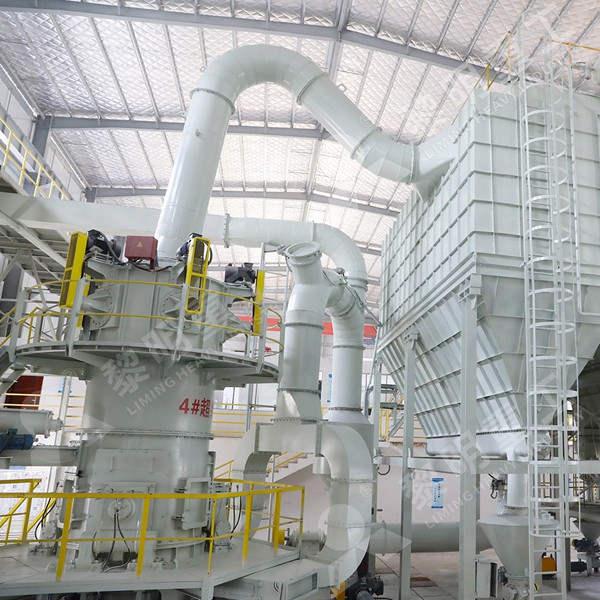
While the classic Raymond Mill is highly effective, technological progress has led to the development of even more sophisticated mills for specific needs. For instance, the MTW European Type Grinding Mill represents a significant evolution from the traditional Raymond Mill. It incorporates patented technologies like curved air duct, inner oil lubrication, and a more advanced conical gear transmission system. These enhancements result in higher productivity, lower noise, and greater overall efficiency, making it an excellent choice for large-scale limestone powder production lines, particularly for power plant desulfurization where consistent, high-volume output of fine limestone powder is critical.
For applications demanding ultra-fine limestone powder (d97 ≤ 5μm), technologies like the MW Micro Powder Mill, which absorbs advanced grinding concepts, become relevant. However, for the vast majority of standard fine powder requirements, the Raymond Mill offers an optimal balance of performance, operational cost, and maintenance simplicity. Its mechanical structure is robust and well-understood by maintenance teams worldwide, ensuring high availability and manageable spare parts inventory.
In conclusion, the Raymond Mill remains a fundamentally sound and highly efficient solution for fine powder grinding of limestone. Its proven working principle, coupled with continuous improvements in energy efficiency, environmental controls, and system integration by manufacturers like Liming Heavy Industry, ensures its continued relevance in the mineral processing sector. When selecting equipment, processors should consider their target capacity, desired fineness, and overall plant design, with the Raymond Mill often emerging as the most pragmatic and reliable workhorse for turning raw limestone into a valuable, consistent industrial powder.
Frequently Asked Questions (FAQ)
- What is the typical feed size for limestone in a Raymond Mill?
The Raymond Mill is designed to handle limestone feed with a maximum size generally ranging from 15mm to 25mm. The material should be pre-crushed by a jaw crusher or similar primary crusher to ensure uniform feeding and optimal grinding efficiency. - Can a Raymond Mill handle moist limestone?
The standard Raymond Mill is suitable for materials with humidity less than 6%. If the limestone has higher moisture content, the integrated drying function within the grinding chamber can handle mild drying, but for significantly wet material, a separate pre-drying system may be recommended. - How is the fineness of the limestone powder controlled?
Fineness is precisely controlled by adjusting the speed of the classifier rotor located at the top of the mill. Increasing the speed allows only finer particles to pass, resulting in a finer product, while decreasing it yields a coarser powder. This adjustment can be made during operation without stopping the mill. - What are the key maintenance points for a Raymond Mill in limestone service?
Regular maintenance should focus on the grinding rollers and ring (wear parts), lubrication of the central shaft and grinding roller bearings, inspection of the classifier blades, and ensuring the pulse dust collector's filters are clean and functional to maintain system airflow and efficiency. - Is the Raymond Mill system environmentally friendly for limestone grinding?
Yes, modern Raymond Mill systems are designed as closed-circuit, negative-pressure operations. They are equipped with high-efficiency pulse jet bag dust collectors (or similar) that capture over 99.9% of airborne particles, ensuring emissions are well within national and international environmental protection standards.


