Published: October 26, 2023
In the demanding world of industrial mineral processing, achieving high-volume, consistent, and fine powder production from limestone is a critical challenge. LIMING HEAVY INDUSTRY addresses this need with its advanced, high-capacity Raymond Mill technology, engineered specifically for large-scale limestone powderization. Building upon decades of expertise in crushing and grinding equipment, our Raymond Mill solutions integrate robust construction, intelligent automation, and energy-efficient operation to deliver superior throughput and product fineness for applications ranging from power plant desulfurization to heavy calcium carbonate production. This article delves into the technical evolution, operational principles, and distinct advantages of our high-capacity limestone grinding systems.
Since its establishment in 1987, LIMING HEAVY INDUSTRY CO., LTD. has been at the forefront of manufacturing large and medium-sized crushing and grinding equipment. Our commitment to modern scientific management, precision manufacturing, and continuous innovation has positioned us as a leader in the global machinery manufacturing sector. With sprawling facilities covering over 80,000 m² in Zhengzhou's HI-TECH Industry Development Zone and an additional 67,000 m² workshop in Shangjie Industry Park, our infrastructure supports rigorous research, development, and production. Our corporate philosophy persistently centers on scientific R&D to enhance product competitiveness, tackling key technological problems and fostering industry advancement through a mature, dedicated research team.
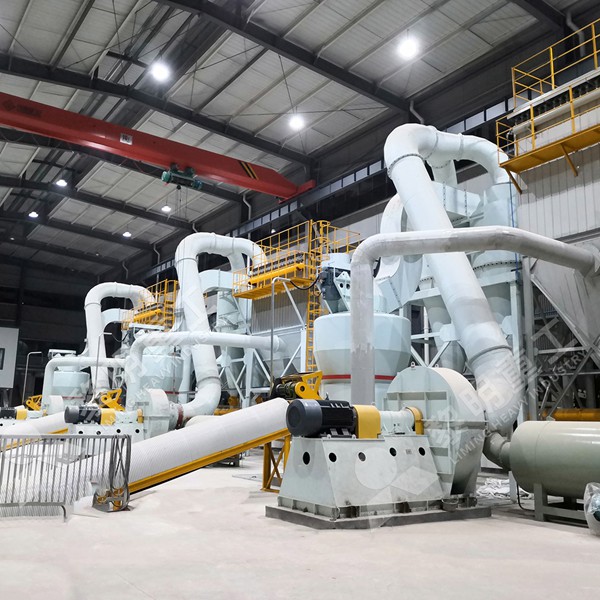
The traditional Raymond mill has long been a workhorse for mineral grinding. However, for high-capacity limestone processing, demands have evolved. LIMING HEAVY INDUSTRY's high-capacity Raymond Mill represents a significant technological leap. It is engineered to handle substantial input sizes (typically up to 25-30mm) and transform them into fine powders with fineness adjustable between 44μm to 613μm (approximately 325 mesh to 30 mesh). This capability makes it perfectly suited for processing non-flammable, non-explosive materials like limestone with Mohs hardness under 7 and humidity less than 6%. The core of its high-capacity performance lies in an optimized grinding roller and ring design, a powerful centrifugal classifier for precise particle size control, and a highly efficient impeller feeder that ensures uniform material distribution into the grinding chamber.
Operational efficiency and reliability are paramount. Our high-capacity Raymond Mill system is a complete, integrated solution. The workflow begins with primary crushing of large limestone lumps. The pre-crushed material is then conveyed and evenly fed into the grinding chamber of the Raymond Mill via a vibrating feeder. Inside, the material is ground between the rotating rollers and the stationary grinding ring. The ground powder is carried upward by the airflow generated by an integral blower into a high-efficiency separator. Here, oversized particles are rejected and returned for regrinding, while qualified fine powder passes through and is collected by a cyclone collector or a bag filter. The entire system operates as a negative pressure, closed-circuit loop, which minimizes dust emissions and ensures a clean working environment, compliant with stringent environmental standards.
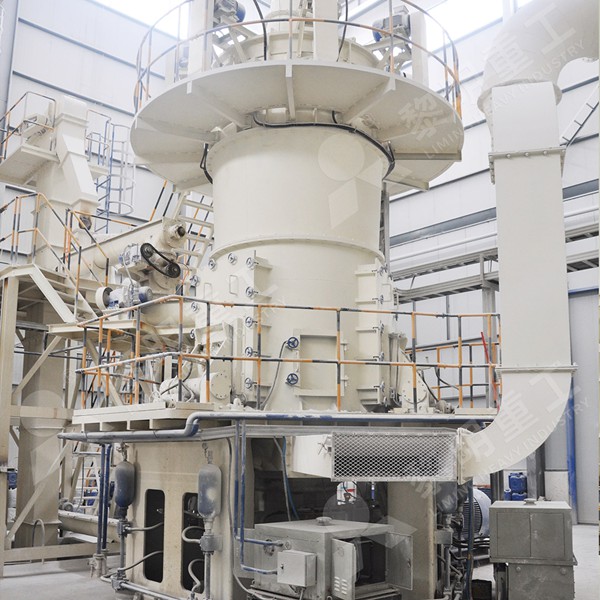
What truly sets our high-capacity limestone Raymond Mill apart are its engineered advantages. First is its remarkable productivity, capable of handling throughputs significantly higher than conventional designs, making it ideal for large-scale power plant desulfurization projects or industrial calcium carbonate plants. Second is its energy efficiency; the optimized grinding mechanics and aerodynamic design reduce power consumption per ton of output. Third is its exceptional stability and durability, with key components made from wear-resistant alloys to withstand the abrasive nature of limestone, ensuring long service life and reduced maintenance downtime. Finally, the system offers outstanding flexibility. The fineness of the final limestone powder can be easily adjusted in real-time by modifying the speed of the classifier, allowing operators to produce different grades of product for various applications without stopping the mill.
The primary application for this high-capacity mill is, unsurprisingly, limestone powder production for flue gas desulfurization (FGD) in thermal power plants, where high-purity, reactive limestone slurry is essential. Beyond FGD, it excels in producing heavy calcium carbonate powder for plastics, paints, coatings, and paper industries. It is also extensively used in the grinding of other non-metallic minerals like gypsum, barite, and calcite for construction and chemical uses. The ability to deliver a consistent, high-volume output of precisely graded powder makes it a cornerstone asset for any serious player in the industrial powder supply chain.
In conclusion, LIMING HEAVY INDUSTRY's high-capacity Raymond Mill for limestone is more than just grinding equipment; it is a comprehensive, high-performance production system. It embodies our three-decade legacy of innovation, combining proven Raymond Mill principles with modern advancements in materials science, dynamics, and automation. For enterprises seeking to scale up their limestone powder production with an emphasis on efficiency, reliability, and product quality, this mill offers a technically superior and economically sound solution, backed by the full research, manufacturing, and support capabilities of a global industry leader.
Frequently Asked Questions (FAQ)
- What is the maximum feed size your high-capacity Raymond Mill can accept for limestone?
Our mill is designed to accept limestone feed material with a maximum size of 25-30mm. For optimal performance and to protect the grinding components, we recommend using a jaw crusher for primary size reduction if your raw material exceeds this specification. - How is the fineness of the final limestone powder controlled?
Fineness is precisely controlled by an integrated high-efficiency turbine classifier. By adjusting the rotational speed of this classifier, the cut-point for particle size separation can be changed in real-time, allowing you to produce powder from approximately 44μm (325 mesh) up to 613μm without stopping production. - Is the system environmentally friendly regarding dust emissions?
Yes. The entire grinding system operates under negative pressure in a closed-circuit loop. Paired with a high-efficiency pulse jet bag filter or cyclone collector, dust emissions are effectively contained, ensuring the operation meets strict national and international environmental protection standards. - What are the key wear parts, and what is their typical service life?
The primary wear parts are the grinding rollers and the grinding ring. These are manufactured from high-chromium or other specialized wear-resistant alloys. Their service life depends on the abrasiveness of the limestone and operational hours, but they are engineered for extended durability, often processing tens of thousands of tons before requiring replacement. - Can this mill process materials with moisture content higher than 6%?
The standard high-capacity Raymond Mill is designed for materials with humidity less than 6%. For limestone with higher moisture content, we can integrate a drying function into the system, often by introducing hot air at the feed inlet, to effectively dry and grind the material in a single pass.


