Published: October 26, 2023
The calcite powder industry is on the cusp of a transformative leap, driven by the convergence of advanced milling technology and artificial intelligence. For decades, Raymond mills have been the workhorse for processing non-metallic minerals like calcite. The future, however, belongs to intelligent, AI-powered Raymond mill systems that promise to revolutionize smart factory operations. These systems will move beyond mere grinding to become self-optimizing, predictive, and seamlessly integrated production nodes. By leveraging real-time data analytics, machine learning, and IoT connectivity, they will deliver unprecedented levels of efficiency, product consistency, and operational autonomy. This evolution represents not just an upgrade in machinery, but a fundamental shift towards cognitive manufacturing, where equipment like those pioneered by LIMING HEAVY INDUSTRY anticipates needs, prevents downtime, and continuously refines the entire powder production lifecycle.
The traditional Raymond mill, a stalwart in mineral processing since its inception, has served industries faithfully. Its principle of grinding materials between rollers and a ring under centrifugal force is mechanically sound. However, the operational paradigm has largely remained reactive. Adjustments for feed rate, fineness, and system pressure often depend on operator experience and periodic sampling. In a calcite powder factory, where consistency in particle size distribution (e.g., between 44μm to 613μm) is critical for product grade and value, this manual approach introduces variability.
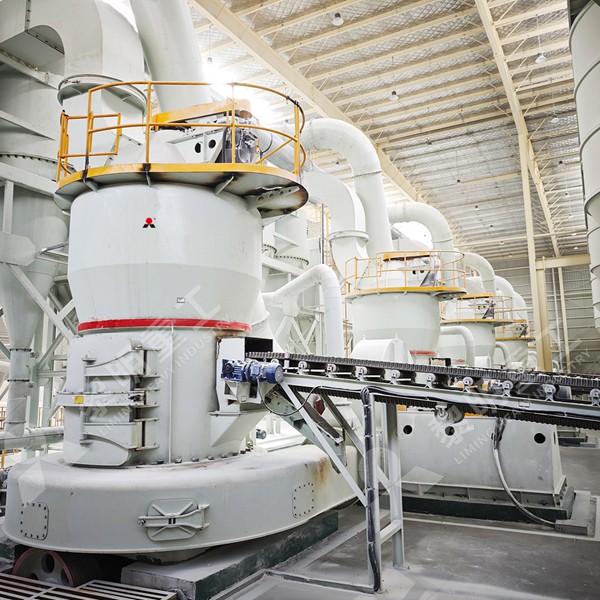
Enter the AI-powered Raymond mill. This next-generation system builds upon the robust mechanical foundation of proven designs, such as the MTW European Type Trapezium Mill—an advanced evolution of the traditional Raymond mill—and infuses it with a digital nervous system. Imagine a mill where embedded sensors continuously monitor vibration, temperature, pressure, motor load, and acoustic emissions. This data stream is not merely displayed on a screen; it is ingested by on-edge AI algorithms that have been trained on vast operational datasets. The system learns the unique "fingerprint" of optimal calcite grinding under varying conditions of raw material moisture (under 6%) and hardness (under 7 Mohs).
The core intelligence manifests in several key areas. First, adaptive process optimization. The AI dynamically adjusts mill parameters—such as classifier speed, roller pressure, and feed rate—in real-time to maintain the target fineness, even with natural fluctuations in feedstock. This ensures every batch of calcite powder meets exact specifications without over-grinding, which wastes energy, or under-grinding, which produces off-spec material. Second, predictive maintenance. By analyzing trends in vibration and temperature data, the AI can forecast wear on grinding rollers, rings, and bearings long before failure. It schedules maintenance during planned downtime, preventing catastrophic breakdowns that halt production for days. This is a game-changer for maintaining the 1.2-4.5 T/H capacity critical for factory throughput.
Furthermore, the AI system enables autonomous quality assurance. Integrated with inline particle size analyzers, it forms a closed-loop control system. The moment a drift from the target range (e.g., towards 44μm superfine or the 613μm coarser end) is detected, corrective actions are automatically initiated. This level of control was previously unattainable with conventional systems. For smart factories, this AI-powered mill becomes a plug-and-play productivity unit, communicating with upstream crushers (like jaw crushers for initial size reduction to 15-25mm) and downstream packaging systems via standard industrial IoT protocols, contributing to a holistic, data-driven production flow.
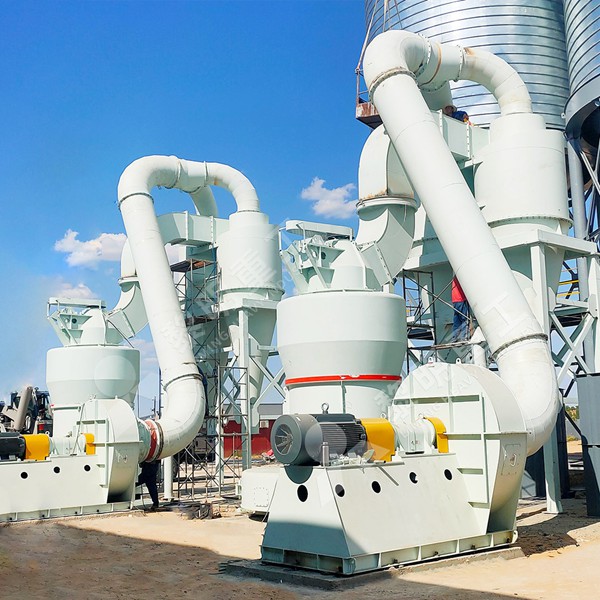
For a manufacturer like LIMING HEAVY INDUSTRY, with over three decades of expertise in "precision manufacturing" and a corporate strategy centered on "scientific research tackling key problems," this trend is a natural progression. The company's deep domain knowledge in grinding mechanics—from the LM Vertical Roller Mill for large-scale processing to the MW Micro Powder Mill for superfine ranges—provides the essential mechanical platform. The integration of AI represents the "pioneering and innovation" that drives the industry frontier. It transforms the mill from a commodity machine into a value-generating intellectual asset for the customer.
The impact on calcite powder factories is profound. Energy consumption, a major operational cost, can be minimized by AI-optimized grinding cycles. Yield is maximized by reducing waste. Overall Equipment Effectiveness (OEE) soars through uptime guarantees. Most importantly, it allows factories to produce higher-value, consistent specialty calcite powders for demanding applications in plastics, paints, and composites, moving beyond commodity markets. The future smart factory will not be run by operators staring at gauges, but by technicians managing AI exceptions and strategic flow, with intelligent Raymond mills serving as the reliable, self-correcting heart of production.
In conclusion, the fusion of robust Raymond mill engineering with sophisticated artificial intelligence is not a distant concept but the immediate future of mineral processing. It heralds an era of smart, sustainable, and supremely efficient calcite powder production. As industry leaders continue to invest in R&D, the vision of fully autonomous grinding circuits, self-diagnosing and seamlessly integrated into the industrial metaverse, is rapidly becoming a tangible reality, setting a new benchmark for what heavy industry machinery can achieve.
Frequently Asked Questions (FAQs)
- How does the AI in a Raymond mill actually "learn" the optimal grinding process for my specific calcite?
The AI system employs machine learning algorithms that are initially trained on historical operational data. Once installed, it continuously collects real-time data from your mill (feed rate, power draw, pressures, etc.) and the resulting product fineness. It uses this feedback loop to build and refine a digital twin model of your specific process, learning the precise adjustments needed for your raw material characteristics to achieve the target output. - Can an AI-powered mill be retrofitted to my existing Raymond mill setup, or do I need a completely new machine?
While a complete new system like an advanced MTW European Type Trapezium Mill designed with integrated AI offers the best performance, retrofit solutions are a key part of the trend. Sensor kits, edge computing devices, and AI software can often be added to existing mills to provide significant benefits in predictive maintenance and process insights, paving the way towards full optimization. - Does implementing an AI-powered system require highly specialized IT staff to operate and maintain?
Not necessarily. The goal is to simplify operation, not complicate it. These systems are designed with user-friendly interfaces that present actionable insights, not raw data. Maintenance alerts are clear and prescriptive. While partnership with the technology provider is important, day-to-day management is intended for plant engineers and operators, with remote support and updates often handled by the manufacturer. - What kind of data security measures are in place for these connected, AI-driven mills?
Reputable manufacturers implement industrial-grade cybersecurity protocols. This includes secure, encrypted data communication, firewall-protected networks, and role-based access control systems. Data can often be processed on the edge (locally on the machine) to minimize cloud transmission, and customers typically retain full ownership of their proprietary process data. - Beyond calcite, is this AI technology applicable to grinding other non-metallic minerals?
Absolutely. The underlying principles are transferable. The AI can be trained on the grinding behavior of gypsum, limestone, kaolin, talc, and other materials under 7 Mohs hardness. The system's ability to adapt to different material properties is one of its core strengths, making it a versatile solution for multi-mineral processing plants.


