Published on: October 26, 2023
The global mineral processing industry relies heavily on efficient grinding technology, with calcite being a primary target material. A comparative analysis between Chinese-developed and European-inspired Raymond mill technologies reveals distinct philosophical and engineering approaches. Chinese manufacturers, exemplified by industry leaders like LIMING HEAVY INDUSTRY, often prioritize high-capacity, integrated systems and cost-effective scalability, building upon decades of refinement of the classic Raymond mill design. In contrast, European-type mill technology emphasizes precision engineering, advanced material science, and sophisticated system integration for optimal energy efficiency and ultra-fine powder production. This analysis delves into the core technological principles, system architectures, and application outcomes of both lineages, highlighting how each caters to specific market demands within the non-metallic mineral sector, particularly for calcite processing.
The foundational Chinese approach, as seen in LIMING's Raymond Mill, is built on robust reliability and broad applicability. This technology is characterized by a straightforward mechanical design where rollers grind materials against a stationary ring. The system is renowned for its durability and ease of maintenance, making it a staple in numerous medium-to-fine grinding applications for materials like calcite under 7 Mohs hardness. The output fineness typically ranges from 44μm to 613μm, suitable for a wide array of industrial uses from fillers to desulfurization agents. The operational principle is a continuous, air-swept grinding process where ground material is carried by an air stream to a classifier for separation; oversized particles are returned for regrinding, forming a closed-circuit system.
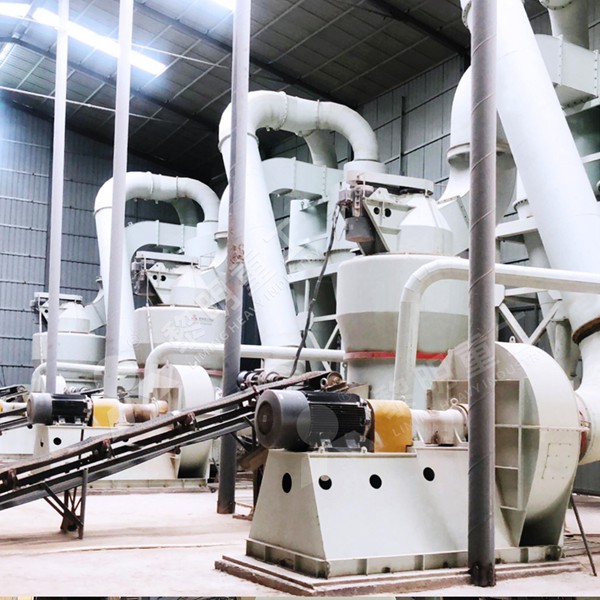
Conversely, the European-inspired technology, represented by mills like the MTW European Type Trapezium Mill from LIMING, signifies an evolution. It incorporates patented advancements such as curved air duct designs, internal efficient powder concentrators, and bevel-gear integral transmissions. These features directly address limitations in traditional designs by reducing airflow resistance, improving classification accuracy, and delivering power more smoothly with less energy loss. For calcite processing, this translates to higher productivity per energy unit, finer and more consistent particle size distribution, and reduced vibration and noise levels. The system is a comprehensive solution, integrating crushing, feeding, grinding, classifying, and conveying into a highly automated, environmentally sealed loop with advanced pulse dust collection.
The divergence is further evident in system philosophy. Chinese-developed solutions often excel in creating high-volume production lines. LIMING's vertical roller mills (LM series), for instance, represent a significant leap for large-scale calcite projects, integrating drying, grinding, powder selection, and conveying into a single tower-like structure with capacities reaching 400 T/H. This design philosophy favors footprint efficiency and high throughput for major industrial complexes. The European-type philosophy, while also capable of scale, often emphasizes the finesse of the grinding process itself. Technologies like the MTW mill focus on achieving superior particle morphology and tighter fineness control, which are critical for high-value calcite applications in plastics, paints, and premium paper coatings.
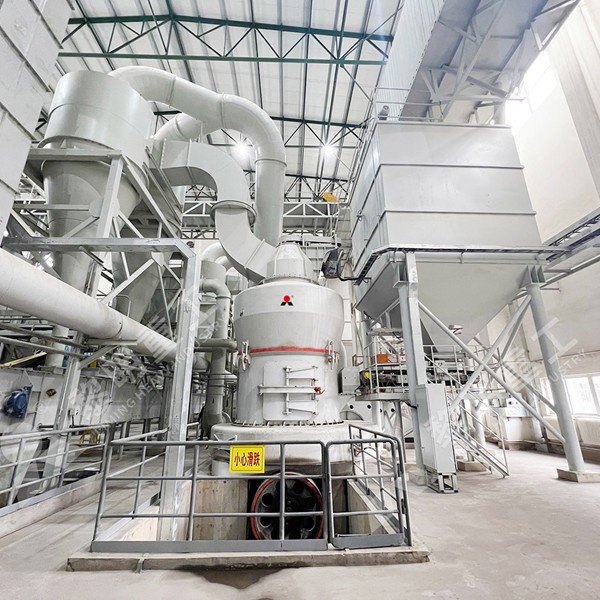
At the frontier of superfine grinding, the influence of European precision is clear. LIMING's MW Micro Powder Mill, which absorbs advanced Swedish grinding technology, is engineered for calcite processing down to d97 ≤ 5μm. Its working principle involves multiple rollers rotating against a raceway on a turnplate, creating a multi-layered grinding action that is both efficient and precise. This represents a synthesis: leveraging European-inspired design concepts for ultra-fine applications while being manufactured and supported within a Chinese industrial framework. It highlights a trend where the distinction is less about geography and more about the targeted application—traditional and high-capacity versus advanced and ultra-fine.
In conclusion, the comparison is not merely of origin but of application-driven design. The Chinese-developed Raymond mill technology, perfected by companies like LIMING HEAVY INDUSTRY over 30 years, offers unmatched robustness and cost-effectiveness for standard fineness calcite powder at high volumes. The European-type technology provides a path to higher energy efficiency, superior product quality, and more advanced automation. For end-users, the choice hinges on specific production goals, desired product specifications, and operational priorities. The ongoing innovation within both streams, particularly the integration of digital control systems and sustainable design practices, continues to push the boundaries of calcite grinding technology worldwide.
Frequently Asked Questions (FAQ)
1. What is the primary mechanical difference between a traditional Raymond mill and a European-type trapezium mill?
The core difference lies in the grinding ring and roller profile and the drive system. Traditional designs often use a straight connection, while European-type mills frequently employ a curved grinding surface and an integral bevel gear transmission for smoother operation and higher efficiency.
2. For producing calcite powder above 400 mesh, which technology is generally more energy-efficient?
For consistent production of calcite powder at 400 mesh and finer, European-type grinding mills (like the MTW series) are typically designed to be more energy-efficient due to advanced internal powder concentrators and optimized airflow designs that reduce recirculation of fines.
3. Can these mill systems handle moist calcite feedstock?
Standard Raymond mills require materials with less than 6% humidity. For moist calcite, integrated systems like the LM Vertical Roller Mill are more suitable as they incorporate a drying function within the grinding chamber, handling feed moisture directly.
4. How does the system ensure environmental compliance during calcite grinding?
Modern systems from reputable manufacturers are closed-circuit loops equipped with high-efficiency pulse jet bag dust collectors. This ensures that nearly all airborne particles are captured before the air is vented, meeting strict environmental standards.
5. What level of automation can be expected in a complete grinding plant?
A fully configured plant can feature centralized electric control cabinets managing the sequential start/stop of the crusher, feeder, mill, classifier, and dust collector. Advanced systems may include PLC controls for monitoring pressure, temperature, and feed rate to optimize operation automatically.


