Published on: October 26, 2023
In the demanding field of mineral processing, achieving consistent high-quality limestone powder while maintaining operational efficiency and equipment longevity is paramount. LIMING HEAVY INDUSTRY CO., LTD., a leader in grinding technology since 1987, addresses these challenges with its advanced Raymond Mill system, now enhanced with an integrated cooling device. This innovation is specifically engineered for processing non-flammable, non-explosive materials like limestone under 7 Mohs hardness. The system integrates drying, grinding, classification, and conveying into a cohesive, closed-loop operation. The incorporation of a dedicated cooling mechanism directly tackles the heat generation inherent in fine grinding, a critical factor that influences both the physical properties of the final powder and the stability of the milling process. This results in a reliable solution that delivers fineness between 44μm and 613μm, ensuring superior product consistency, reduced thermal degradation, and enhanced system durability for applications ranging from power plant desulfurization to the production of heavy calcium carbonate.
At the core of LIMING's solution is a deep understanding of the grinding dynamics involved in processing abrasive materials like limestone. The traditional Raymond mill design, while effective, can generate significant frictional heat during prolonged operation. This heat can adversely affect the chemical composition of sensitive minerals, lead to increased wear on grinding rollers and rings, and even cause unwanted moisture evaporation that complicates the powder handling process. Recognizing this, our engineering team has meticulously designed a cooling system that operates in harmony with the mill's grinding chamber. This isn't an afterthought; it's a fully integrated subsystem that regulates the operational temperature, ensuring the grinding environment remains within an optimal range.
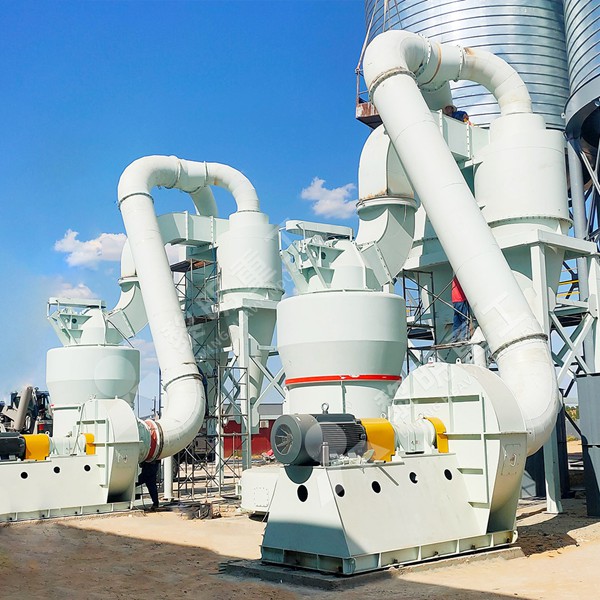
The working principle of the enhanced Raymond Mill begins with the jaw crusher reducing large limestone lumps to a manageable size of 15-25mm. The material is then uniformly fed into the grinding chamber via a vibrating feeder. Inside, the rollers rotate against the grinding ring, crushing the material. The critical addition is the controlled, cooled airflow. As the ground particles are carried upward by the air stream towards the classifier, the integrated cooling device actively moderates the temperature of this air. This prevents the fine limestone particles from agglomerating due to heat and ensures that the classifier can make a precise separation based solely on particle size. The oversized particles fall back for regrinding, while the qualified powder proceeds through the system. The closed-loop design, coupled with a high-efficiency pulse dust collector, guarantees that the process is not only efficient but also environmentally compliant, with minimal dust emission.
The benefits of this cooled Raymond Mill system are multifaceted. Firstly, it significantly improves product quality. By maintaining a lower temperature, the mill produces limestone powder with a more stable crystalline structure and prevents the loss of bound water in certain mineral compositions, which is crucial for applications in construction and chemical industries. Secondly, it enhances operational reliability. Reduced thermal stress on mechanical components like rollers, shafts, and bearings translates to less frequent maintenance intervals and longer service life, thereby lowering the total cost of ownership. Thirdly, it increases process stability. A consistent temperature eliminates one of the major variables in fine powder production, leading to more predictable throughput and fineness results, often maximizing the rated capacity of 1.2 to 4.5 tons per hour.
LIMING HEAVY INDUSTRY's commitment to innovation is rooted in its "scientific research tackling key problems" philosophy. With a mature R&D team and modern manufacturing facilities spanning over 80,000 square meters in Zhengzhou's HI-TECH Industry Development Zone, the company focuses on technological frontiers. The development of the cooled Raymond Mill is a direct result of this commitment, aiming to solve real-world industrial problems. It represents a perfect synergy of traditional, robust milling principles with modern thermal management technology. This machine is not merely a tool for grinding; it is a precision system designed for the sustainable and high-yield production of limestone powder, solidifying LIMING's position at the forefront of the machinery manufacturing industry.
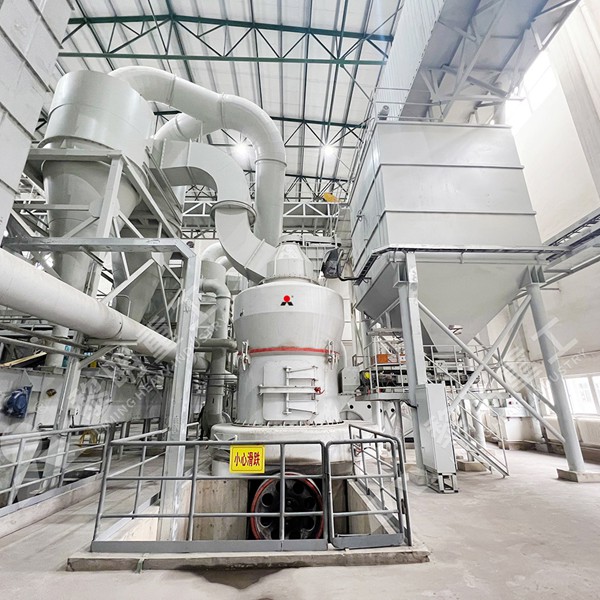
In conclusion, for industries that rely on high-purity, consistently fine limestone powder, the choice of grinding equipment is critical. LIMING HEAVY INDUSTRY's Raymond Mill with its proprietary cooling device offers a technologically advanced, reliable, and efficient pathway. It transforms the challenge of heat management into a competitive advantage, ensuring that end-users receive a superior product while enjoying the benefits of reduced downtime and operational smoothness. This equipment stands as a testament to LIMING's enduring mission: to drive progress through precision manufacturing and intelligent engineering solutions for the global market.
Frequently Asked Questions (FAQ)
- How does the cooling device specifically improve the fineness and quality of the limestone powder?
The cooling device regulates the temperature inside the grinding chamber, preventing excessive heat that can cause fine particles to stick together (agglomerate) or undergo chemical changes. This results in a more uniform particle size distribution, better flow characteristics, and preservation of the limestone's natural properties, leading to higher quality powder suitable for sensitive applications. - Is the cooling system integrated into the standard Raymond Mill, or is it an add-on option?
In our latest design, the cooling mechanism is an integral part of the Raymond Mill system's airflow and temperature control loop. It is engineered from the ground up to work seamlessly with the grinding, classification, and conveying processes, ensuring optimal performance and not an external aftermarket modification. - What is the primary maintenance requirement for the cooling component of the mill?
The cooling system is designed for low maintenance. Primary tasks involve regular inspection of air ducts for any material buildup, checking the integrity of cooling surfaces, and ensuring that the associated fans and air-moving components are clean and functioning properly, as outlined in the routine maintenance schedule. - Can this cooled Raymond Mill handle materials other than limestone?
Absolutely. While optimized for limestone, this mill is suitable for grinding various non-flammable, non-explosive materials with a Mohs hardness below 7 and humidity less than 6%, such as gypsum, calcite, barite, dolomite, and feldspar, where controlled temperature grinding is beneficial. - How does the closed-loop system with cooling contribute to environmental protection?
The closed-loop system ensures that all air and particles are contained within the circuit. The integrated pulse dust collector captures over 99% of airborne particulates before clean air is released. The cooling function enhances this by stabilizing the process, reducing the risk of thermal-related inefficiencies that could lead to higher energy consumption or inconsistent operation.


