Published on: October 26, 2023
In the demanding world of industrial mineral processing, achieving fine grinding efficiency while maintaining impeccable environmental standards has long been a significant challenge. Liming Heavy Industry Co., Ltd. addresses this dual imperative head-on with its advanced Raymond Mill, engineered specifically for dust-free operation. This mill represents a synthesis of decades of grinding expertise and modern environmental technology, offering a closed-circuit system that contains and manages particulate matter from feed to final product collection. By integrating high-efficiency pulse dust collectors and a sealed grinding chamber, it delivers consistent, high-quality powder between 613μm and 44μm without compromising workplace safety or air quality. Ideal for processing non-flammable, non-explosive materials under Mohs hardness 7 and 6% humidity, such as calcium carbonate, gypsum, and coal for desulfurization, this mill is a cornerstone for industries committed to sustainable and responsible production.
Founded in 1987, Liming Heavy Industry has built its reputation on the precision manufacturing of large and medium-sized crushing and grinding equipment. Our journey, spanning over three decades, is marked by a steadfast commitment to a modern scientific management system and continuous technological pioneering. With headquarters in the HI-TECH Industry Development Zone of Zhengzhou and a major workshop in Shangjie Industry Park, our facilities embody our scale and capability. We persist in a strategy where scientific research and development are paramount, focusing on product competitiveness and technological frontier innovation. Our Raymond Mill with dust-free operation is a direct result of this philosophy—a product where performance meets environmental stewardship.
The core of this Raymond Mill's dust-free capability lies in its intelligent system design. The grinding process operates within a fully enclosed circuit. The system comprises the mill, a high-efficiency separator, an air blower, and a pulse jet dust collector. Materials are fed into the grinding chamber where rollers grind against a stationary ring. The ground particles are carried upward by the airflow generated by the blower to the integrated classifier. Here, oversized particles are separated and returned for regrinding, while the correctly sized fines proceed. Crucially, the entire air stream from the mill is directed into the pulse dust collector before being recirculated back to the blower. This creates a negative pressure environment within the mill housing, preventing any dust leakage. The dust collector, featuring robust filter bags, captures over 99.9% of particulate matter, ensuring the exhaust air meets stringent national environmental protection standards. This closed-loop design not only contains dust but also improves material recovery and system efficiency.
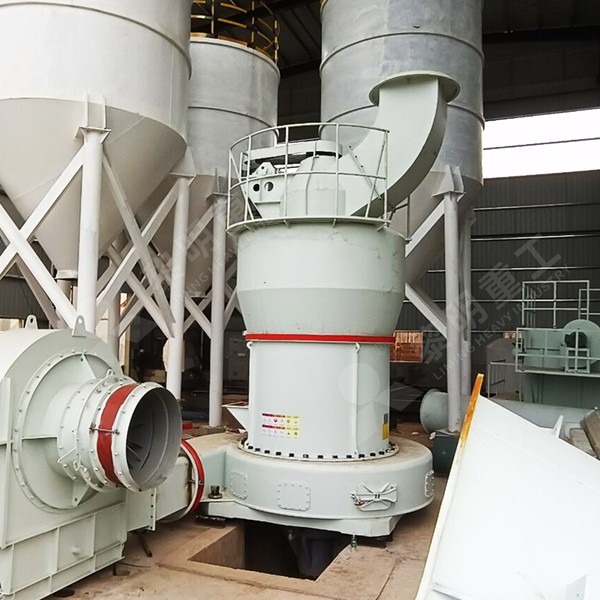
Operational benefits extend far beyond dust control. The mill's design ensures stable performance and high productivity for processing various non-metallic minerals. Its grinding mechanism allows for precise fineness adjustment, catering to diverse user requirements from coarse fillers to finer powders. The integration of drying, grinding, powder selection, and conveying into a single, automated unit simplifies operation and reduces footprint. Furthermore, the dust-free system significantly lowers maintenance costs associated with equipment wear from abrasive dust and enhances the working environment, contributing to higher operator safety and morale. For applications like power plant desulfurization or preparing pulverized coal, where both fineness and clean operation are critical, this mill offers an unparalleled solution.
Liming's dedication to R&D ensures that our Raymond Mill is not a static product but an evolving platform. We absorb advanced international grinding technologies and refine them through our mature scientific research team. The focus on "scientific research tackling key problems" drives innovations in wear-resistant materials for grinding rollers and rings, optimizing airflow patterns for better separation, and enhancing the automation of the electric control system. This continuous improvement cycle aims at boosting the overall scientific and technological innovation ability of the enterprise, directly translating into more reliable, energy-efficient, and environmentally sound equipment for our clients worldwide.
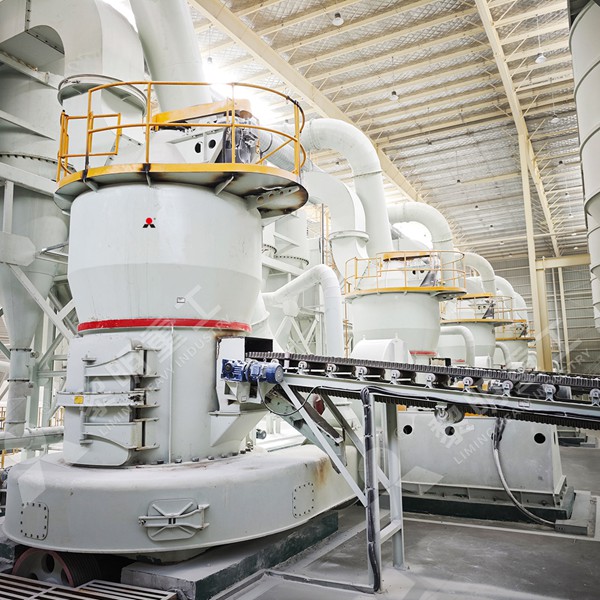
In conclusion, the Raymond Grinding Mill with dust-free operation from Liming Heavy Industry is more than just machinery; it is a commitment to a cleaner industrial future. It successfully bridges the gap between high-capacity mineral processing (1.2-4.5T/H) and the imperative for zero-dust emission workplaces. By choosing this technology, industries in metallurgy, construction materials, chemicals, and mining not only invest in a robust grinding solution but also actively participate in sustainable manufacturing practices. It stands as a testament to Liming's leadership in domestic and overseas machinery manufacturing, where pioneering innovation is consistently aligned with environmental responsibility.
Frequently Asked Questions (FAQ)
- What is the primary mechanism that ensures dust-free operation in this Raymond Mill?
The mill employs a completely closed-circuit system with an integrated high-efficiency pulse dust collector. The grinding air stream is continuously recycled within this sealed loop under negative pressure, and all particulates are captured by the filter before the air is recirculated, preventing any external release. - What material fineness range can be achieved?
The mill can produce finished powders with a fineness range between 613 microns (μm) and 44 microns (μm). The fineness can be precisely adjusted through the built-in classifier to meet specific application requirements. - Is this mill suitable for grinding moist materials?
The standard Raymond Mill is designed for materials with a humidity of less than 6%. For materials with higher moisture content, an integrated drying function using hot air can be configured to simultaneously dry and grind the feed. - How does the dust-free system impact operational maintenance?
By effectively containing abrasive dust, the system drastically reduces wear on mechanical components outside the grinding chamber. This leads to longer equipment lifespan, lower spare part consumption, and reduced downtime for cleaning and maintenance. - Can the system handle different types of non-metallic minerals?
Yes, it is highly versatile and commonly used for calcium carbonate, gypsum, talc, calcite, limestone, barite, and other non-flammable, non-explosive materials with a Mohs hardness below 7.


