Published: April 18, 2025
Summary: This article provides a complete overview of the ball mill for ore grinding plants, a key machine in mineral processing and industrial comminution. As a mature and widely used grinding solution, the ball mill from Liming Heavy Industry Co., Ltd. combines reliable mechanical design, flexible configuration, and steady operation. With a capacity range of 0.65 to 50 tons per hour and a feed size of up to 25 mm, the ball mill is suitable for cement, coal, power plant desulfurization, metallurgy, chemical industry, non-metallic minerals, construction materials, and ceramics. This article also covers the working principle, application advantages, selection considerations, maintenance practices, and answers five common questions.
Why the Ball Mill Remains Essential for Ore Grinding
In almost every ore dressing plant, grinding is the step that determines the liberation of valuable minerals and the downstream recovery performance. Over the past 30 years, ball mills have become one of the most reliable and widely used machines in this field. Unlike some modern grinders that need precise feed conditions, a ball mill can handle variations in ore hardness and feed moisture while maintaining a stable output. That is why so many plant operators continue to choose it as the backbone of their grinding circuit.
At Liming Heavy Industry, we design ball mills to meet the practical needs of beneficiation, construction, and chemical industries. Our company was founded in 1987 and has grown into a modern joint-stock corporation that combines research, manufacturing, and sales. With headquarters in the HI-TECH Industry Development Zone of Zhengzhou, covering 80,000 square meters, and an additional workshop in Shangjie Industry Park covering 67,000 square meters, we have the engineering capacity and manufacturing experience to build large and medium-sized grinding equipment. In this article, I want to share how a ball mill works, what should be considered when selecting it for an ore grinding plant, and how to keep it operating smoothly.
Core Specifications and Project Data
When a customer asks me about a ball mill for an ore grinding plant, I always begin with three basic figures: capacity, feed size, and final fineness. Our standard ball mill has a capacity range of 0.65 to 50 tons per hour, which is wide enough for small pilot plants and medium-sized commercial operations. The maximum feed size is 25 mm, so material must be prepared by a crusher before entering the mill. The ball mill can be applied to:
- Cement and clinker grinding
- Coal and pulverized coal preparation
- Power plant desulfurization
- Metallurgical processes
- Chemical industry
- Non-metallic mineral processing
- Construction materials and ceramics
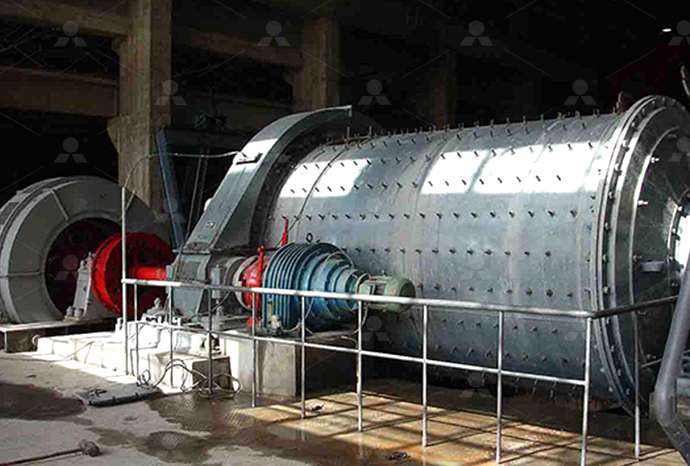
For an ore grinding plant, the selection is not just about the mill itself. It also depends on the upstream crushing circuit, the moisture in the ore, the target particle size, and whether the process uses an open circuit or closed circuit with a classifier. The ball mill can be supplied with different liner types, such as ladder liner or ripple liner, as well as different sizes of steel balls, to match the ore characteristics and production goal.
Working Principle of the Ball Mill
Understanding the working principle helps operators avoid common mistakes and maintain the machine more efficiently. The ball mill is a horizontal rotating device that is transmitted by an outer gear. The material is transferred to the grinding chamber uniformly through the quill shaft. Inside the chamber, there are ladder liners or ripple liners and steel balls of different specifications. As the barrel rotates, the centrifugal force brings the steel balls to a certain height. When the balls fall, they impact and grind the ore into smaller particles. Finally, the ground materials are discharged through the discharge board, and the grinding process is complete.
This simple but effective principle is why the ball mill has survived for so many years. In an ore grinding plant, the ball mill is usually part of a larger system that includes a jaw crusher, vibrating feeder, bucket elevator, dust collector, conveyor, and control panel. The ball mill receives crushed ore, grinds it, and sends the product to the next stage of beneficiation. Because the system is enclosed with dust collection, it can meet modern environmental requirements.
Key Advantages for Ore Grinding Plants
From my observation in many mineral processing projects, the ball mill offers several practical advantages.
- Proven reliability: The ball mill has been used for decades, and the design is well understood by operators all over the world.
- Wide adaptability: It can grind all kinds of ores and other materials, including hard rock, cement clinker, coal, and non-metallic ores.
- Simple operation: Once the feed rate and steel ball charge are set, the mill can run continuously with only routine supervision.
- Flexible process configuration: It can work in open or closed circuits, and the fineness can be controlled by the discharge system and classifier.
- Low maintenance threshold: The maintenance team does not need unusual skills; regular lubrication, liner inspection, and steel ball replenishment are enough to keep the mill running.
Behind these advantages is the manufacturing strength of Liming. The company adheres to a modern scientific management system and precise manufacturing process. We invest in scientific research and development, and our engineering team has deep experience with crushing and grinding equipment. This is important because a ball mill is only as good as its gear, bearing, shell, and liner quality. When you buy from a manufacturer with more than 30 years of experience, you are not only buying a machine, you are buying process knowledge and after-sales support.
How to Choose the Right Ball Mill for Your Project
Choosing a ball mill is not a one-size-fits-all decision. I always recommend that clients prepare the following information before contacting us:
- Ore type and hardness
- Feed particle size distribution
- Target product fineness
- Hourly capacity requirement
- Whether wet or dry grinding is required
- Existing circuit configuration
For example, in a gold ore grinding plant, the target grind size is often around 75 to 150 microns, depending on the liberation size. In a cement plant, the ball mill may produce finer product with higher surface area. The capacity of our ball mill can be adjusted from 0.65 to 50 tons per hour, and the feed size must be kept under 25 mm. If the ore contains large lumps, a jaw crusher or other primary crusher should be installed ahead of the mill. For a plant with strict environmental requirements, we can include a pulse dust collector and a closed grinding loop.
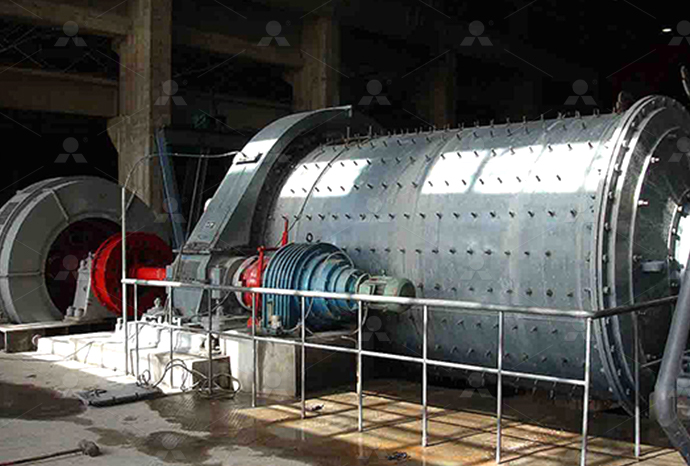
In some cases, a vertical roller mill or a micro powder mill might be more suitable, especially for very fine powder or non-metallic minerals. But for many ore grinding plants, the ball mill remains the best balance of cost, capacity, and reliability. Liming also offers a full range of grinding equipment, including vertical roller mills, European type trapezium mills, and micro powder mills, so you can compare different technologies with one supplier. This reduces design risk and simplifies procurement.
Maintenance and Operational Tips
Over the years, I have seen that many grinding plant problems are caused by neglecting routine maintenance rather than by the mill design. To keep a ball mill operating at high efficiency, follow these practices:
- Check the lubrication system daily and maintain the correct oil level and pressure.
- Inspect liners regularly for uneven wear; replace worn liners before they damage the shell.
- Monitor the steel ball charge. Add balls periodically to compensate for wear.
- Keep the feed size below the design limit of 25 mm and remove foreign objects before the crusher.
- Pay attention to rotation speed, bearing temperature, vibration, and current draw.
- Clean dust collectors and ensure the discharge system is not blocked.
Safety is another important point. Always lock out the motor and wait for the drum to stop before anyone enters the mill. Use proper tools and personal protective equipment during maintenance. A ball mill is heavy equipment, and careless operation can cause serious injury.
Conclusion
The ball mill remains a practical and efficient grinding solution for ore grinding plants around the world. Its ability to handle different ores, its simple working principle, and its reliable capacity of 0.65 to 50 tons per hour make it a common choice in cement, coal, metallurgy, chemical, non-metallic mineral, and construction industries. As an engineer, I appreciate the machine for its straightforward design and predictable performance. As a company, Liming Heavy Industry provides modern manufacturing, strong research support, and decades of experience in crushing and grinding equipment. If you are planning a new ore grinding plant or upgrading an existing circuit, the ball mill is an option worth serious consideration.
FAQ
- What is the capacity range of the ball mill?
The capacity range of the Liming ball mill is 0.65 to 50 tons per hour. The actual output depends on ore hardness, feed size, product fineness, and circuit configuration. - What is the maximum feed size for the ball mill?
The maximum feed size is 25 mm or less. Larger ore should be crushed by a primary crusher before entering the grinding plant. - Can the ball mill handle wet and dry grinding?
Yes. The ball mill can be arranged for both wet and dry grinding. The liner design, discharge method, and auxiliary equipment will be selected according to the process requirement. - Which industries can use the ball mill?
The ball mill is widely used in cement, coal, power plant desulfurization, metallurgy, chemical industry, non-metallic mineral processing, construction materials, ceramics, and ore beneficiation. - Does Liming provide only a single ball mill or a complete grinding plant?
Liming can supply a single ball mill or a complete grinding system, including crushers, feeders, conveyors, dust collectors, classifiers, and control systems. This allows our customers to build an integrated ore grinding plant from one reliable source.


