Manganese ore is becoming a critical input for lithium-ion battery cathodes, particularly in lithium manganese oxide (LMO) and nickel-manganese-cobalt (NMC) chemistries. This article summarizes Liming Heavy Industry Co., Ltd.'s complete grinding solutions for battery-grade manganese ore powder. Founded in 1987, Liming is a modern joint-stock company with research, manufacturing and sales capabilities. Its headquarter is located in the HI-TECH Industry Development Zone of Zhengzhou, covering 80,000 m², and another workshop in Shangjie Industry Park covers 67,000 m². With more than 30 years of manufacturing experience and a strong scientific research team, Liming supplies key grinding equipment such as the LM Vertical Roller Mill (10-400 T/H), MTW European Type Trapezium Mill (3-55 T/H), Raymond Mill (1.2-4.5 T/H), MW Micro Powder Mill (0.5-25 T/H) and Ball Mill (0.65-50 T/H). Depending on capacity and final particle size requirements, these mills can be integrated into a complete manganese ore grinding mill system for battery material production.
Why Manganese Ore Grinding Matters for Battery Production
Battery-grade manganese is not simply crushed ore. The electrochemical performance of a cathode depends on phase purity, surface area and particle size. If the manganese oxide particles are too coarse or have a broad size distribution, electrode cracking, capacity fade and poor rate capability can occur. Grinding is therefore a critical step. The goal of a manganese ore grinding mill for battery applications is to reduce pre-treated ore or synthetic product to a fine powder, often below 45 μm and in many cases below 10 μm, while maintaining a narrow particle size distribution. Choosing the right manganese ore grinding mill for battery production is a high-value decision that affects the cost, quality and consistency of cathode materials.
Key Characteristics of Manganese Ore and Grinding Challenges
Most manganese ore deposits contain pyrolusite, rhodochrosite and other oxides. The ore can be abrasive, and its moisture depends on the mining and beneficiation method. For dry grinding, the feed moisture should be controlled. Raymond and MTW mills are suitable for materials under 7 Mohs hardness and less than 6% humidity, while the LM Vertical Roller Mill can handle higher-moisture feed with integrated drying. A battery-grade manganese powder plant also needs a narrow particle size distribution, which requires efficient classification and stable grinding pressure. Abrasive wear must be managed with high-quality wear parts, and the plant design should avoid contamination of the final powder.
Complete Manganese Ore Grinding Process
Liming's grinding solution follows a well-proven flow:
- Primary crushing: a jaw crusher reduces run-of-mine manganese ore to the mill's required feed size, typically 15-55 mm.
- Belt conveying and feeding: a variable-frequency belt feeder sends the crushed ore evenly and continuously into the grinding mill.
- Main grinding: the mill reduces the particles under compression, impact and attrition. For Raymond, MTW and ball mills, material is ground between rollers or balls and ring liners; for the LM vertical roller mill, the material is ground between a roller and a grinding table.
- Classification: a separator returns coarse particles to the grinding zone until they pass the required screen size.
- Dust collection and recovery: a pulse dust collector captures fine powder, while the cleaned air is recycled or discharged according to environmental standards.
- Finished storage: collected powder is transported by screw conveyor or air chute to silos or packing lines.
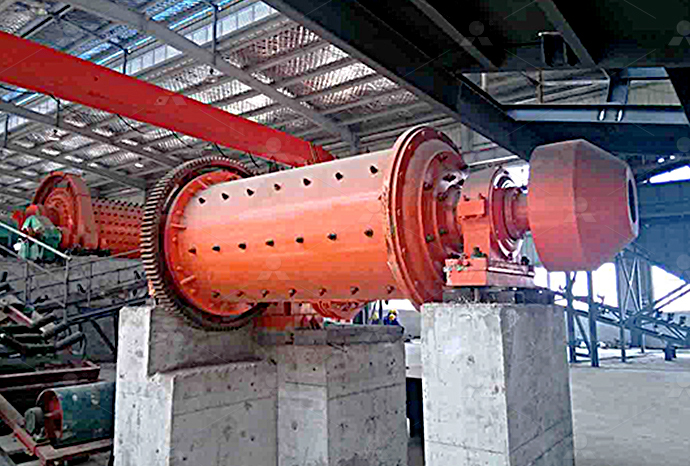
Manganese Ore Grinding Mill Equipment from Liming Heavy Industry
The right equipment depends on throughput, feed size and final fineness. The table below summarizes Liming's main options based on official product data:
| Mill Type | Capacity | Input Size | Best Use |
|---|---|---|---|
| LM Vertical Roller Mill | 10-400 T/H | 30-55 mm | Large-scale integrated grinding and drying |
| MTW European Type Trapezium Mill | 3-55 T/H | 30-50 mm | Medium and large powder production |
| Raymond Mill | 1.2-4.5 T/H | 15-25 mm | Small and pilot projects, 44-613 μm product |
| MW Micro Powder Mill | 0.5-25 T/H | 10-20 mm | Superfine battery-grade powder, 325-3250 mesh |
| Ball Mill | 0.65-50 T/H | ≤25 mm | Beneficiation and flexible fine grinding |
LM Vertical Roller Mill for Large-Scale Manganese Ore Grinding
The LM Vertical Roller Mill adopts a new milling device and an automatic electric control system. It integrates drying, grinding, powder selection and conveying in one unit. With a capacity of 10-400 T/H and an input size of 30-55 mm, it can support a centralized manganese ore powder plant serving several battery material customers. The integrated design reduces floor area and simplifies material handling. In this configuration, the LM mill can pre-grind or finish-grind beneficated manganese ore while producing a consistent powder stream.
MTW European Type Trapezium Mill for Medium-Capacity Manganese Powder Production
The MTW European Type Trapezium Mill is an upgraded product of traditional Raymond mill and pendulum mill. It uses patented technology and is designed for stable performance, high productivity, environmental protection and energy saving. The capacity range is 3-55 T/H, and the input size is 30-50 mm. The MTW grinding system consists of a grinding mill, separator, air blower, jaw crusher, vibrating feeder, hopper, dust collector, pipe, powder collector and electric cabinet. Oversized particles are returned to the grinding zone, and the air flow is recirculated in a closed system. This makes the MTW a reliable main mill for battery-related manganese powder projects.
Raymond Mill for Small and Pilot Manganese Ore Grinding
The Raymond mill is a classic grinding machine used in metallurgy, building materials, chemicals and mining. It can process non-flammable and non-explosive materials with hardness under 7 Mohs and humidity under 6%. Its output fineness ranges from 613 μm to 44 μm. With an input size of 15-25 mm and capacity of 1.2-4.5 T/H, it is suitable for pilot-scale battery material preparation or small manganese ore grinding stations where simple operation and easy maintenance are important.
MW Micro Powder Mill for Superfine Battery-Grade Manganese Powder
For cathode-grade manganese oxide powder, superfine grinding is often needed. The MW Micro Powder Mill, a medium-speed micro-grinding mill, absorbs advanced Swedish grinding technology. It can produce finished products up to d97 ≤5 μm, with fineness adjustable between 325 mesh and 3250 mesh. The input size is 10-20 mm and capacity is 0.5-25 T/H. The MW mill also has a pulse precipitator, which captures fine dust and makes production cleaner. This is the key piece of equipment when the battery material specification requires a high percentage of particles below 10 μm.
Ball Mill for Manganese Beneficiation and Flexible Fine Grinding
The ball mill is commonly used grinding equipment and a key machine for milling after ore crushing. It can grind all kinds of ores and other materials, and it is widely used in beneficiation, construction and chemistry. The ball mill is a horizontal rotating device driven by an outer gear. Material enters the grinding chamber through a quill shaft and is ground with ladder liners, ripple liners and steel balls. For manganese ore, a ball mill can be used in the beneficiation plant before concentration, or as a flexible fine grinding unit in a battery-material plant. Its feed size is ≤25 mm and capacity is 0.65-50 T/H.
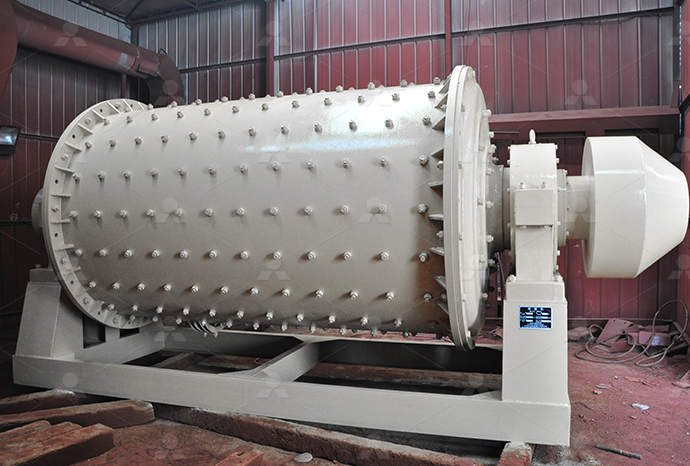
How to Choose a Manganese Ore Grinding Mill for Battery Applications
- Throughput: For above 10 T/H, the LM Vertical Roller Mill or MTW mill is a strong candidate. For 1-5 T/H, a Raymond mill or MW mill can be used. For crushing or beneficiation plants, a ball mill is often the primary choice.
- Final fineness: If the target is 325-3250 mesh or d97 ≤5 μm, choose the MW Micro Powder Mill. If the target is coarser than 44 μm, the Raymond mill is sufficient. For medium requirements, the MTW offers a balance.
- Feed moisture: The LM mill has integrated drying. Raymond and MTW require feed moisture lower than 6%. A pre-drying unit can be added when necessary.
- System configuration: A complete circuit with jaw crusher, vibrating feeder, hopper, mill, separator, air blower, dust collector and powder collector provides more stable operation than a single milling machine.
- Environmental control: Battery projects often require low dust emission. Use pulse dust collectors and closed-loop air systems to meet standards.
Operational Advantages of Liming Manganese Ore Grinding Systems
Liming Heavy Industry persists in implementing a scientific research and development strategy, with the goal of improving product competitiveness. Its mature research team supports process optimization for specific ores. The grinding equipment is designed with automatic control, reducing manual intervention. The closed air flow and pulse dust collector reduce material loss and create a clean workplace. These factors help battery material manufacturers achieve stable product quality and efficient production.
Conclusion
Battery-grade manganese powder requires a careful match between ore characteristics and grinding equipment. Liming Heavy Industry's product range covers everything from coarse grinding to superfine powder preparation. With more than 30 years of experience and a complete research, manufacturing and sales system, the company can provide a manganese ore grinding mill for battery applications that meets capacity, fineness and environmental targets.
Frequently Asked Questions
1. What final fineness can the battery-grade manganese ore grinding mill achieve?
The MW Micro Powder Mill can adjust fineness between 325 mesh and 3250 mesh, with d97 ≤5 μm. The Raymond mill can produce 613 μm to 44 μm powder. For cathode-grade Mn3O4 or MnO2, a micro-powder mill is usually recommended after a pre-grinding step.
2. Which Liming mill is best for a 5 T/H manganese ore plant?
At about 5 T/H, the MTW European Type Trapezium Mill is often suitable because it has a 3-55 T/H capacity and stable performance. If the target is very fine battery powder, the MW Micro Powder Mill can be selected for smaller capacities, or an MTW can be used as a pre-grinder followed by a classifier.
3. Can the same grinding system handle manganese ore with high moisture?
The LM Vertical Roller Mill has integrated drying, so it can handle feed with higher moisture while grinding. For Raymond and MTW mills, the feed moisture should generally be below 6%. Liming can add a drying system before the mill when needed.
4. How does Liming control dust in the manganese grinding plant?
The MTW and MW grinding systems are equipped with pulse dust collectors. The air flow is recycled in a closed system, and fine powder is collected by the powder collector. The design complies with national environmental protection standards and keeps the workplace clean.
5. Does Liming provide complete grinding circuits or only the milling machine?
Liming provides complete grinding circuits, including jaw crusher, vibrating feeder, hopper, belt feeder, mill, separator, air blower, dust collector, pipe, powder collector and electric cabinet. This integrated approach helps ensure stable particle size distribution and easier commissioning.


