Published: May 20, 2025
In modern industrial processes where pulverized coal is required for combustion, gasification, or drying operations, the integration of coal grinding mills with drying systems has become a pivotal solution for achieving high efficiency, stable operation, and consistent product quality. A coal grinding mill for drying system combines material size reduction with simultaneous moisture removal, typically by introducing hot gases into the grinding chamber. This article provides a comprehensive overview of how LIMING Heavy Industry's advanced grinding mills—including the LM Vertical Roller Mill, MTW European Type Trapezium Mill, Raymond Mill, MW Micro Powder Mill, and Ball Mill—serve as the core equipment in coal grinding-drying systems. Drawing on three decades of engineering expertise and a broad portfolio of over 20 mill models, LIMING delivers tailored solutions for industries such as cement, power generation, metallurgy, and chemicals. The article details working principles, system configurations, and key benefits, concluding with frequently asked questions.
Introduction to LIMING Heavy Industry
LIMING HEAVY INDUSTRY CO., LTD., founded in 1987, is a modern joint-stock corporation integrating research, manufacturing, and sales of large and medium-sized crushing and grinding equipment. Headquartered in the HI-TECH Industry Development Zone of Zhengzhou, the company covers 80,000 m², with an additional workshop in Shangjie Industry Park spanning 67,000 m². Over the past 30 years, through adherence to modern scientific management systems, precision manufacturing, and continuous innovation, LIMING has become a leader in the domestic and overseas machinery manufacturing industry. The company’s strategy focuses on scientific research and development, with the core mission of improving product competitiveness. By emphasizing “scientific research tackling key problems, technological progress and improvement” and “production, learning and research,” LIMING leverages a mature scientific research team to stay at the technological frontier and enhance overall innovation capability.
Coal Grinding Mills for Drying Systems: Overview
Coal drying is often required when the moisture content of raw coal exceeds acceptable levels for downstream processes such as pulverized coal injection in blast furnaces, cement kilns, or power plant boilers. A drying system integrated with a grinding mill typically introduces hot flue gases (e.g., from a preheater or hot air generator) directly into the mill. The hot gas stream simultaneously dries and conveys the ground coal particles, while the mill’s internal classifier returns oversized particles for further grinding. The result is a dry, finely ground coal powder with controlled particle size distribution.
LIMING offers several mill types that are well-suited for coal grinding with drying. Among them, the LM Vertical Roller Mill stands out due to its integrated drying, grinding, powder selection, and conveying functions. With a capacity range of 10–400 T/H and input size of 30–55 mm, it is ideal for large-scale coal preparation in cement, electricity, metallurgy, chemical, and non-metallic mineral industries, focusing on coal, slag, and non-metallic minerals. The mill’s automatic electric control system ensures stable operation under varying moisture conditions.
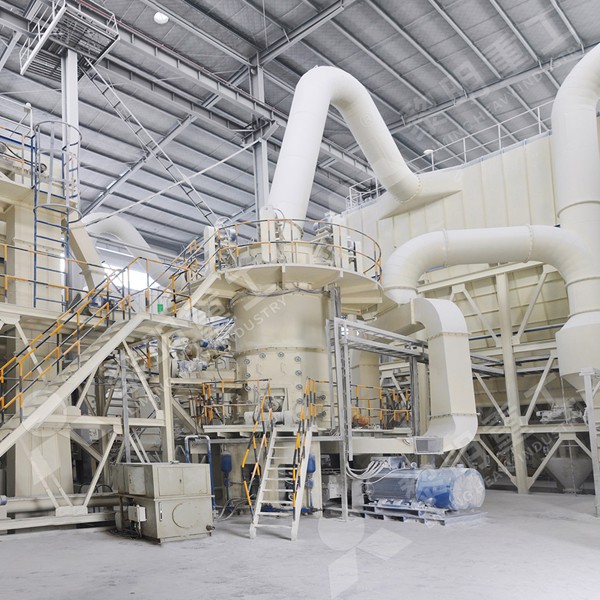
Another robust option is the MTW European Type Trapezium Mill, which is the upgrade product of traditional Raymond mill and pendulum mill. With patented technology, it offers high productivity, environmental protection, and energy saving. Its closed-loop system includes a grinding mill, separator, air blower, jaw crusher, vibrating feeder, hopper, dust collector, pipe, powder collector, and electric cabinet. Big lump materials are crushed to required size, then fed evenly into the mill via a variable-frequency belt feeder. The material is ground between rings and rollers, and fine particles move upward with the air flow. Those that cannot pass the separator fall back for regrinding. The air stream passes through the separator and returns to the blower for recycling, forming a closed system. The pulse dust collector ensures compliance with environmental standards. Capacity: 3–55 TPH, input size: 30–50 mm.
For smaller to medium-scale coal drying applications, the Raymond Mill is a reliable choice. Widely used in minerals grinding for metallurgy, building materials, chemicals, mining, and other fields, it processes non-flammable and non-explosive materials with Mohs hardness under 7 and humidity less than 6%. Output fineness ranges from 613 μm to 44 μm, adaptable to various user requirements. Capacity: 1.2–4.5 T/H, input size: 15–25 mm.
MW Micro Powder Mill (medium speed micro-grinding mill) absorbs advanced Swedish grinding technology and specializes in superfine powder processing. The finished product can reach d97 ≤ 5 μm (325–3250 mesh). Equipped with a pulse precipitator, it ensures a greener production process. Capacity: 0.5–25 T/H, input size: 10–20 mm. While primarily designed for ultra-fine grinding, it can be adapted for coal drying where very fine dry coal powder is needed.
Ball Mill is a classic grinding plant used widely in beneficiation, construction, and chemical industries. It is key equipment for milling after materials are crushed. In coal grinding-drying systems, the ball mill can be combined with a hot air supply for drying. The horizontal rotating device transmits power via the outer gear, and materials are transferred to the grinding chamber through the quill shaft. Inside, ladder or ripple liners and steel balls of different specifications grind the material by centrifugal force. The ground product is discharged through a discharging board. Capacity: 0.65–50 T/H, input size ≤ 25 mm.
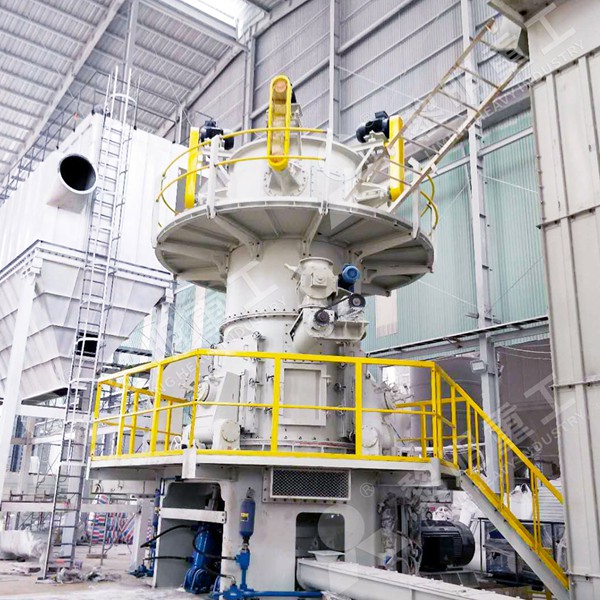
Working Principle of a Typical Coal Drying System with a Grinding Mill
In a typical system deployed by LIMING, the process begins with pre-crushing the raw coal to a specified size (e.g., 30–55 mm for LM mill) using a jaw crusher. The crushed coal is then conveyed to a hopper. A variable-frequency belt feeder ensures even, continuous feeding into the mill. Within the mill, hot drying gases (at temperatures typically ranging from 200°C to 400°C depending on coal moisture) are introduced from the bottom or side, creating a turbulent, high-velocity airstream. As the coal particles are ground between the rollers and the grinding table or ring, the hot gas evaporates the moisture. The gas lifts the ground particles upward to a dynamic classifier. Coarse particles are returned to the grinding zone, while fine powder meeting the desired fineness (e.g., 80% passing 200 mesh for cement kilns) passes through the classifier and is conveyed to a cyclone collector or bag filter for product recovery. The cleaned air is either recycled or exhausted to meet environmental regulations.
One key advantage of vertical roller mills (like LM) is that they integrate drying, grinding, and classification in a single unit, minimizing the footprint and energy consumption. The grinding pressure is adjustable, and the system can automatically respond to changes in coal moisture or feed rate, ensuring consistent product quality.
Applications in Key Industries
Coal grinding mills with drying systems are essential in:
- Cement industry: For preparation of coal dust as fuel for rotary kilns and precalciners. Drying is critical because raw coal often has high inherent moisture.
- Power generation: In coal-fired power plants, pulverized coal is dried to improve combustion efficiency and reduce emissions.
- Metallurgy: For blast furnace injection of pulverized coal, where moisture content must be below 2% to ensure stable combustion.
- Chemical industry: For coal gasification or as raw material in activated carbon production.
- Non-metallic mineral processing: For coal used in drying kilns or as fuel for industrial furnaces.
Why Choose LIMING for Coal Grinding-Drying Systems?
LIMING’s dedication to scientific research and technological progress has resulted in grinding mills that offer high drying efficiency, low energy consumption, and robust reliability. The mills are equipped with automatic control systems that maintain optimal temperature and pressure within the grinding chamber. In addition, LIMING provides comprehensive after-sales support including installation guidance, commissioning, and spare parts. With over 30 years of manufacturing experience, thousands of installations worldwide, and a focus on customer-specific solutions, LIMING ensures that each coal grinding-drying system is optimized for the particular coal type, moisture level, and throughput requirement.
Frequently Asked Questions
Q1: What is the maximum moisture content of coal that can be dried using a LIMING vertical roller mill?
A: The LM Vertical Roller Mill can handle coal with moisture content up to 20–25% when equipped with an appropriate hot gas generator. For higher moisture levels, a combined drying and grinding approach with pre-drying may be recommended. Our engineering team evaluates each case to design the optimal system.
Q2: Can the MTW European Type Trapezium Mill be used for coal with high abrasiveness?
A: Yes. The MTW mill features durable materials and is designed for grinding materials with moderate abrasiveness. For high-abrasive coal (e.g., with high silica content), we recommend using optional wear-resistant liners and periodic roller replacement to maintain efficiency. A life-cycle assessment is provided during the quotation stage.
Q3: What is the typical drying gas temperature range used in a coal grinding-drying mill?
A: The temperature typically ranges from 200°C to 400°C at the mill inlet, depending on coal moisture, fineness requirement, and safety considerations. Lower temperatures are used for high-volatile coals to avoid ignition risk. The mill’s control system monitors and adjusts the temperature automatically.
Q4: How does LIMING ensure environmental compliance for coal grinding-drying systems?
A: All LIMING mills can be equipped with pulse jet dust collectors or bag filters that achieve particulate emission levels below 30 mg/Nm³. The closed-loop design for certain mills (like MTW) minimizes dust leakage. Additionally, we offer inert gas purging and explosion venting options to ensure safety and compliance with local regulations.
Q5: What is the typical capacity range for a coal grinding mill used in a drying system?
A: Depending on the mill type, capacities range from 0.5 T/H (MW Micro Powder Mill) to 400 T/H (LM Vertical Roller Mill). For most industrial coal drying applications, capacities between 10 and 100 T/H are common. LIMING offers custom sizing based on throughput, coal properties, and required fineness.


