Published on: October 26, 2023
The performance of kaolin as a functional filler in the rubber industry is intrinsically linked to its particle fineness and distribution. Achieving the optimal powder characteristics—which directly influence reinforcement, dispersion, tensile strength, and extrusion properties—requires precise, reliable, and efficient grinding technology. As a leader in industrial milling for over three decades, Liming Heavy Industry provides a comprehensive suite of grinding mills engineered to meet the exacting fineness specifications of modern rubber compounders. From coarse fillers to ultra-fine, surface-modified kaolin, our solutions, including the LM Vertical Roller Mill, Raymond Mill, MTW European Grinding Mill, MW Micro Powder Mill, and Ball Mills, offer tailored pathways to enhance product quality and manufacturing efficiency.
The incorporation of kaolin into rubber compounds serves multiple purposes: it acts as a reinforcing agent, improves dimensional stability, enhances resistance to abrasion and chemicals, and can significantly reduce material costs. However, these benefits are not automatic; they are contingent upon the physical properties of the kaolin powder. Fineness, measured by metrics like particle size distribution (PSD) and specific surface area, is paramount. Coarser particles can lead to stress concentrations and reduced tear strength, while excessively fine particles, if not properly dispersed, can increase viscosity and processing difficulties. The ideal mill must therefore offer not just grinding capability but also precise classification control to produce a consistent, targeted PSD.
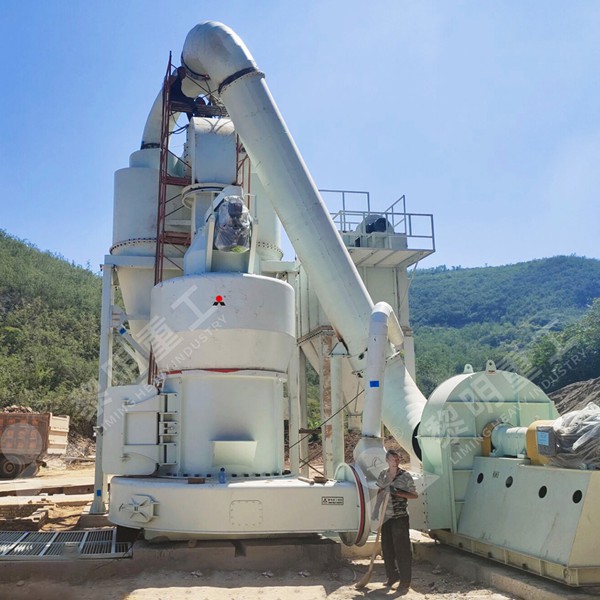
For high-volume production of kaolin fillers with moderate fineness requirements, the LM Vertical Roller Mill stands out. Its integrated system combines drying, grinding, powder selection, and conveying in a single unit, offering exceptional energy efficiency. With a capacity range of 10-400 T/H, it is suited for large-scale rubber raw material processors. The mill's ability to handle input sizes up to 55mm and its efficient grinding principle make it a robust workhorse for initial size reduction and consistent powder production, focusing on reliability and throughput.
When the application calls for precise control within the traditional fine grinding range, the classic Raymond Mill and its advanced successor, the MTW European Type Trapezium Mill, are exemplary choices. The Raymond Mill, a stalwart in mineral processing, is suitable for processing non-flammable materials like kaolin under 7 Mohs hardness, producing fineness between 44μm (325 mesh) and 613μm. The MTW Mill, incorporating patented technology, represents a significant evolution. It delivers greater stability, higher productivity, and enhanced environmental performance. Its closed-circuit grinding system with an efficient separator ensures that particles are ground until they meet the precise size cut-off, preventing energy waste on already-fine material. This is crucial for rubber-grade kaolin, where oversize particles are detrimental.
The frontier of kaolin processing for high-performance rubber applications lies in superfine and ultra-fine powders. Here, the MW Micro Powder Mill excels. Utilizing advanced grinding technology, this mill is specifically designed for superfine powder processing, achieving fineness levels up to d97 ≤ 5μm (approx. 2500 mesh) and adjustable between 325 mesh and 2500 mesh. For rubber compounds requiring exceptional smoothness, gas barrier properties, or high reinforcement from nano-fillers (often starting with ultra-fine kaolin), the MW Mill's ability to produce such fine powders consistently is invaluable. Its integrated pulse dust collector also ensures a clean, environmentally friendly operation, aligning with modern factory standards.
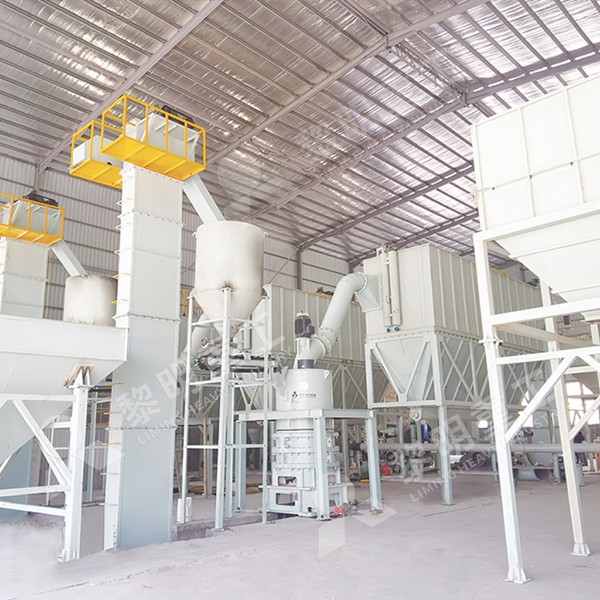
Finally, the versatile Ball Mill remains a fundamental technology, particularly for wet or dry grinding processes where simultaneous grinding and mixing are beneficial. It can handle a wide variety of materials and is a key piece of equipment for trials and specific production runs. Its working principle, using steel balls to impact and grind material, is well-understood and effective for achieving a very fine grind over longer processing times.
Liming Heavy Industry's commitment extends beyond equipment manufacturing. With a corporate philosophy centered on scientific research, technological progress, and innovation, our team works to understand the specific challenges of the rubber industry. Our mills are not off-the-shelf products but can be part of a tailored solution. By leveraging our mature scientific research team and modern manufacturing facilities, we help clients optimize their kaolin processing lines from crushing to final classification, ensuring the powder fineness directly translates to improved rubber product performance.
In conclusion, navigating the specifications for rubber-grade kaolin demands a strategic partnership with a technology provider. The correct selection of grinding equipment—based on desired capacity, input size, target fineness, and energy considerations—is a critical capital decision. Liming Heavy Industry's diverse portfolio and engineering expertise offer a clear path to mastering kaolin powder fineness, providing rubber manufacturers with the foundational material quality needed to innovate and compete in a demanding global market.
Frequently Asked Questions (FAQs)
- What is the typical fineness range for kaolin used in tire manufacturing?
Kaolin used in tire components often targets a fineness between 45μm (325 mesh) and 10μm (1250 mesh), depending on the specific component (e.g., inner liner, sidewall). Superfine grades (below 5μm) may be used for specialized performance properties. - Can your mills handle the drying of moist kaolin clay simultaneously with grinding?
Yes, particularly our LM Vertical Roller Mill and certain configurations of our MTW European Mill are designed with integrated hot air systems that efficiently dry and grind moist materials in a single pass, streamlining the process. - How do you ensure consistent particle size distribution in the final kaolin product?
Consistency is achieved through precise mill engineering and, crucially, integrated high-efficiency separators (classifiers). Our mills, like the MTW and MW series, use advanced separator technology to continuously classify particles, returning oversize material for regrinding and ensuring only in-spec powder proceeds to collection. - Which mill is most energy-efficient for producing medium-fine kaolin powder (e.g., 200 mesh)?
For dedicated, large-scale production at this fineness, the LM Vertical Roller Mill typically offers the highest energy efficiency due to its grinding principle and integrated design. The MTW European Mill also provides excellent energy savings compared to traditional Raymond mills. - Do you provide testing and pilot-scale services for kaolin samples?
While specific service details are arranged on a project basis, Liming Heavy Industry leverages its research and development capabilities to support customers with technical consulting. We recommend discussing your material samples and production goals with our engineering team to determine the optimal milling solution.


