Published: October 26, 2023
For industries demanding exceptionally high-whiteness kaolin products, selecting the optimal grinding technology is paramount. This article explores the specialized application of Raymond Mill technology from LIMING HEAVY INDUSTRY for processing high-grade kaolin, focusing on achieving superior brightness, fine particle size distribution, and consistent quality while maintaining operational efficiency and environmental compliance. We will delve into the technical adaptations, working principles, and the specific advantages our milling solutions offer for this sensitive mineral.
Kaolin, or china clay, is a valued industrial mineral prized for its brightness, whiteness, and fine particle size. In applications ranging from premium paper coatings and ceramics to high-end paints and polymers, the final product's whiteness index is a critical quality parameter. Traditional grinding methods can introduce impurities or cause discoloration, compromising this key characteristic. At LIMING HEAVY INDUSTRY, with over three decades of expertise in manufacturing medium and large-scale crushing and grinding equipment, we have refined our Raymond Mill technology specifically to address the challenges of processing sensitive materials like high-whiteness kaolin. Our commitment to scientific research and technological innovation drives us to develop solutions that protect material integrity while delivering exceptional fineness and throughput.
The core challenge in high-whiteness kaolin processing lies in minimizing contamination during the size reduction phase. Metallic wear from grinding components is a primary concern, as iron or other metal impurities can significantly reduce the brightness of the final powder. Our Raymond Mill series for such applications incorporates several key design philosophies. First, the grinding ring and rollers can be lined with specialized, wear-resistant ceramic materials or other non-metallic composites. This drastically reduces the risk of metallic contamination. Second, the internal airflow system and classifier are engineered for high precision, ensuring efficient separation of fine particles without over-grinding, which can also affect color properties.
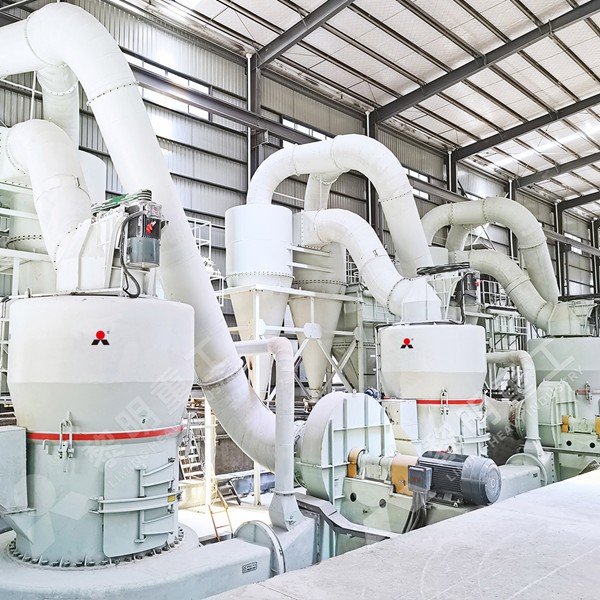
Our standard Raymond Mill operates on a well-established principle perfectly suited for non-metallic minerals. Material is fed into the grinding chamber where it is pulverized between stationary rollers and a rotating grinding ring. The crushed material is then carried by an upward airflow to an integrated classifier. Here, particles meeting the target fineness (adjustable between 613μm and 44μm) pass through, while coarser particles fall back for regrinding. This closed-circuit system promotes efficiency and consistent output. For kaolin, we enhance this system with advanced sealing technologies to prevent ingress of external contaminants and employ high-efficiency cyclones and pulse-jet baghouse dust collectors. These collectors are not only crucial for meeting stringent environmental standards but also for recovering the valuable, ultra-fine kaolin product, maximizing yield.
Beyond contamination control, achieving the desired particle size distribution (PSD) is vital for kaolin's performance in its end-use. A narrow, controlled PSD enhances opacity, gloss, and viscosity. The dynamic classifier in our mills allows for real-time adjustment of fineness during operation without stopping the mill. Operators can fine-tune the speed of the classifier rotor to precisely select the particle cut-point, ensuring the output consistently meets the strict specifications required for high-value kaolin products. This flexibility is a significant advantage over less adjustable milling systems.
While our Raymond Mill is a standout solution for many kaolin processing lines, LIMING HEAVY INDUSTRY's comprehensive product portfolio allows for tailored system design. For projects requiring ultra-fine grinding down to 5μm (d97), our MW Micro Powder Mill, which incorporates advanced Swedish grinding technology, presents an excellent alternative. It is particularly adept at producing superfine kaolin powders for specialty applications. For larger capacity requirements or raw kaolin with higher moisture content, our LM Vertical Roller Mill, which integrates drying and grinding, may be recommended. Our engineering team, based in our Hi-TECH Industry Development Zone facilities in Zhengzhou, works closely with clients to analyze raw material properties and product goals to recommend the most effective and economical grinding solution.
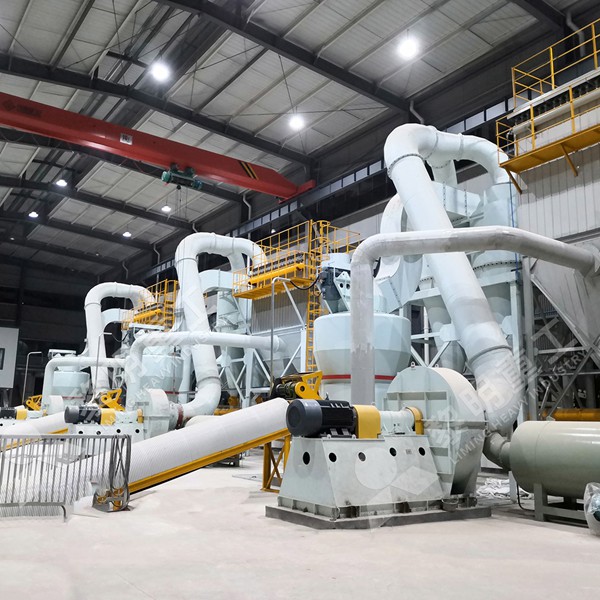
Operational reliability and energy efficiency are integral to our design. The grinding mechanisms in our mills are engineered for smooth operation with minimal vibration, reducing mechanical stress and maintenance downtime. Furthermore, the closed-circuit grinding system with internal material recirculation is inherently more energy-efficient than open systems, as it minimizes the waste of power on already-sized material. This focus on efficiency aligns with our corporate strategy of technological improvement and sustainable development, ensuring our clients' operations remain competitive and responsible.
In conclusion, processing high-whiteness kaolin requires a harmonious blend of precision engineering, contamination control, and operational intelligence. LIMING HEAVY INDUSTRY's Raymond Mill, backed by decades of manufacturing excellence and a persistent R&D ethos, provides a proven and adaptable platform for this demanding task. By prioritizing material purity through specialized wear protection, offering precise particle size control, and ensuring system-wide efficiency and cleanliness, we empower producers to unlock the full value and performance of their kaolin resources.
Frequently Asked Questions (FAQ)
1. What is the primary advantage of using a Raymond Mill for kaolin over a ball mill?
Raymond Mills generally offer better control over particle size distribution and generate less heat, which is crucial for heat-sensitive materials. They are also more energy-efficient for fine grinding applications and, when equipped with ceramic liners, provide superior protection against metallic contamination that can degrade kaolin whiteness.
2. Can your mills handle kaolin with varying moisture content?
Yes. Our standard Raymond Mill is suitable for materials with humidity less than 6%. For feed material with higher moisture, we recommend our LM Vertical Roller Mill, which integrates a highly efficient drying function using hot air sourced from a gas furnace or from exhaust gases from other processes.
3. How do you ensure the final kaolin product remains free from contamination?
We employ multiple strategies: offering ceramic or special alloy linings for grinding components, using high-quality sealing systems throughout the mill and ducts, and designing fully enclosed systems with negative pressure to prevent dust leakage and external contaminant ingress.
4. What fineness range can be achieved for kaolin with your equipment?
Our standard Raymond Mill can produce powder in the range of 613μm to 44μm (approximately 30 to 400 mesh). For ultra-fine kaolin products, our MW Micro Powder Mill can achieve fineness up to d97 ≤ 5μm (over 2500 mesh), adjustable within a wide spectrum.
5. Do you provide complete system solutions or just the grinding mill?
We provide complete system solutions. A typical grinding line from LIMING includes the jaw crusher (for initial size reduction), vibrating feeder, grinding mill (Raymond, Vertical, or Micro Powder), classifier, pipeline system, pulse dust collector, electrical control cabinet, and all necessary motors and drives, ensuring a seamless and optimized turnkey operation.


