Published: October 26, 2023
This document provides a comprehensive technical and commercial overview for the procurement of a Raymond Mill system specifically engineered for limestone processing. Drawing upon decades of industrial machinery expertise, we detail the operational principles, configuration options, and performance specifications of our advanced grinding solutions. The focus is on delivering a reliable, efficient, and scalable system capable of producing high-quality limestone powder for diverse industrial applications, from construction materials to flue gas desulfurization. Our commitment to integrated R&D, precision manufacturing, and sustainable design ensures a quotation that represents long-term value and operational excellence.
For over three decades, Liming Heavy Industry Co., Ltd. has stood at the forefront of crushing and grinding technology. Established in 1987 and headquartered in the HI-TECH Industry Development Zone of Zhengzhou, our modern facilities span over 80,000 square meters, dedicated to the research, manufacturing, and sales of large and medium-sized processing equipment. Our corporate philosophy is built on a foundation of scientific management, precision engineering, and continuous innovation, allowing us to lead in both domestic and international machinery markets. This expertise is directly channeled into our milling product line, where the Raymond Mill holds a pivotal role for mineral processing.
The Raymond Mill, a cornerstone of our grinding portfolio, is engineered for the efficient processing of non-flammable, non-explosive materials with Mohs hardness below 7 and humidity less than 6%. Its versatility makes it exceptionally suitable for limestone, transforming raw feed with an input size of 15-25mm into fine powders ranging from 613μm to 44μm (approximately 30 to 325 mesh). This fineness range caters to a broad spectrum of requirements, from coarse fillers to finer additives. The mill's classic design, refined over years, ensures stable operation with a typical capacity between 1.2 to 4.5 tons per hour, making it an ideal choice for mid-scale production lines.
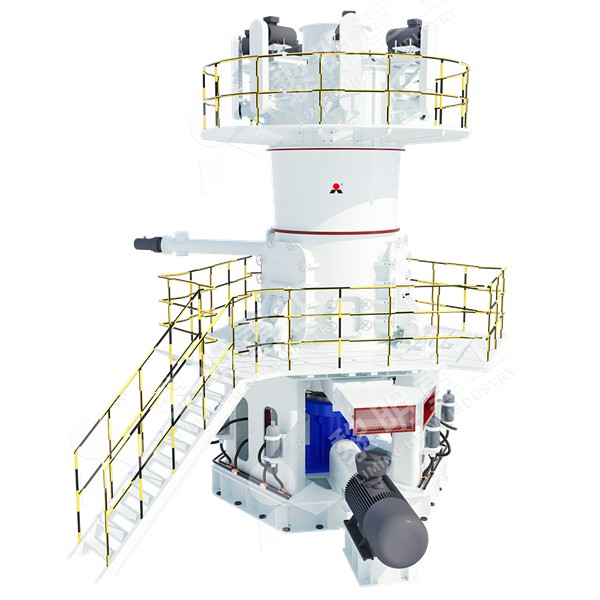
While our standard Raymond Mill offers proven performance, for projects demanding higher capacity, finer output, or enhanced energy efficiency, we recommend evaluating our next-generation MTW European Type Grinding Mill. This system represents a significant technological evolution from traditional Raymond and pendulum mills. It incorporates patented technology for improved grinding efficiency and lower energy consumption per ton of output. With a capacity range of 3 to 55 tons per hour and the ability to handle feed sizes up to 50mm, the MTW mill is engineered for large-scale limestone powder production, particularly for power plant desulfurization and high-volume industrial filler markets.
The working principle of our grinding systems is designed for reliability and closed-loop operation. For instance, in an MTW mill line, the process begins with a jaw crusher reducing large limestone lumps. A vibrating feeder then uniformly supplies material to the grinding chamber. Inside the mill, rollers rotate against a stationary ring, crushing the material. The ground powder is carried upward by an air stream to a high-efficiency separator, where oversized particles are rejected and returned for regrinding, while the qualified fine powder proceeds to a pulse-jet dust collector. The cleaned air is recirculated by a blower, creating an environmentally sealed system that minimizes dust emission and complies with stringent environmental standards.
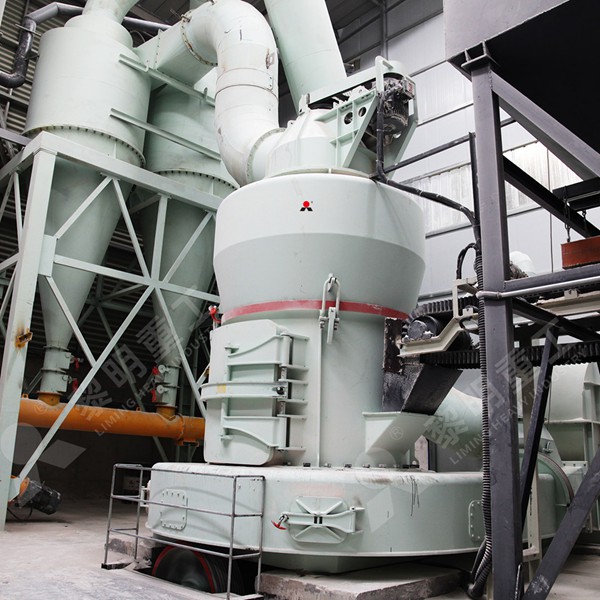
Our technical proposal is not merely for a standalone machine but for a complete, optimized solution. The system typically includes the core mill, a high-efficiency separator for precise particle size control, a reliable air blower, a primary jaw crusher for size reduction, automated feeding equipment, and a high-performance pulse dust collector. All components are integrated through a central electric control cabinet, enabling semi-automatic or fully automatic operation. This holistic approach ensures seamless interoperability, maximizes system uptime, and simplifies maintenance. Our R&D team, a core pillar of our corporate strategy, continuously refines these systems, focusing on improving product competitiveness through technological advancement and innovation at the industry's frontier.
When considering a mill for limestone, it is crucial to align the equipment's capabilities with the final product's target specifications and the project's overall scale. For ultra-fine limestone powders (d97 ≤ 5μm), our MW Micro Powder Mill, which incorporates advanced European grinding technology, may be the optimal choice. For very high-capacity or wet grinding scenarios, a Ball Mill could be considered. Our engineering team is prepared to conduct a detailed analysis of your raw material characteristics, desired output fineness, and production goals to recommend the most technically sound and economically viable configuration. The final quotation will encompass all necessary machinery, foundational drawings, technical documentation, and a clear outline of our commissioning and after-sales support services.
Frequently Asked Questions (FAQs)
- What is the typical lead time for the delivery and installation of a complete Raymond Mill system?
Lead times vary based on system configuration and order volume. Generally, for a standard system, delivery can be scheduled within 60-90 days after order confirmation, with installation and commissioning requiring an additional 2-3 weeks on-site, subject to site preparedness. - How does the system ensure consistent product fineness, and can it be adjusted during operation?
Fineness is primarily controlled by the speed of the integrated classifier or separator. Our systems feature adjustable classifier rotors or separator blades, allowing operators to fine-tune the product size distribution in real-time without stopping production, ensuring consistent output quality. - What are the key wear parts in the Raymond Mill, and what is their expected service life?
The primary wear components are the grinding rollers and rings. Their service life depends heavily on the abrasiveness of the limestone. Using high-chromium or ceramic materials, these parts can typically process between 5,000 to 15,000 tons of material before requiring replacement or rebuilding. - What level of dust emission does the system produce, and how is it controlled?
The system is designed as a negative-pressure, closed-loop circuit. The integrated pulse-jet baghouse dust collector ensures dust emissions are typically below 20 mg/Nm³, fully complying with international environmental protection standards for industrial air quality. - Do you provide training for our operational and maintenance staff?
Yes, comprehensive training is a standard part of our commissioning service. Our engineers will provide detailed operational procedures, safety guidelines, and routine maintenance training for your technical team to ensure smooth and efficient long-term operation.


