Published on: October 26, 2023
An integrated limestone powder production plant represents the pinnacle of efficiency and technological integration in mineral processing. By combining advanced crushing, grinding, classification, and conveying systems into a single, cohesive unit, such plants deliver consistent, high-quality limestone powders essential for industries ranging from construction and agriculture to environmental desulfurization and advanced materials. For over three decades, Liming Heavy Industry Co., Ltd. has been at the forefront of designing and manufacturing the core equipment that makes these integrated plants possible. Leveraging a modern R&D-driven approach and precision engineering, the company provides tailored solutions that optimize throughput, particle size distribution, and energy consumption, transforming raw limestone into a versatile industrial commodity.
The heart of any integrated limestone powder plant is its grinding system. Liming Heavy Industry offers a portfolio of mills, each engineered for specific fineness requirements and production scales. For high-capacity production of coarse to medium-fine powders, the LM Vertical Roller Mill stands out. Its integrated design combines drying, grinding, powder selection, and conveying in one unit, making it exceptionally efficient for processing limestone with moisture. With capacities up to 400 T/H, it is a workhorse for large-scale projects in power plant desulfurization and building materials.
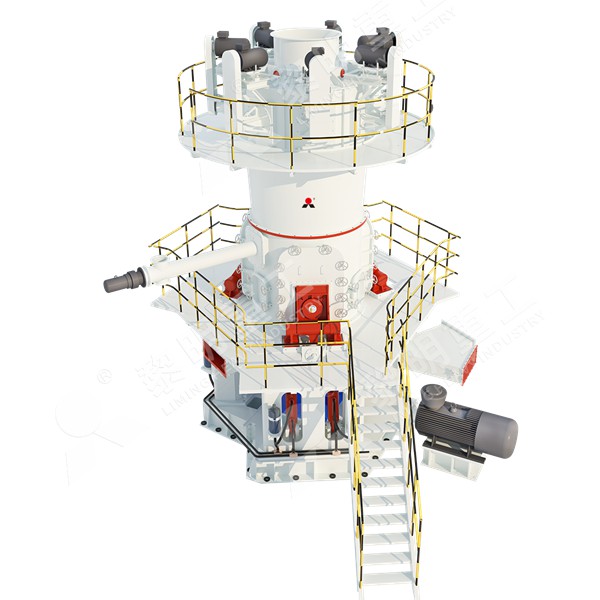
When the application demands finer powders, the MTW European Type Grinding Mill and the Raymond Mill come into play. The MTW mill, an advancement over traditional designs, incorporates patented technology for stable performance and energy savings. It is particularly effective for producing powders for heavy calcium carbonate and non-metallic mineral markets. The Raymond Mill, a proven technology, remains a reliable choice for processing non-flammable materials under Mohs hardness 7, offering fineness between 44μm and 613μm. Its simplicity and durability make it a staple in many mineral grinding circuits.
For ultra-fine and superfine limestone powder—critical in plastics, paints, and high-end ceramics—the MW Micro Powder Mill is the technological answer. This mill absorbs advanced grinding technology to achieve fineness up to d97 ≤ 5μm (3250 mesh). Its system is designed with a pulse dust collector, ensuring the production process is not only precise but also environmentally green. Complementing these, the classic Ball Mill offers versatility for grinding limestone alongside other materials, commonly used in beneficiation and chemical processes where simultaneous milling is required.
However, an integrated plant is more than just a mill. It is a symphony of coordinated components. As detailed in the working principle of the MTW system, the process begins with a jaw crusher reducing large limestone lumps. A vibrating feeder then ensures a consistent flow to the mill. Inside the mill, grinding occurs between rollers and rings, with an air classifier (separator) continuously sorting particles. Oversize material is recirculated, while finished powder is conveyed via air flow to collectors. The entire system is a closed-loop, negative-pressure design, equipped with high-efficiency baghouse dust collectors to achieve near-zero emissions. This holistic approach minimizes manual handling, reduces energy loss, and guarantees product uniformity.
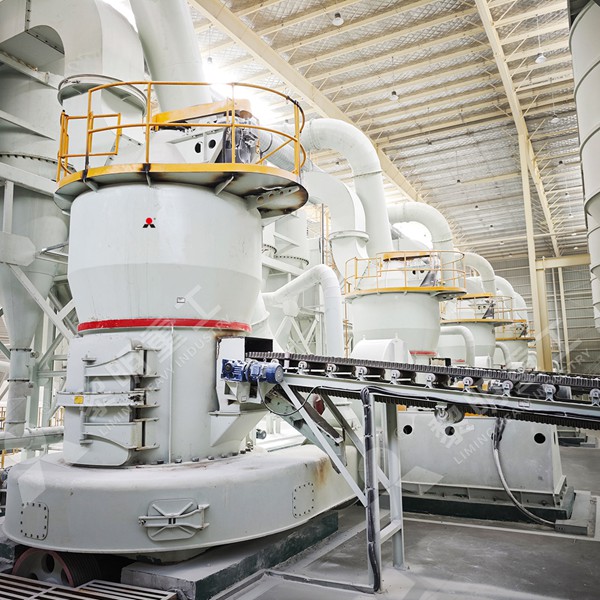
Liming Heavy Industry’s strength lies in its ability to engineer these components into a seamless plant. Founded in 1987 and headquartered in Zhengzhou’s HI-TECH Industry Development Zone, the company’s 80,000 m² R&D and manufacturing complex is a hub of innovation. By persisting in a strategy of “scientific research tackling key problems,” Liming develops solutions aimed at the industry’s technological frontier. The integrated limestone plant embodies this philosophy: it is a manifestation of precision manufacturing, where equipment like the LM Vertical Mill’s automatic control system and the MW Mill’s advanced grinding mechanics work in concert to boost overall productivity and competitiveness for the end-user.
Ultimately, investing in an integrated limestone powder production plant is an investment in future-proofing one’s operations. It consolidates multiple process stages, reduces footprint, lowers operational costs through automation and energy recovery, and ensures compliance with stringent environmental standards. With Liming Heavy Industry’s comprehensive equipment range and system engineering expertise, producers can configure a plant that precisely matches their raw material characteristics and target market specifications, from construction fillers to high-purity industrial additives.
Frequently Asked Questions (FAQs)
1. What are the key factors in selecting the right mill for an integrated limestone plant?
The choice depends primarily on the required product fineness, desired capacity (T/H), and the moisture content of the raw limestone. For instance, the LM Vertical Roller Mill is ideal for high-capacity drying and grinding, while the MW Micro Powder Mill is dedicated to superfine powder production.
2. How does an integrated plant ensure environmental protection?
Modern integrated plants employ closed-circuit, negative-pressure systems with pulse-jet baghouse dust collectors at all transfer points. This design contains dust entirely, ensuring emissions meet strict national environmental standards.
3. Can the plant handle variations in limestone hardness or feed size?
Yes. The system design includes primary crushing (e.g., jaw crusher) and pre-homogenization stages to normalize feed. The grinding mills themselves, like the MTW or Ball Mill, are engineered to handle a range of material hardness within specified limits.
4. What level of automation can be expected?
Core equipment like the LM Vertical Mill comes with automatic electric control systems that integrate grinding parameters, drying temperature, and powder selection. Full-plant control systems can be implemented for centralized monitoring and operation.
5. Is the plant suitable only for limestone?
While optimized for limestone, the core grinding equipment is versatile. The same plant design, with minor adjustments, can often process similar non-metallic minerals like calcite, dolomite, gypsum, or coal slag, as highlighted in the application notes for each mill.


