Published: October 26, 2023
For industries requiring consistent, high-quality limestone powder, integrating a Raymond mill with a sophisticated automated packing system represents the pinnacle of processing efficiency and product integrity. This article explores the technical synergy of such a system, drawing on the engineering expertise and reliable equipment manufacturing of LIMING HEAVY INDUSTRY. We will delve into the operational principles, system components, and the significant benefits—from enhanced productivity to minimized contamination—that this integrated solution delivers for modern mineral processing applications.
At the heart of this production line is the Raymond mill, a time-tested and robust grinding machine. Our Raymond mill is engineered for processing non-flammable, non-explosive materials with a Mohs hardness under 7 and humidity below 6%, making it perfectly suited for limestone. It operates on the principle of grinding via spring-loaded rollers against a rotating ring. Crushed limestone is fed into the grinding chamber where it is pulverized. The resulting powder is then carried by an air stream to a classifier; oversized particles are returned for regrinding, while fine powder meeting the specified fineness (adjustable between 44μm and 613μm) passes through. This closed-circuit system ensures precise control over the final product's particle size distribution, a critical factor for applications in plastics, paints, coatings, and construction materials.
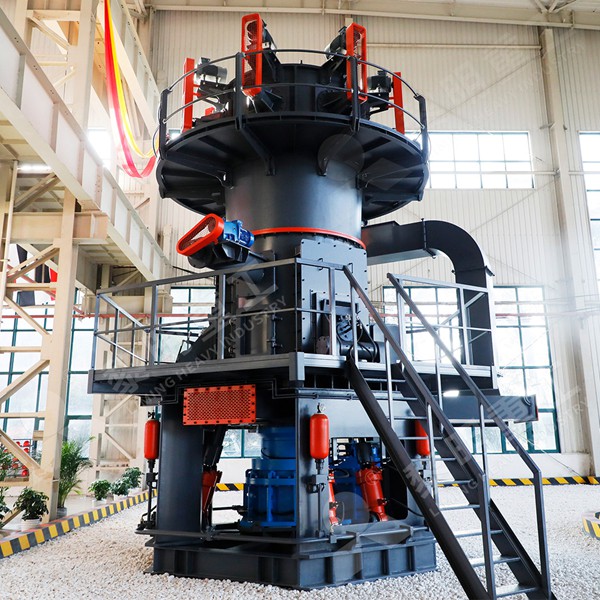
The true advancement, however, lies in seamlessly connecting this milling process to an automated packing system. Once the limestone powder is collected via a high-efficiency cyclone or bag filter, it is conveyed—typically via screw or pneumatic conveyor—to storage silos. From here, the packing system takes over. Modern systems feature fully automated valve bag packers or big bag stations. These units precisely weigh the powder, fill the bags, and seal them with minimal dust emission. The integration is managed by a centralized Programmable Logic Controller (PLC), which synchronizes the mill's output with the packing line's speed, creating a continuous, synchronized workflow from raw stone to packaged product.
Why is this integration so crucial? First, it dramatically reduces human intervention, which directly translates to lower labor costs and a significant decrease in the risk of product contamination. Limestone powder for food, pharmaceutical, or high-end polymer applications demands exceptional purity. An automated, enclosed packing line preserves the quality achieved during grinding. Second, it enhances operational efficiency and consistency. The system can run continuously, with the packing unit adapting to the mill's output, eliminating bottlenecks and maximizing throughput. Finally, it improves the working environment by containing dust, ensuring compliance with stringent international environmental and occupational health standards.
LIMING HEAVY INDUSTRY brings over three decades of experience in manufacturing crushing and grinding equipment to this solution. Founded in 1987 and headquartered in Zhengzhou's HI-TECH Industry Development Zone, our corporate philosophy is rooted in scientific research, precision manufacturing, and technological innovation. Our Raymond mills are built with durability and performance in mind, featuring high-quality wear-resistant materials and stable mechanical structures. When we design a complete system with an integrated packing line, we consider every aspect—from the initial jaw crusher that reduces the limestone feed size to the final dust collector that ensures a clean plant. Our commitment to "scientific research tackling key problems" ensures our systems are not just reliable, but also incorporate advancements in energy efficiency and automation.
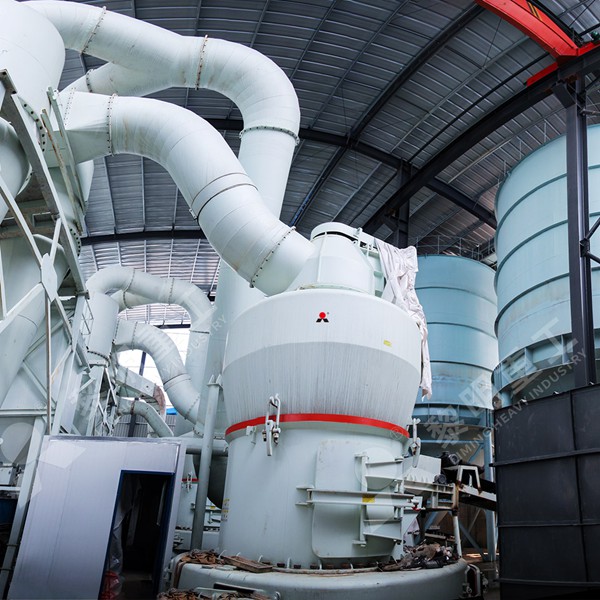
For clients, the benefits are multifaceted. Beyond the already mentioned gains in product quality and plant cleanliness, the integrated system offers remarkable flexibility. The fineness of the powder can be quickly adjusted at the mill's classifier to produce different grades for various market demands, and the packing system can be configured for different bag sizes (e.g., 25kg paper bags, 1-ton FIBCs) on the same line. Furthermore, the overall energy consumption per ton of packaged product is optimized, as the synchronized process eliminates unnecessary stop-start cycles of individual machines. This holistic approach, backed by LIMING's comprehensive after-sales support, provides a future-proof investment for businesses looking to scale their limestone powder production reliably and sustainably.
In conclusion, the marriage of a robust Raymond mill with a smart, automated packing system creates a powerhouse solution for the limestone powder industry. It transforms a multi-stage, potentially disjointed process into a smooth, continuous, and highly controlled operation. Leveraging LIMING HEAVY INDUSTRY's engineering prowess ensures this system is built on a foundation of reliability, innovation, and a deep understanding of industrial grinding needs. For any enterprise aiming to lead in the competitive market of mineral powders, such an integrated line is not merely an option but a strategic imperative for quality, efficiency, and growth.
Frequently Asked Questions (FAQs)
- What is the typical moisture content limit for limestone processed in your Raymond mill system?
Our standard Raymond mill is designed to handle materials with a moisture content below 6%. For limestone with higher inherent moisture, we can integrate auxiliary drying equipment into the system prior to the grinding stage. - Can the packing system handle different types of packaging materials?
Yes, the automated packing station can be configured to work with various packaging options, including woven polypropylene valve bags, paper bags, and large Flexible Intermediate Bulk Containers (FIBCs or big bags), allowing for flexibility based on customer logistics and market requirements. - How is dust control managed throughout the integrated milling and packing process?
The system is a closed-loop design. Primary dust collection occurs at the mill's output via cyclones and bag filters. The packing station is equipped with its own local dust extraction hoods and is connected to the central pulse-jet dust collector, ensuring near-zero visible dust emission and a clean plant environment. - What level of automation is possible for the entire line?
The system can be equipped with a full PLC-based control panel. This allows for centralized monitoring and control of the entire process—from feed rate and grinding fineness to bag weight and production count—enabling one-operator supervision and data logging for quality traceability. - Does LIMING HEAVY INDUSTRY provide support for system layout and foundation planning?
Absolutely. We provide complete technical support, including detailed plant layout drawings, foundation plans, and installation guidance. Our service extends from initial consultation and design to installation supervision, commissioning, and operator training.


