Published on: October 26, 2023
For industries requiring efficient and high-quality limestone powder production, a complete Raymond mill plant offers a robust, integrated solution. This system, built around the core grinding technology of Raymond mills or their advanced successors like the MTW European Type Grinding Mill, is engineered to handle the entire process from raw material feeding to fine powder collection. It is particularly suited for producing powders in the range of 613μm to 44μm (80-325 mesh), which are essential for applications such as power plant desulfurization, construction materials, and chemical manufacturing. A well-designed plant integrates crushing, grinding, classifying, and dust collection into a cohesive, automated unit, ensuring consistent output, operational stability, and compliance with environmental standards. As a leader in mineral processing equipment, Liming Heavy Industry provides comprehensive plant solutions that leverage decades of engineering expertise to deliver reliability and performance for limestone processing operations worldwide.
Liming Heavy Industry Co., Ltd., with over three decades of experience in manufacturing crushing and grinding equipment, specializes in designing complete production lines. Our philosophy centers on integrating advanced milling technology with automated control systems to create plants that are not only productive but also energy-efficient and environmentally responsible. For limestone processing, the heart of the plant is the grinding mill itself. While the traditional Raymond Mill remains a widely recognized workhorse for medium-fine grinding, our technological evolution has led to the development of the MTW European Type Trapezium Mill. This mill represents a significant upgrade, incorporating patented technology that enhances grinding efficiency, increases capacity, and reduces energy consumption per ton of output. It is specifically committed to large-scale non-metallic mineral powder making, making it an ideal centerpiece for a modern limestone processing plant.
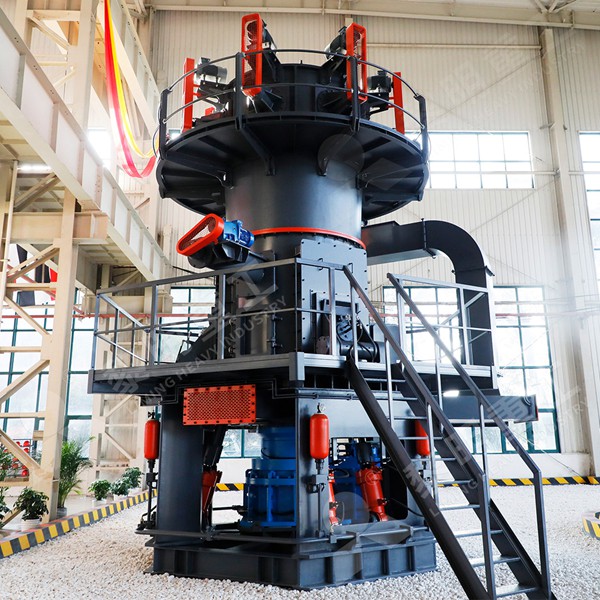
The working principle of a complete Raymond mill plant is a closed-circuit, negative pressure system that prioritizes powder quality and dust control. The process begins with primary crushing. Large lumps of limestone are reduced to a feed size of 15-50mm using a jaw crusher. A vibrating feeder then ensures a steady and controlled flow of material into the grinding mill. Inside the mill, the material is ground between the rollers and the grinding ring. The ground powder is carried upward by the airflow generated by an induced draft fan to a high-efficiency classifier. Here, particles that meet the required fineness pass through and proceed to the cyclone collector for product separation, while oversized particles are rejected and returned to the grinding chamber for further milling. This internal circulation is key to achieving a uniform product size.
The entire airflow system is sealed and operates under negative pressure, which prevents dust leakage. A pulse jet baghouse dust collector is an integral component, ensuring that any escaping fine particles are captured before the air is exhausted, guaranteeing that the plant meets stringent environmental protection standards. This holistic approach—from controlled feeding and efficient grinding to precise classification and thorough dedusting—defines the completeness of the plant. It transforms raw limestone into a consistent, high-value powder with minimal manual intervention and maximal operational safety.
Beyond the core grinding unit, the selection of auxiliary equipment is crucial for optimal plant performance. This includes jaw crushers for size reduction, variable-frequency belt feeders for precise feed rate control, high-pressure centrifugal induced draft fans for maintaining system airflow, and advanced pulse dust collectors. Liming Heavy Industry provides all these components as a matched system, ensuring compatibility and seamless operation. Our plants are designed with flexibility in mind, capable of producing various fineness levels to meet different market demands, whether for coarse fillers or finer additives. The control system, often featuring PLC-based automation, allows for centralized monitoring and adjustment of key parameters, leading to stable operation and reduced labor costs.
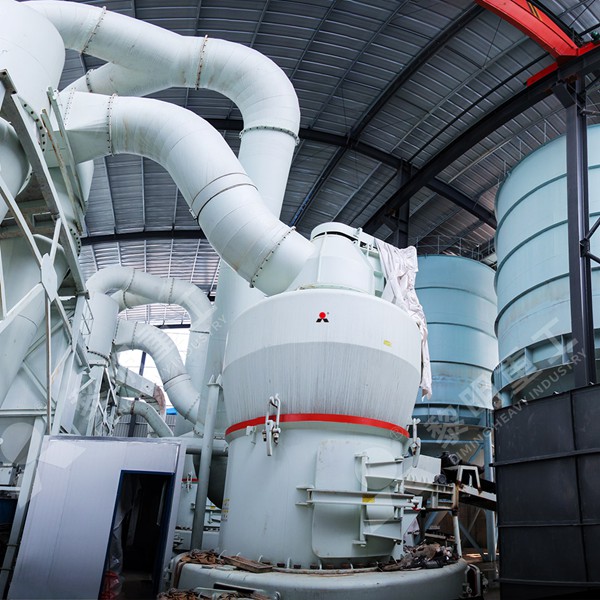
For applications demanding even finer powders, such as high-grade coatings or advanced plastics, the plant configuration can be adapted. While the Raymond or MTW mill handles the bulk of grinding to a fine level, an additional stage using a superfine mill like the MW Micro Powder Mill can be integrated. The MW mill, absorbing advanced grinding technology, is capable of producing powders up to d97 ≤ 5μm (2500 mesh). This two-stage approach—coarse grinding followed by ultra-fine grinding—provides exceptional flexibility for producers targeting diverse product portfolios from a single raw material source like limestone.
In conclusion, a complete Raymond mill plant from Liming Heavy Industry is more than just an assembly of machines; it is a turnkey solution engineered for the specific challenges of limestone processing. It combines proven grinding mechanics with modern automation and environmental controls to deliver a reliable, efficient, and clean production line. Our commitment to scientific research and technological innovation ensures that our plants incorporate the latest advancements in energy savings and powder quality control, providing our clients with a competitive edge in the non-metallic mineral industry.
Frequently Asked Questions (FAQ)
Q1: What is the main difference between a traditional Raymond Mill and the MTW European Type Grinding Mill in a limestone plant?
A1: The MTW European Type Grinding Mill is an upgraded version featuring a patented trapezoidal grinding ring and roller design, a curved air duct, and an internal lubricating system. These improvements result in higher grinding efficiency, larger capacity, lower energy consumption, and longer component life compared to the traditional Raymond mill structure.
Q2: How does the plant ensure consistent powder fineness?
A2: Consistency is achieved through the integrated high-precision classifier (separator). It continuously separates fine particles that meet the specification from coarse ones. The coarse particles are automatically recirculated back to the grinding chamber for further milling, creating a closed-loop system that guarantees a uniform final product.
Q3: Is the plant environmentally friendly?
A3: Yes. The entire grinding system operates under negative pressure, preventing dust escape. Furthermore, it is equipped with a high-efficiency pulse jet baghouse dust collector that captures over 99.9% of airborne particulates, ensuring emissions are well within national and international environmental standards.
Q4: Can the plant handle moist limestone?
A4: Standard Raymond mill plants are suitable for materials with humidity less than 6%. For limestone with higher moisture content, an integrated drying function can be considered. Some advanced mill designs, like certain configurations of our vertical roller mills, inherently combine grinding and drying in a single chamber for such applications.
Q5: What level of automation can be expected?
A5: Our complete plants can be equipped with varying levels of automation, from basic local control panels to fully centralized PLC control systems. The automated system can manage feed rates, monitor grinding pressure and temperature, control fineness, and sequence the startup/shutdown of all equipment, significantly reducing manual operation and improving safety.


