Published: October 26, 2023
For industries requiring consistent, high-quality limestone powder, the integration of a Raymond Mill with a precision classifier represents a cornerstone of modern mineral processing. This system, exemplified by advanced designs from LIMING HEAVY INDUSTRY, efficiently grinds limestone to specified fineness—from coarse granules down to fine powders as fine as 44μm—while ensuring optimal particle size distribution and energy efficiency. By combining robust grinding mechanics with intelligent air classification, it delivers a closed-circuit, environmentally controlled process ideal for applications in construction materials, power plant desulfurization, and chemical manufacturing. This article explores the technical synergy of the mill and classifier, its operational advantages, and why it remains a preferred solution for scalable limestone powder production.
At the heart of this system lies the Raymond Mill, a technology refined over decades. LIMING HEAVY INDUSTRY, with its foundation in 1987 and commitment to R&D-driven manufacturing, has evolved this mill to meet contemporary demands. The core principle involves grinding rollers applying centrifugal force to crush materials against a stationary ring. For limestone, a relatively soft and non-abrasive material, this method is exceptionally effective. However, the true refinement comes from the integrated classifier. As ground particles are carried upward by the airflow, the classifier—often a dynamic cage separator—precisely segregates them. Oversized particles are rejected and returned for regrinding, while only particles meeting the target fineness proceed to collection. This closed-loop system is key to achieving uniform product quality and high system efficiency.
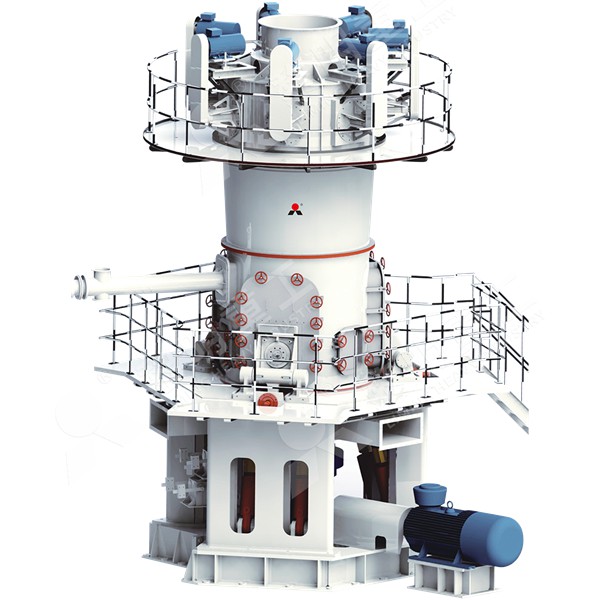
The operational benefits are multifaceted. First, the system offers remarkable flexibility in final product fineness. By adjusting the classifier's rotational speed or the airflow, operators can dial in specific particle size distributions to suit diverse applications, from fillers in plastics to sorbents in flue gas desulfurization. Second, energy consumption is optimized. The classifier ensures the mill isn't over-grinding material, preventing wasted energy on already-fine particles. Third, the entire process is enclosed and typically equipped with pulse-jet baghouse dust collectors, minimizing dust emissions and ensuring a clean working environment that complies with stringent environmental standards. This aligns with LIMING's philosophy of integrating technological progress with sustainable, green manufacturing practices.
When configured specifically for limestone, the Raymond mill with classifier demonstrates several performance strengths. Its ability to handle feed sizes up to 25-30mm simplifies the upstream crushing circuit. The inherent drying capability, where hot air (introduced via the air blower) passes through the grinding chamber, allows it to process limestone with moisture content up to 6% without the need for a separate dryer in many cases. This is crucial for maintaining consistent flowability of the final powder. Furthermore, the wear parts, such as grinding rollers and rings, are designed for longevity with materials suited for non-abrasive grinding, ensuring low maintenance costs and high availability.
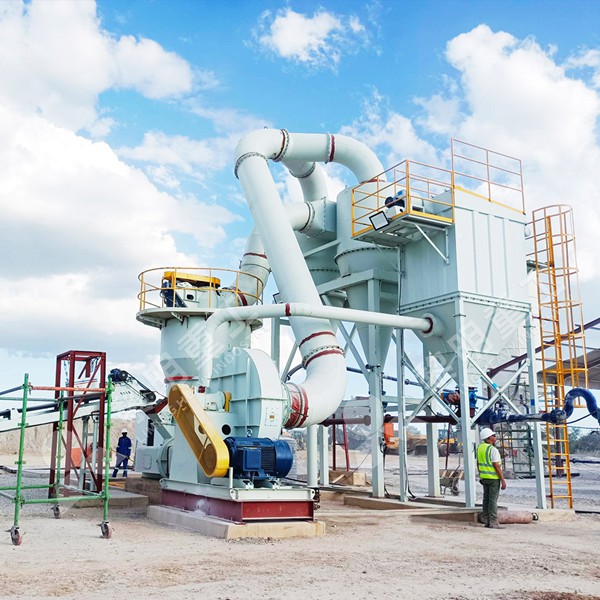
Beyond the core machine, the success of a limestone powder production line depends on the harmonious integration of auxiliary components. A typical LIMING system includes a jaw crusher for primary size reduction, a vibrating feeder for consistent material supply, an air blower to generate the necessary airflow, and sophisticated powder collectors. The electrical control cabinet brings automation to the forefront, allowing for centralized monitoring and control of motor speeds, feed rates, and temperature, leading to stable operation with minimal manual intervention. This holistic approach to system design—from research and precision manufacturing to complete solution offering—is what enables the delivery of reliable capacity ranging from modest to industrial-scale outputs.
In conclusion, the Raymond Mill coupled with an advanced classifier is not merely a piece of equipment but a sophisticated processing system. It transforms raw limestone into a valuable, specification-grade powder with efficiency, consistency, and environmental responsibility. For companies like LIMING HEAVY INDUSTRY, advancing this technology is part of a broader mission to lead in the machinery manufacturing sector through continuous innovation, scientific management, and a deep understanding of material science and customer process needs. For end-users, selecting such a system means investing in production reliability, product quality, and long-term operational economy.
Frequently Asked Questions (FAQ)
- What is the typical fineness range achievable for limestone powder using this system?
The system can produce limestone powder with a fineness ranging from approximately 44μm (325 mesh) up to 613μm. The integrated classifier allows for precise adjustment within this spectrum to meet specific application requirements. - Can the system handle moist limestone feedstock?
Yes, the system incorporates a drying function via the intake of heated air. It is designed to effectively process limestone with a moisture content of up to 6% without significant loss of efficiency or output quality. - How does the classifier improve energy efficiency?
The classifier acts as a precision gatekeeper, allowing only sufficiently fine particles to exit as product. It continuously recirculates oversized particles back to the grinding chamber, preventing the mill from wasting energy on over-grinding already-fine material. - What are the key maintenance points for the Raymond mill grinding limestone?
Primary wear parts are the grinding rollers and ring. For non-abrasive materials like limestone, these components have a long service life. Regular maintenance mainly involves lubricating moving parts, checking wear on these grinding elements, and ensuring the classifier blades are clean and functional. - Is the system environmentally friendly regarding dust emission?
Absolutely. The grinding and classification process is a fully enclosed negative pressure system. It is integrated with high-efficiency pulse-jet dust collectors (baghouses) that capture over 99.9% of airborne particles, ensuring emissions are well within international environmental protection standards.


