Published on: October 26, 2023
For industries requiring consistent, high-volume production of fine limestone powder, achieving a precise 400-mesh fineness is a critical benchmark. This article explores the specialized application of Raymond Roller Mill technology, specifically engineered and refined by LIMING HEAVY INDUSTRY, to meet this demanding specification. We will delve into the operational principles, system configuration, and the distinct advantages that make this milling solution a cornerstone for efficient mineral processing in sectors such as power plant desulfurization, construction materials, and chemical manufacturing.
At the heart of this process lies the Raymond Mill system, a technology that has evolved significantly since its inception. LIMING HEAVY INDUSTRY, with over three decades of expertise in manufacturing crushing and grinding equipment, has perfected this system for modern industrial demands. The core strength of our Raymond Mill for limestone processing is its ability to handle materials with a Mohs hardness under 7 and humidity below 6%, transforming raw limestone with an input size of 15-25mm into a finely tuned powder with a fineness range that reliably includes 400 mesh (approximately 38 microns). This precision is achieved through a closed-circuit grinding and classifying loop that ensures particle size consistency and operational efficiency.
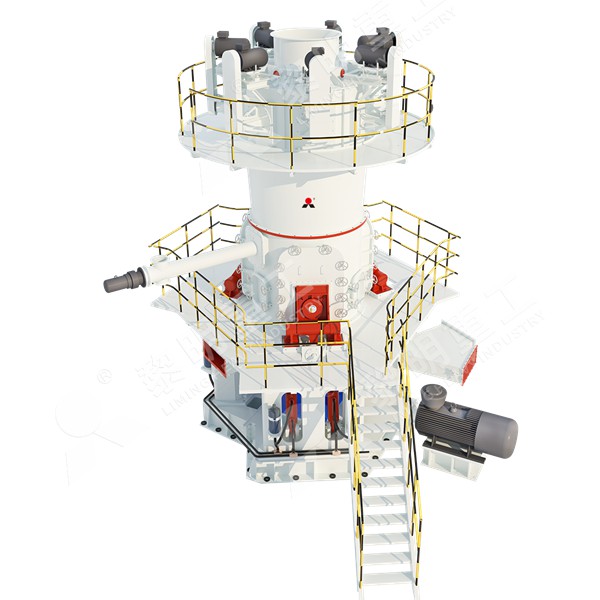
The working principle is both robust and intelligent. The system comprises the mill host, a high-efficiency separator, an air blower, jaw crusher, vibrating feeder, and dust collection equipment. Large limestone lumps are first reduced by the jaw crusher and then fed uniformly into the grinding chamber of the Raymond mill. Here, the material is ground between the stationary ring and rotating rollers. The ground powder is carried upward by the airflow to the integrated classifier. Particles meeting the 400-mesh specification pass through, while coarser particles are rejected back to the grinding zone for further processing. This internal recirculation is key to achieving high yield and precise particle size distribution. The entire airflow is recycled in a closed system, with a pulse dust collector ensuring emissions comply with stringent environmental standards.
What sets the LIMING-engineered solution apart for 400-mesh limestone production is its focus on system-wide optimization. It's not merely a mill but a synchronized production line. The automatic electric control system integrates drying (if needed), grinding, powder selection, and conveying into a seamless operation. This integration minimizes energy consumption per ton of output—a critical factor in large-scale processing. The use of high-wear-resistant materials for grinding components like rollers and rings extends service life dramatically, reducing maintenance downtime and total operating costs. The system's design prioritizes stability, which translates directly to consistent product quality batch after batch.
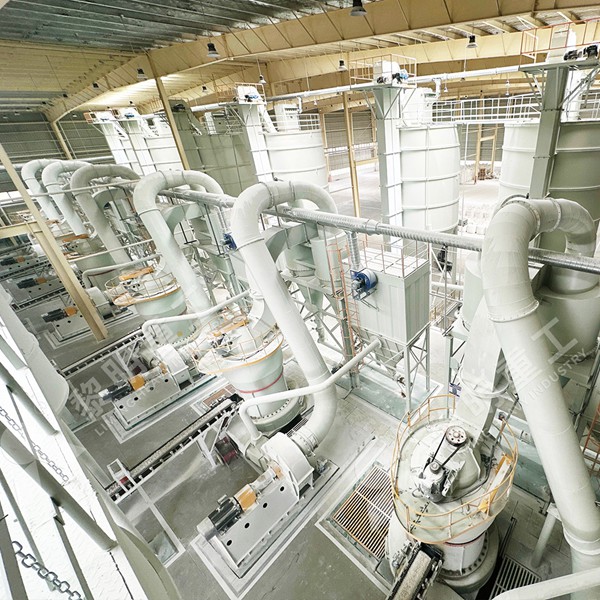
The applications for 400-mesh limestone powder are vast and growing. In power plants, it is the primary reagent for flue gas desulfurization (FGD), where its high surface area and reactivity are essential for capturing sulfur oxides. In the construction industry, it serves as a high-quality filler in asphalt, paints, plastics, and sealants, enhancing product properties. The chemical and manufacturing sectors utilize it as a raw material or neutralizing agent. The reliability of the Raymond Roller Mill in delivering this specific fineness makes it an indispensable asset for companies building their supply chains on consistency and quality.
LIMING HEAVY INDUSTRY's commitment to "scientific research tackling key problems" and "technological progress" is embodied in this technology. By leveraging a mature R&D team and focusing on the industry's technological frontier, continuous improvements have been made to the traditional Raymond mill design. These enhancements focus on increasing productivity, improving energy efficiency, and bolstering environmental performance. Operating from our extensive facilities in Zhengzhou's HI-TECH Industry Development Zone, we ensure every mill is precision-manufactured, supporting our clients in becoming leaders in their own machinery-dependent fields.
In conclusion, selecting a Raymond Roller Mill for producing 400-mesh limestone powder is a strategic decision that impacts long-term operational efficiency and product marketability. The technology offered by LIMING HEAVY INDUSTRY represents a synthesis of proven grinding principles and modern industrial innovation. It provides a balanced solution of high capacity, precise control, durability, and environmental compliance, making it a rational and high-performing choice for serious mineral processors worldwide.
Frequently Asked Questions (FAQ)
- What is the typical capacity range of a Raymond Roller Mill for producing 400-mesh limestone?
The capacity can vary based on system configuration and limestone characteristics, but standard models are designed to handle production rates suitable for medium to large-scale industrial requirements, often ranging from several tons per hour. - How does the system ensure consistent 400-mesh fineness output?
Consistency is achieved through the integrated high-precision classifier (separator). It continuously rejects oversized particles back to the grinding zone, allowing only particles meeting the target fineness to pass through to the final collection cyclones. - Can the mill handle limestone with slight moisture content?
Yes, the system can integrate a drying function. If the raw limestone feed has humidity below 6%, the friction heat and airflow within the closed circuit can often handle it. For higher moisture, optional hot air intake systems can be incorporated. - What are the main wear parts, and what is their typical service life?
The primary wear parts are the grinding rollers and the grinding ring. Their service life depends on the material's abrasiveness but is significantly extended through the use of high-chromium or alloy steel materials developed for maximum durability. - Is the system environmentally friendly?
Absolutely. The entire grinding process is a negative-pressure, closed-circuit system. It is equipped with an efficient pulse-jet bag dust collector, which captures over 99.9% of airborne particles, ensuring the workshop remains clean and emissions meet international environmental standards.


