Published: October 26, 2023
For industries demanding exceptionally fine calcite powder, achieving consistent quality at ultra-fine levels up to 2500 mesh presents a significant technological challenge. Liming Heavy Industry addresses this need with its advanced grinding solutions, specifically engineered to transform raw calcite into high-value, superfine powder. By integrating decades of milling expertise with continuous innovation, our equipment ensures precise particle size distribution, high throughput, and energy-efficient operation, making it the ideal choice for producers in paints, plastics, paper, and advanced materials seeking to enhance product performance and market competitiveness.
Liming Heavy Industry Co., Ltd., established in 1987, has built a formidable reputation as a leader in manufacturing large and medium-sized crushing and grinding equipment. Our commitment to scientific research, precision manufacturing, and technological advancement is embodied in our two major production bases in Zhengzhou, spanning over 147,000 square meters. This foundation allows us to tackle the precise demands of ultra-fine powder processing, pushing the boundaries of what is possible in mineral grinding technology.
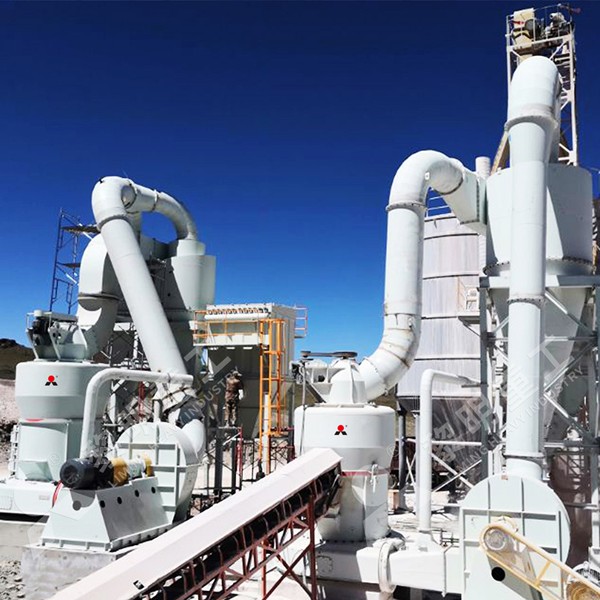
The core of our solution for ultra-fine calcite lies in the evolution of the traditional Raymond mill. While conventional Raymond mills are reliable for coarse to medium grinding, producing powder in the range of 44μm to 613μm (approximately 325 to 250 mesh), the leap to 2500 mesh (approximately 5μm) requires a fundamentally different approach. Our engineers have developed grinding systems that incorporate principles from our MW Micro Powder Mill and MTW European Type Grinding Mill technologies. These systems feature enhanced grinding mechanisms, highly efficient centrifugal classifiers, and optimized airflow designs that work in concert to repeatedly fracture calcite particles to the desired micron-level fineness.
A critical component in achieving 2500 mesh powder is the precision separation system. Our mills are equipped with advanced dynamic classifiers that can accurately segregate particles based on size in real-time. Oversized particles are efficiently recirculated back into the grinding chamber for further processing, while only particles meeting the strict fineness criteria are collected as final product. This closed-circuit system ensures not only the target fineness of d97 ≤ 5μm but also a remarkably tight particle size distribution, which is crucial for the uniformity and performance of the final calcite powder in sensitive applications like high-grade plastics and coatings.
Beyond fineness, operational efficiency and environmental stewardship are paramount. Our ultra-fine grinding systems are designed with integrated pulse jet bag dust collectors, ensuring that the production process is virtually dust-free and complies with stringent international environmental standards. The grinding chamber and classifier are engineered for low energy consumption per ton of output, a significant consideration for cost-sensitive production. Furthermore, the entire system often incorporates intelligent electronic control systems, allowing for remote monitoring, automatic adjustment of operational parameters, and stable, consistent output quality with minimal manual intervention.
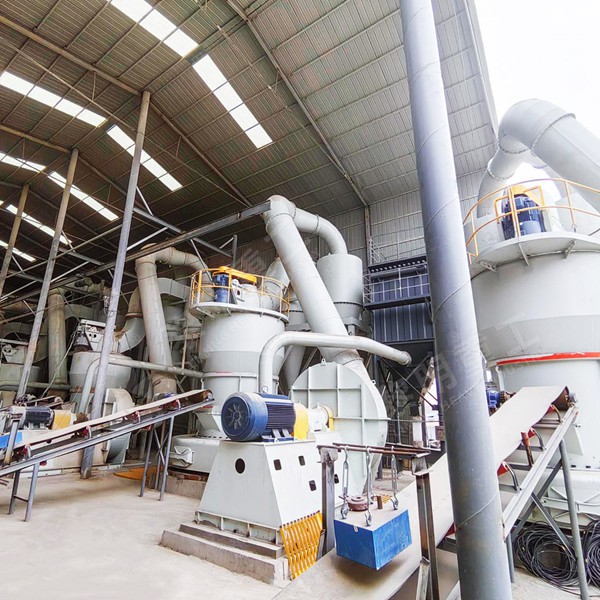
The applications for 2500 mesh calcite powder are extensive and growing. In the plastics industry, it acts as a high-performance filler, improving mechanical strength, surface finish, and dimensional stability. For premium paints and coatings, it enhances opacity, durability, and weather resistance. In the paper industry, it contributes to better brightness, smoothness, and printability. Our grinding solutions provide the consistent quality and reliability required by these advanced sectors, enabling them to develop superior end-products.
In conclusion, Liming Heavy Industry's ultra-fine grinding technology represents a synthesis of robust engineering, innovative design, and a deep understanding of material science. We provide more than just machinery; we deliver a complete, reliable, and efficient production solution for the most demanding calcite powder specifications. By choosing our equipment, producers invest in a system built for longevity, performance, and a clear return on investment, backed by a company with over three decades of industry leadership.
Frequently Asked Questions (FAQ)
Q1: What is the main difference between your ultra-fine mill for 2500 mesh and a standard Raymond mill?
A: The primary differences lie in the grinding mechanism, classifier technology, and system pressure. Our ultra-fine mill incorporates more rollers or a specialized grinding ring design, a high-precision turbo air classifier capable of separating micron-sized particles, and often operates under a higher negative pressure system to achieve and maintain the 2500 mesh (5μm) fineness, whereas standard Raymond mills are designed for coarser outputs.
Q2: Can the same mill grind materials other than calcite to 2500 mesh?
A: Yes, the technological principle is applicable to many non-metallic minerals with similar hardness and properties, such as limestone, kaolin, talc, and barite. However, the specific grinding parameters, wear part materials, and system configuration may be optimized based on the material's characteristics like hardness, moisture, and abrasiveness.
Q3: How is energy consumption managed for such a fine grinding process?
A: Our systems are designed with energy efficiency as a core principle. This is achieved through optimized grinding geometry to reduce friction, highly efficient classifiers that prevent over-grinding, variable-frequency drives on major motors to match power to load, and a closed-circuit design that maximizes the utilization of energy for productive grinding.
Q4: What kind of after-sales support and service do you provide?
A: We provide comprehensive support including detailed installation guidance, operational training for customer technicians, a global supply chain for genuine wear parts and components, and remote diagnostic assistance. Our service team is committed to ensuring optimal performance and minimal downtime throughout the equipment's lifecycle.
Q5: How do you ensure the consistency of the final product's fineness?
A: Consistency is guaranteed by the precision of the integrated dynamic classifier and the stability of the entire system. The classifier speed is adjustable, allowing precise control over the cut point. Furthermore, the automated control system continuously monitors key parameters (like feed rate, air volume, and grinding pressure) and makes fine adjustments to maintain a stable grinding environment and consistent product quality.


