Published: October 26, 2023
In the modern mineral processing industry, achieving high-efficiency grinding while maintaining stringent environmental standards is a paramount challenge. For the production of calcite powder—a critical material in plastics, paints, construction, and pharmaceuticals—the integration of advanced milling technology with effective dust control is essential. Liming Heavy Industry addresses this need with its optimized Raymond Mill system, specifically engineered for calcite processing and equipped with an integrated pulse-jet dust collector. This combination delivers a closed-loop production process that maximizes yield and product quality (ranging from 613μm to 44μm) while ensuring a dust-free workshop environment, embodying the principle of clean production without compromising operational efficiency.
Liming Heavy Industry Co., Ltd., with over three decades of expertise in manufacturing crushing and grinding equipment, has consistently focused on technological innovation to enhance product competitiveness. Our Raymond Mill, a cornerstone of our grinding portfolio, is renowned for its reliability in processing non-flammable, non-explosive materials with Mohs hardness under 7 and humidity less than 6%. When configured for calcite, the system transforms into a model of clean production. The core of this setup is the seamless integration of the grinding mill with a high-efficiency pulse dust collector. This isn't merely an add-on filter; it's a systemically designed component that captures ultrafine particles at the source, recirculating clean air back into the grinding chamber and collecting product with minimal loss.
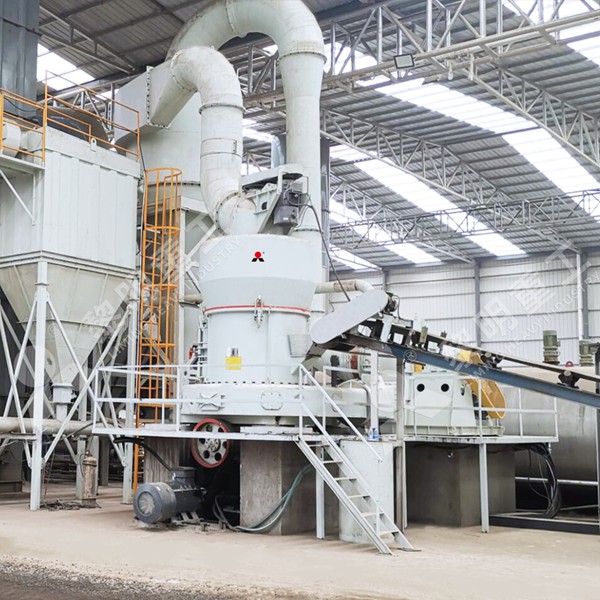
The working principle of this integrated system is a testament to intelligent engineering. Calcite feedstock (15-25mm) is fed into the grinding chamber where rollers grind it against a stationary ring. The ground powder is carried upward by an airflow generated by an induced draft fan. A high-precision classifier ensures only particles meeting the target fineness proceed. The crucial clean production step follows: the entire air-powder stream is directed into the pulse dust collector. Here, filter bags capture over 99.9% of the calcite powder. Compressed air pulses at regular intervals clean these bags, causing the collected powder to fall into a hopper for packaging. The purified air is then recirculated, creating a negative pressure environment that prevents any dust leakage, ensuring the workshop remains clean and safe for operators.
This approach offers multifaceted advantages. From an environmental and occupational health standpoint, it fully complies with international emission standards, protecting worker health and minimizing the plant's environmental footprint. Operationally, the closed-loop system enhances product recovery rates, directly boosting profitability. The consistent negative pressure also stabilizes airflow within the mill, which contributes to more uniform grinding and stable product quality. For calcite processors, this means achieving precise fineness specifications—whether for coarse fillers or fine-grade powders—with exceptional consistency batch after batch.
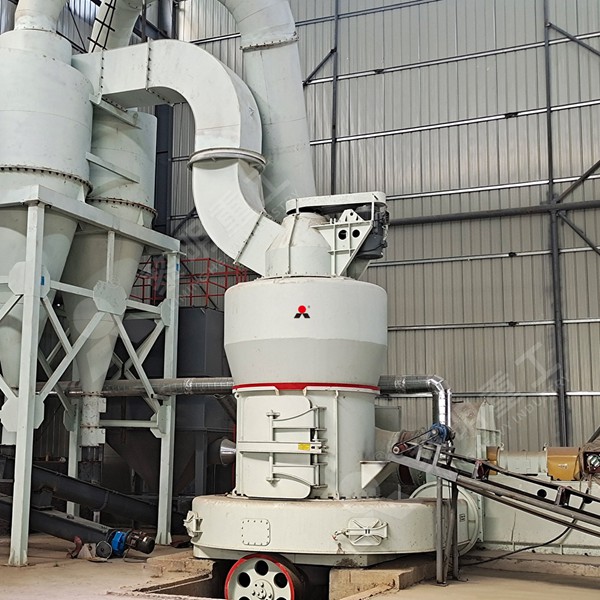
Liming's commitment to "scientific research tackling key problems" is evident in the system's design. Our Raymond Mills for calcite are backed by a mature R&D team focused on the technological frontiers of mineral processing. The pulse dust collector is not a generic unit but is calibrated to the specific airflow and powder characteristics of calcite grinding. This synergy between mechanical innovation and environmental technology reflects our core philosophy of providing holistic solutions that empower our clients' sustainable growth. By choosing this system, calcite producers invest not just in a machine, but in a future-proof, responsible production methodology that aligns with global trends towards greener manufacturing.
In conclusion, the calcite-dedicated Raymond Mill with an integrated pulse dust collector from Liming Heavy Industry represents the convergence of performance and responsibility. It transforms calcite grinding from a potentially dusty, wasteful operation into a clean, efficient, and highly controlled process. This solution empowers industries dependent on high-quality calcite powder to meet their production goals while upholding their commitments to environmental stewardship and workplace safety.
Frequently Asked Questions (FAQ)
- What is the primary advantage of integrating a pulse dust collector directly with the Raymond Mill?
The primary advantage is the establishment of a fully closed-loop production system. It ensures near-total capture of product, eliminates dust emissions for a cleaner workshop, stabilizes internal mill airflow for better grinding consistency, and enhances overall material yield and operational safety. - Can this system handle calcite with varying moisture content?
The standard Raymond Mill is suitable for materials with humidity less than 6%. For calcite with higher inherent moisture, Liming Heavy Industry can integrate auxiliary drying systems or recommend alternative mill configurations like our LM Vertical Roller Mill which integrates drying and grinding. - How fine can calcite powder be produced with this Raymond Mill system?
The system can produce calcite powder with a fineness range between 613μm (~30 mesh) and 44μm (~325 mesh). Adjustments are made via the integrated classifier speed to meet different application requirements in industries like plastics, paints, or paper. - Is the system complex to operate and maintain?
While technologically advanced, the system is designed for user-friendly operation with automated electric controls. Maintenance focuses on regular checks of grinding rollers/rings and the scheduled cleaning/replacement of filter bags in the dust collector, which is designed for easy access. - Beyond calcite, what other materials is this Raymond Mill with dust collection suitable for?
This configuration is excellent for a wide range of non-metallic minerals with similar properties, such as limestone, gypsum, talc, barite, and feldspar. It is ideal for any non-flammable, non-explosive material under Mohs hardness 7 where clean, dry grinding is required.


