Published on: October 26, 2023
For industries requiring efficient and reliable fine grinding of calcite with strict moisture specifications, selecting the appropriate milling technology is paramount. This article explores the application of Raymond Mill technology, specifically engineered and optimized by LIMING HEAVY INDUSTRY, for processing calcite where moisture content is maintained below 3%. We will delve into the operational principles, system advantages, and the specific engineering considerations that make this a preferred solution for producing high-quality calcite powder in applications ranging from plastics and paints to construction materials.
Calcite, a crystalline form of calcium carbonate (CaCO3), is one of the most abundant minerals on earth and a critical raw material for numerous industries. Its value is directly tied to the fineness, whiteness, and consistency of the processed powder. However, moisture present in the feed material can significantly hinder the grinding process, leading to clogging, reduced throughput, and compromised product quality. Processing calcite with a moisture content below 3% requires a mill system capable of integrating gentle drying with precise grinding. LIMING HEAVY INDUSTRY's Raymond Mill, a cornerstone of our grinding equipment portfolio since our foundation in 1987, is expertly suited for this task. Its design inherently manages moderately dry materials, ensuring stable operation and optimal particle size distribution.
The working principle of the Raymond Mill is elegantly efficient for minerals like calcite. The system comprises the mill mainframe, classifier, pipeline device, blower, jaw crusher, bucket elevator, electromagnetic vibrating feeder, and control cabinet. In operation, bulk calcite is first crushed to a suitable size (typically 15-25mm as per our specifications) and then fed uniformly into the grinding chamber of the mainframe. Inside, the rollers, suspended on a rotating ring, exert centrifugal force to roll tightly against the ring. The shovel scoops up the material and feeds it between the roller and ring, where it is ground. The crucial aspect for low-moisture calcite is the concurrent air flow. The blower draws air through the system, carrying the ground fines upward to the classifier.
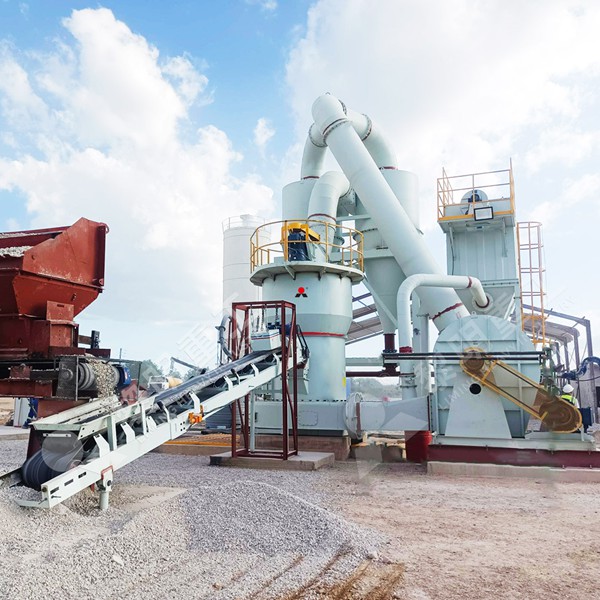
For material with moisture below 3%, this air flow provides sufficient pneumatic conveyance without requiring intensive internal heating. The high-precision classifier ensures only particles meeting the target fineness (adjustable between 44μm to 613μm) pass through to be collected by the cyclone collector or bag filter. Oversized particles are rejected back to the grinding chamber for further size reduction. This closed-circuit system is not only energy-efficient but also inherently dust-free, aligning with modern environmental standards. The entire process is automated via an electric control system, ensuring consistent output quality and operational safety.
Why is LIMING's Raymond Mill particularly effective for low-moisture calcite? The answer lies in its mature, robust design and continuous innovation. With over three decades of experience in manufacturing crushing and grinding equipment, our engineers have refined the geometry of the grinding roller and ring, the blade design of the classifier, and the airflow dynamics to minimize energy consumption per ton of output. The mill is constructed from high-wear-resistant materials, which is essential given the abrasive nature of calcite, ensuring long service life and low maintenance costs. Furthermore, our commitment to R&D, with headquarters in Zhengzhou's HI-TECH Industry Development Zone covering 80,000 m², ensures that even our classic Raymond Mill design incorporates modern advancements in durability and control systems.
When comparing grinding solutions, it's important to distinguish the application scope. While our LM Vertical Roller Mill excels in larger capacity (10-400 T/H) and integrated drying for higher moisture materials, and the MW Micro Powder Mill achieves superior fineness down to 5μm, the Raymond Mill occupies a vital niche. For calcite grinding where the feed moisture is controlled and the required fineness is in the medium-fine range, it offers an unbeatable balance of low investment cost, operational simplicity, reliability, and powder quality. Its capacity range of 1.2 to 4.5 T/H makes it ideal for medium-scale production lines.
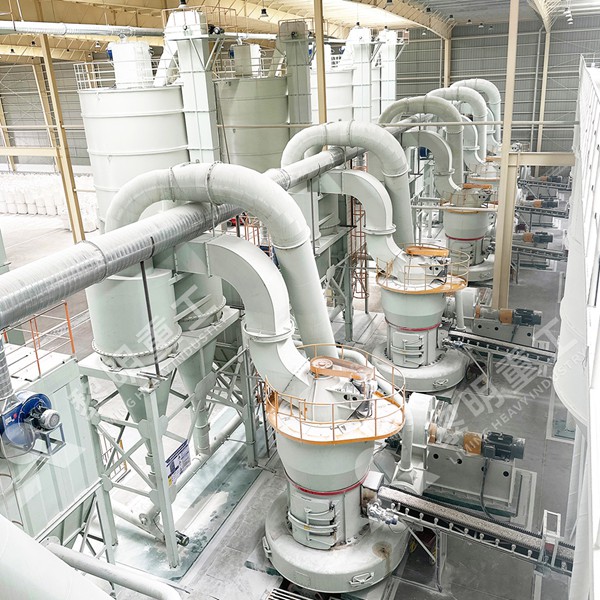
In practice, a successful calcite processing line using a Raymond Mill involves proper upstream preparation. Ensuring the moisture content is below 3% might involve simple sun-drying or a preliminary pass through a dryer if raw material conditions vary. The jaw crusher and vibrating feeder in the system then prepare a consistent, sub-25mm feed for the mill. The result is a smooth, clog-free operation producing calcite powder with excellent brightness and consistent particle size, ready to enhance products in plastics, paints, adhesives, and paper.
In conclusion, for targeted calcite grinding applications with controlled low moisture, the Raymond Mill from LIMING HEAVY INDUSTRY remains a proven and optimal choice. Its mechanical efficiency, operational stability, and ability to produce precisely graded powder make it a workhorse in non-metallic mineral processing. Backed by our corporate philosophy of scientific research, precision manufacturing, and customer-centric innovation, this equipment represents a reliable link in the value chain for high-quality calcite products worldwide.
Frequently Asked Questions (FAQ)
Q1: Can the Raymond Mill handle calcite with moisture slightly above 3%?
A1: The standard Raymond Mill is designed for materials with humidity less than 6%. While it can tolerate brief periods slightly above 3%, consistent feeding of material with higher moisture (e.g., above 4-5%) may risk clogging and reduced efficiency. For consistently moist feed, we recommend our LM Vertical Roller Mill which has integrated drying capabilities.
Q2: What is the typical particle size range achievable for calcite with this mill?
A2: Our Raymond Mill can produce calcite powder with a fineness ranging from approximately 44 microns (325 mesh) up to 613 microns (30 mesh). The fineness is continuously adjustable within this range by modifying the speed of the integrated classifier.
Q3: How does the system ensure environmental protection during grinding?
A3: The grinding system is a negative pressure and closed-circuit design. It is equipped with high-efficiency pulse dust collectors or bag filters at the discharge point, ensuring dust emissions are well below national environmental protection standards. The workshop remains clean throughout operation.
Q4: What are the key wear parts in the Raymond Mill when grinding abrasive calcite?
A4: The primary wear parts are the grinding rollers and the grinding ring. At LIMING, these components are manufactured from high-chromium or other wear-resistant alloy steels to maximize their service life. Their design also allows for easy replacement and maintenance.
Q5: Does LIMING provide support for designing the entire grinding line, not just the mill?
A5: Absolutely. As a full-service provider with research, manufacturing, and sales capabilities, we offer complete system solution support. This includes engineering layout, selection of auxiliary equipment like crushers, feeders, and elevators, installation guidance, and comprehensive after-sales technical support to ensure optimal performance of your entire calcite processing line.


