Published: October 26, 2023
In today's competitive industrial landscape, maximizing productivity within constrained physical footprints is a paramount challenge. For operations processing non-metallic minerals like calcite, the traditional dilemma has often involved choosing between high-capacity grinding equipment and valuable floor space. Recognizing this critical industry pain point, LIMING HEAVY INDUSTRY CO., LTD. has engineered a solution: a next-generation, compact-design Raymond Mill specifically optimized for calcite processing. This innovation embodies a vertical integration of precision engineering, where a reduced spatial requirement does not equate to compromised performance. By reimagining the mill's structural layout, auxiliary system integration, and material flow dynamics, this machine delivers the fine powder output and operational reliability synonymous with the Raymond Mill legacy, all within a significantly minimized installation area. It represents a strategic answer for expanding production capabilities in existing facilities or for new ventures where real estate is at a premium.
LIMING HEAVY INDUSTRY, with its foundation in 1987 and decades of experience in manufacturing crushing and grinding equipment, approaches design with a philosophy centered on scientific research and practical application. The development of this compact calcite mill was driven by direct feedback from the field, where plant managers and engineers consistently highlighted space constraints as a major bottleneck. The company's mature R&D team, operating from its extensive facilities in Zhengzhou's HI-TECH Industry Development Zone, tackled this challenge by focusing on the core mechanics of the Raymond grinding principle. The goal was clear: retain the essential process of grinding materials under 7 Mohs hardness and 6% humidity to a fineness between 44μm and 613μm, but achieve it through a more spatially intelligent design.
The compactness is achieved through several key design innovations. First, the grinding mill, separator, and air blower are configured in a more cohesive, three-dimensional layout rather than a sprawling horizontal arrangement. This vertical integration reduces the overall footprint. Second, the ductwork and piping for the closed-circuit air system are optimized for shorter, more direct routes, minimizing the spatial "sprawl" often associated with ancillary components. The electrical control cabinet is also designed as an integrated, wall-mounted or compact floor-standing unit, further conserving floor space.
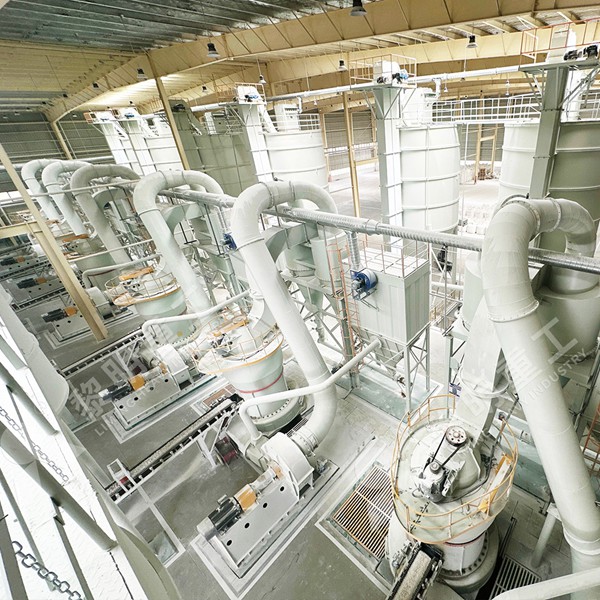
Despite its smaller footprint, the mill's performance parameters for calcite are impressive. It maintains a stable capacity range suitable for small to medium-scale production lines, ensuring consistent output of high-quality calcite powder used in plastics, paints, coatings, and construction materials. The grinding roller assembly applies sufficient pressure to the grinding ring for efficient pulverization, while the integrated high-efficiency separator ensures precise particle size classification. The system remains a closed-circuit, negative-pressure operation, which is crucial for dust-free production and meeting environmental standards—a non-negotiable aspect of modern plant design that LIMING HEAVY INDUSTRY prioritizes across all its product lines, from Vertical Roller Mills to Micro Powder Grinding Mills.
Operational efficiency is another cornerstone of this compact design. The streamlined layout simplifies material feeding and product collection logistics. Operators benefit from easier access points for routine maintenance and inspection, as key components are not buried within a vast machine complex. The automatic electric control system, a hallmark of LIMING's advanced milling technology, provides simple touch-screen operation for starting, stopping, and monitoring the grinding process, allowing for quick adjustments to fineness and feed rate. This user-friendly interface reduces the need for extensive control rooms, contributing further to space savings.
Installation and foundation work are also simplified. The reduced weight and concentrated load distribution of the compact design can lead to less demanding foundation requirements compared to larger, more spread-out traditional setups. This translates to lower initial civil engineering costs and a faster setup time, getting production online more rapidly. For factories with low headroom or multi-floor structures, the design's flexibility in configuration can be a particular advantage, offering installation possibilities that conventional horizontal ball mills or larger Raymond systems cannot.
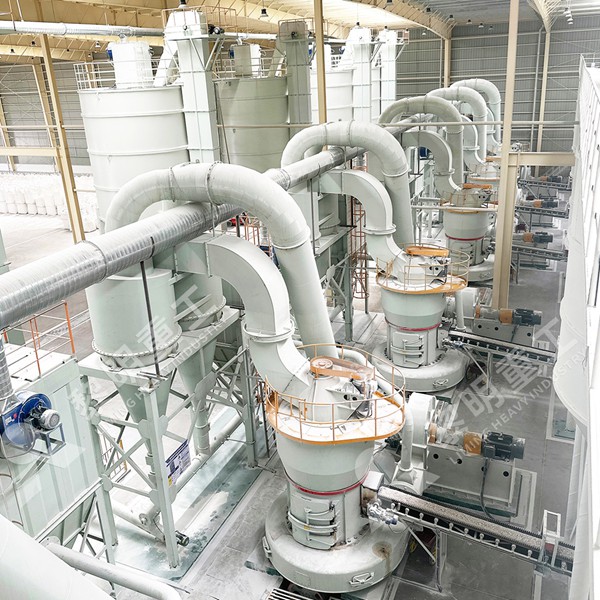
In essence, this Compact Design Calcite Raymond Mill is more than just a smaller machine; it is a re-engineering of a proven technology for the modern industrial reality. It aligns perfectly with LIMING HEAVY INDUSTRY's core strategy of improving product competitiveness through technological progress and innovation. For companies looking to add calcite grinding capacity, upgrade older, inefficient equipment, or establish a new production line in a space-conscious facility, this mill presents a compelling, technically robust solution. It proves that through intelligent design, it is possible to achieve high-performance mineral processing without surrendering excessive square meters of valuable factory space.
Frequently Asked Questions (FAQs)
- What is the primary advantage of choosing a compact-design Raymond Mill over a standard model?
The primary advantage is its significantly reduced spatial footprint, allowing installation in factories with limited floor space or enabling more efficient use of existing areas for capacity expansion, without sacrificing the core grinding performance and fineness control of a traditional Raymond Mill. - Can this compact mill handle materials other than calcite?
Yes. While optimized for calcite, it is suitable for grinding various non-flammable, non-explosive materials with a Mohs hardness under 7 and humidity less than 6%, such as gypsum, talc, kaolin, and barite, similar to standard Raymond Mills. - Does the compact design affect the maintenance schedule or accessibility for service?
No, the design prioritizes maintainability. Key components like grinding rollers and the classifier are arranged for relatively straightforward access. The compact layout often consolidates service points, potentially making routine checks more efficient. - How does the environmental performance of the compact mill compare?
It maintains high environmental standards. The system operates as a closed-circuit, negative-pressure loop with an integrated pulse dust collector (bag filter), effectively containing dust and ensuring emissions comply with environmental regulations, mirroring the eco-friendly design of larger LIMING grinding systems. - Is the production capacity of the compact mill suitable for my operation?
The capacity is designed for small to medium-scale production needs. For precise matching, it is essential to consult with LIMING HEAVY INDUSTRY's technical team, providing your specific calcite feed size, desired output fineness, and target hourly tonnage for an accurate assessment.


