Published: October 26, 2023
In the evolving landscape of urban industrial processing, the demand for high-performance, environmentally conscious milling solutions is paramount. For the production of fine calcite powder within noise-sensitive urban and peri-urban zones, Liming Heavy Industry's advanced Raymond Mill technology offers an optimal blend of precision grinding, operational efficiency, and significantly reduced acoustic footprint. This article explores the technical adaptations and design philosophies that make our Raymond Mill a superior choice for urban calcite processing, aligning with modern standards for sustainable and community-friendly industrial operations.
Urbanization brings with it the challenge of integrating essential mineral processing activities, such as calcite powder production for plastics, paints, and construction materials, into environments with strict noise and emission regulations. Traditional grinding equipment often falls short of these new urban benchmarks. Recognizing this shift, Liming Heavy Industry has dedicated its three decades of engineering expertise to refining its flagship Raymond Mill series. Our focus extends beyond mere particle size reduction to encompass a holistic system design that prioritizes low-noise operation, dust containment, and energy efficiency, ensuring that high-quality calcite production can coexist with urban life.
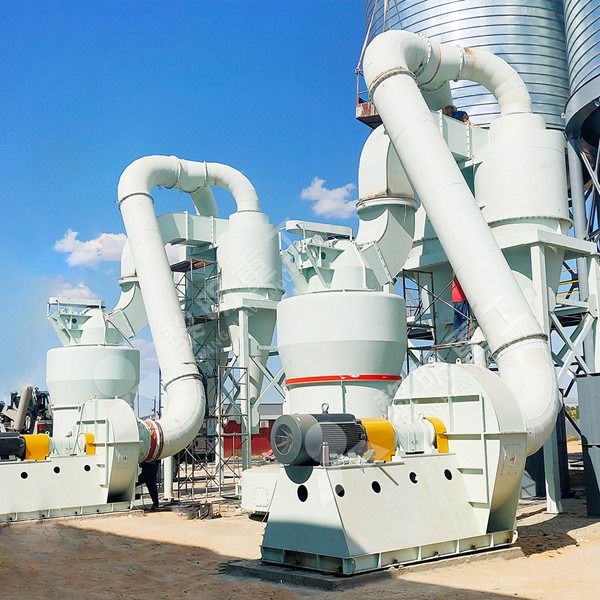
The core of our low-noise Raymond Mill lies in its meticulously engineered grinding mechanism. The system utilizes a vertical structure with a compact footprint, ideal for space-constrained urban facilities. Key components like the grinding roller and grinding ring are manufactured from high-wear-resistant alloys, ensuring a smooth, stable grinding process for calcite with minimal vibration—a primary source of operational noise. Furthermore, the transmission system is equipped with high-precision gears and sound-insulated housings. The integrated centrifugal classifier ensures precise particle size control (from 44μm to 613μm) in a single pass, reducing the need for recirculation and associated energy consumption and noise.
Noise mitigation is engineered into every subsystem. The powerful air blower, essential for material conveyance and classification, features specially designed impellers and insulated ducts to suppress aerodynamic noise. The entire grinding chamber is sealed and lined with composite damping materials that absorb high-frequency sounds generated during the milling process. Coupled with a high-efficiency pulse jet bag filter dust collector—a standard component—the system operates as a negative-pressure, closed-loop circuit. This not only achieves near-zero dust emission, critical for urban air quality, but also contains noise within the system's structure. The electrical control cabinet employs variable frequency drives (VFDs) for soft-starting and optimizing motor speeds, further reducing mechanical stress and acoustic output.
For calcite specifically, a material valued for its whiteness and purity, our Raymond Mill's gentle yet efficient grinding action is ideal. The low-heat-generation design prevents thermal degradation of the calcite, preserving its brightness and chemical properties. The system's adaptability allows for fine-tuning to achieve the exact fineness required for various urban applications, from coarse fillers to fine-grade powders for premium products. This versatility, combined with a capacity range suitable for medium-scale urban production (compatible with the described throughput parameters), makes it a cornerstone for sustainable urban industrial development.
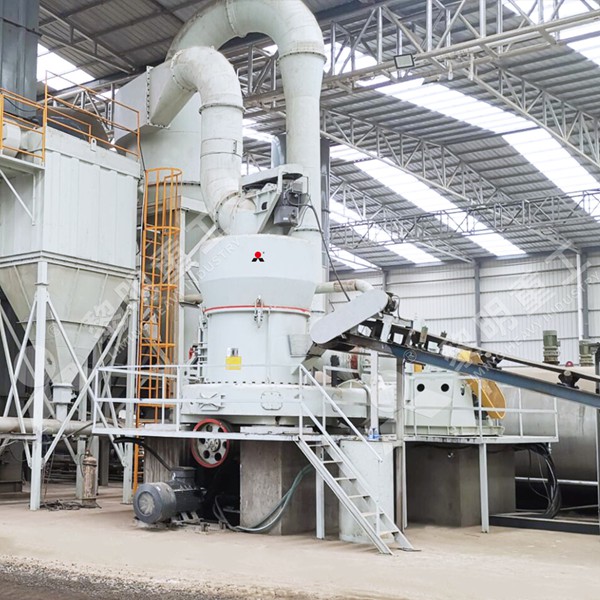
Liming Heavy Industry's commitment, as a modern joint-stock corporation integrating R&D, manufacturing, and sales, is to pioneer through scientific research and technological improvement. Our Raymond Mill embodies this philosophy. It is more than just machinery; it is a responsible solution for the modern city. By choosing our low-noise technology, producers of calcite powder invest not only in reliable and efficient grinding but also in community harmony and regulatory compliance, ensuring their operations are sustainable partners in urban growth for years to come.
Frequently Asked Questions (FAQ)
- What specific noise level reduction can be expected from your urban-optimized Raymond Mill compared to conventional models?
Our engineered modifications, including insulated chambers, dampened transmission, and optimized airflow, typically achieve a noise reduction of 15-25 dB(A) at operator positions compared to standard open-design mills, often bringing operation well below 85 dB(A) to meet stringent urban workplace regulations. - How does the mill handle variations in the moisture content of raw calcite, given the urban emphasis on dust control?
The integrated system allows for indirect hot air intake (optional). This airflow simultaneously dries the material during grinding, effectively processing calcite with moisture content up to 6%, ensuring efficient pulverization while keeping the material dry enough for excellent containment within the closed-loop dust collection system. - Is the system suitable for fully automated operation to minimize labor in urban settings with higher operational costs?
Yes. Our Raymond Mill is designed for integration with automated control systems. The electric control cabinet supports PLC interfaces for remote monitoring and control of feeding rate, grinding fineness, and system pressure, enabling continuous, minimally attended operation. - Beyond noise, what other environmental features are integrated for urban compliance?
The system is a negative-pressure design with a high-efficiency pulse dust collector as standard, ensuring particulate emissions are far below national standards. Its energy-efficient design, with optimized grinding mechanics and recycling airflow, also reduces overall power consumption per ton of product. - What is the typical maintenance footprint for ensuring consistent low-noise operation?
Maintenance focuses on wear parts like grinding rolls and rings. Their extended life due to premium materials minimizes frequent intervention. All noise-dampening enclosures are designed for easy access without compromising their acoustic integrity, ensuring upkeep does not degrade the mill's quiet performance.


