Published on: October 26, 2023
For industries requiring consistent, high-volume production of fine calcite powder, managing heat generation during grinding is a critical challenge. Liming Heavy Industry addresses this with an advanced Raymond Mill configuration integrated with a dedicated water cooling system. This engineered solution enables continuous, stable operation by effectively controlling grinding temperature, preventing thermal degradation of calcite's desirable properties, and ensuring uniform particle size distribution. By combining the proven efficiency of the Raymond grinding mechanism with proactive thermal management, this system maximizes uptime, protects product quality, and enhances overall operational reliability for demanding mineral processing applications.
At the core of Liming Heavy Industry's offering is the robust Raymond Mill platform, renowned for its reliability in processing non-metallic minerals like calcite. The mill is engineered for materials under 7 Mohs hardness and 6% humidity, making it ideally suited for calcite. Its grinding mechanism, involving rollers rotating against a stationary ring, applies centrifugal force to crush and grind feed material between 15-25mm into a fine powder ranging from 44μm to 613μm. This versatility allows producers to meet various fineness specifications for different industrial applications, from plastics and paints to paper and construction materials.
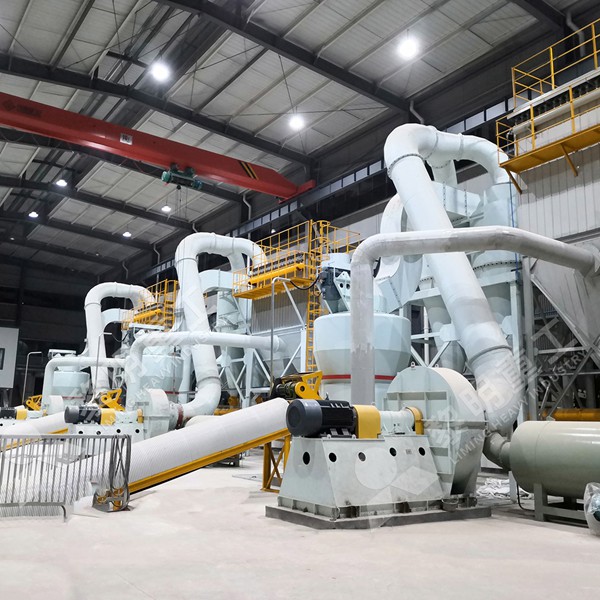
The significant innovation for continuous calcite grinding lies in the integrated water cooling system. During prolonged operation, friction and mechanical energy conversion generate considerable heat within the grinding chamber. Excessive heat can lead to several issues: premature wear of grinding components, agglomeration of fine calcite particles, and potential alteration of the calcite's crystalline structure, which can affect its whiteness and chemical reactivity. Liming's system circulates coolant through strategically designed channels within the mill's critical housing areas, effectively dissipating heat and maintaining an optimal, stable operating temperature. This not only safeguards the product quality but also extends the service life of wear parts like grinding rollers and rings.
Founded in 1987, Liming Heavy Industry Co., Ltd. brings over three decades of expertise in manufacturing crushing and grinding equipment to this solution. The company's philosophy of integrating research, manufacturing, and sales ensures that product development is driven by real-world industrial challenges. Their commitment to "scientific research tackling key problems" and "technological improvement" is evident in this tailored Raymond Mill system. By focusing on the technological frontier, Liming's mature scientific research team has developed this cooling integration to push the boundaries of continuous processing capability.
The system's design emphasizes operational smoothness and environmental compliance. The grinding process is part of a closed-circuit pneumatic system. Ground material is carried by air flow to a high-efficiency separator, where oversized particles are rejected and returned for regrinding, while finished product proceeds to a pulse-jet dust collector. This ensures high collection efficiency and a clean working environment, meeting stringent environmental standards. The addition of the water cooling system complements this by promoting stable air flow dynamics, as consistent temperature prevents moisture condensation and material clogging within the circuit.
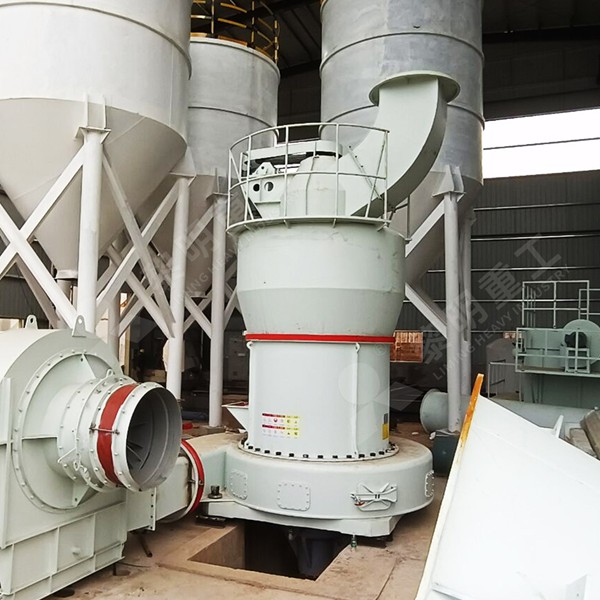
For calcite processors, the benefits are multifaceted. Enhanced Production Continuity: The system is designed for 24/7 operation, minimizing unplanned shutdowns caused by overheating. Consistent Product Quality: Stable temperature ensures uniform grinding conditions batch after batch, yielding calcite powder with reliable fineness and chemical properties. Reduced Maintenance Costs: Controlled operating temperatures reduce thermal stress on mechanical components, leading to less frequent replacement of grinding elements and lower long-term operating expenses. Energy Efficiency: By maintaining optimal grinding conditions, the mill operates at peak efficiency, preventing energy waste associated with processing overheated, agglomerated material.
In conclusion, Liming Heavy Industry's Raymond Mill with Water Cooling System represents a significant advancement for the continuous grinding of calcite. It transforms a reliable workhorse technology into a high-performance, production-critical asset. By solving the fundamental challenge of heat management, this solution delivers unmatched operational stability, product consistency, and cost-effectiveness for medium-to-fine powder production, reinforcing Liming's position as a leader in innovative grinding technology for the global minerals industry.
Frequently Asked Questions (FAQ)
Q1: How does the water cooling system specifically prevent calcite quality degradation?
A1: The cooling system maintains a consistent temperature in the grinding zone. This prevents the "burning" or calcination of calcite, which can reduce its brightness and cause chemical changes. It also stops fine particles from melting and re-agglomerating due to heat, ensuring a free-flowing, uniformly fine powder.
Q2: Is the cooling system a standalone unit or fully integrated into the mill structure?
A2: It is a fully integrated design. Cooling channels are engineered directly into the mill's housing and base structure. It connects to a external cooling unit (chiller or cooling tower), forming a closed-loop circuit. This integration ensures efficient heat transfer and does not compromise the structural integrity of the mill.
Q3: Can this system handle other calcium-based minerals besides calcite?
A3: Absolutely. While optimized for calcite, this configuration is highly effective for grinding other heat-sensitive or semi-abrasive non-metallic minerals such as gypsum, talc, kaolin, and barite. The cooling feature is beneficial wherever heat buildup is a concern for product quality or equipment longevity.
Q4: What is the typical maintenance required for the water cooling circuit?
A4: Maintenance is minimal and routine. It primarily involves checking and maintaining coolant levels, ensuring the cleanliness of the external heat exchanger to prevent clogging, and periodically inspecting pumps and valves for proper operation. The circuit is designed for reliability and easy access to key components.
Q5: For a new installation, does the integrated cooling system affect the mill's foundation or spatial requirements significantly?
A5: The mill's footprint remains largely unchanged. The main additional spatial consideration is for the external cooling unit (chiller), which is typically placed nearby. Foundation requirements are based on the standard mill weight and dynamics; our engineering team provides detailed layout and foundation plans that incorporate all auxiliary equipment, including the cooling system.


