Published on: October 26, 2023
For small to medium-scale operations requiring consistent and efficient limestone powder production, the Raymond Mill remains a cornerstone of reliable mineral processing. This article explores the technical advantages, operational principles, and specific applications of small-scale Raymond grinding machines, particularly within the context of modern, environmentally conscious manufacturing. Drawing from decades of engineering expertise, we examine how contemporary iterations of this classic technology balance proven mechanics with incremental innovations to deliver precise fineness control, robust construction, and energy-efficient performance for dedicated limestone grinding circuits.
At its core, the Raymond Mill is a vertical structure grinding system. The process begins with crushed limestone of a specified feed size (typically 15-25mm) being uniformly and continuously fed into the grinding chamber via a vibrating feeder. Inside, the material is ground between the stationary ring and rotating rollers. The ground material is then carried upward by the airflow generated by an integrated blower to a classifier. Here, a critical separation occurs: particles meeting the desired fineness pass through the classifier and are conveyed to the product collector, while coarser particles are rejected and fall back to the grinding chamber for further milling. This closed-circuit system ensures high classification efficiency and consistent product quality.
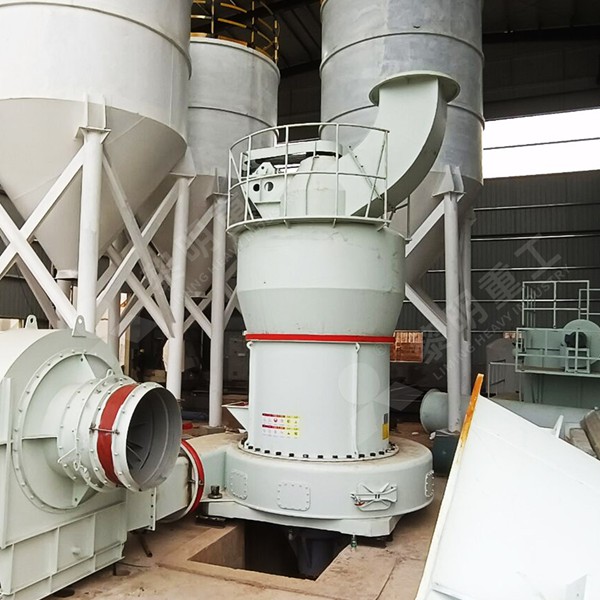
The defining characteristic of a well-engineered small-scale Raymond Mill for limestone is its adaptability. The fineness of the final powder can be adjusted within a range of approximately 44μm to 613μm (mesh 325 to mesh 30) by modifying the speed of the classifier. This flexibility allows a single machine to produce various grades of limestone powder suitable for diverse applications, from fillers in plastics and paints to agricultural soil conditioning. The grinding rollers and ring, often made from high-chromium or wear-resistant alloy steel, are designed for longevity when processing moderately abrasive materials like limestone, ensuring sustained performance and reduced maintenance downtime.
LIMING HEAVY INDUSTRY CO., LTD. integrates decades of manufacturing heritage into its Raymond Mill designs. Founded in 1987, the company's philosophy centers on scientific research, precision manufacturing, and technological improvement. This commitment translates into machines where reliability is paramount. The structural design emphasizes stability to minimize vibration during operation, which directly contributes to smoother running, lower noise levels, and extended bearing life. Furthermore, modern electrical control systems are incorporated to automate the startup and shutdown sequences and monitor operational parameters, enhancing both safety and ease of use for plant operators.
Environmental considerations are seamlessly integrated into the system design. The entire grinding and conveying process is enclosed and operates under negative pressure. This design philosophy, coupled with an efficient pulse jet baghouse dust collector, effectively contains limestone dust, ensuring the workshop environment remains clean and emissions comply with stringent environmental protection standards. This closed-loop approach not only safeguards worker health but also maximizes product yield by recapturing all processed material.
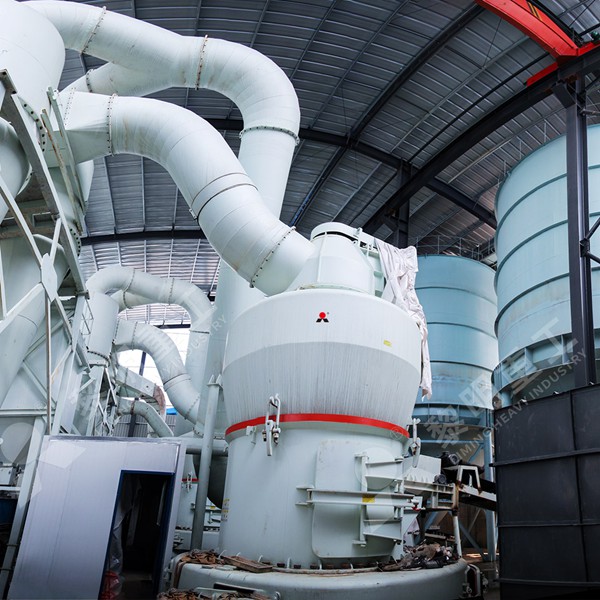
When selecting a small-scale Raymond Mill for limestone, key specifications to evaluate include capacity (typically ranging from 1.2 to 4.5 tons per hour for standard models), input feed size, and the required product fineness range. The system's footprint is relatively compact, making it suitable for operations with limited space. Its energy consumption is primarily driven by the main grinding motor and the blower fan, and modern designs focus on optimizing airflow and grinding efficiency to reduce specific power consumption per ton of product.
Beyond standalone operation, the Raymond Mill can serve as the heart of a complete grinding line. It is commonly paired with auxiliary equipment such as a jaw crusher for primary size reduction, bucket elevators, storage silos, and automated packing systems. This configurability allows businesses to start with a core grinding unit and expand their production line as demand grows. The proven technology offers a lower-risk investment path for entrepreneurs and small enterprises entering the ground calcium carbonate (GCC) or industrial limestone powder market.
In conclusion, the small-scale limestone Raymond grinding machine embodies a perfect synergy of time-tested mechanical principles and modern manufacturing execution. It provides a cost-effective, reliable, and environmentally sound solution for producing high-quality limestone powder. For companies prioritizing operational stability, product consistency, and sustainable practices, investing in a robustly engineered Raymond Mill from a seasoned manufacturer like LIMING HEAVY INDUSTRY represents a strategic step towards building a competitive and resilient mineral processing operation.
Frequently Asked Questions (FAQ)
- What is the typical moisture content limit for limestone processed in a Raymond Mill?
The Raymond Mill is suitable for grinding materials with humidity less than 6%. For limestone with higher moisture, an integrated drying system or a pre-drying step may be required. - Can the Raymond Mill handle materials other than limestone?
Yes. It is versatile and can process various non-flammable, non-explosive minerals under Mohs hardness 7, such as calcite, potash feldspar, talc, marble, and gypsum. - How is the fineness of the final powder controlled?
Fineness is primarily controlled by adjusting the rotational speed of the built-in classifier. Increasing the speed yields finer powder, while decreasing it produces a coarser product. - What are the main wear parts in a Raymond Mill grinding limestone?
The primary wear components are the grinding rollers and the grinding ring. These are typically made from wear-resistant materials to extend service life when processing moderately abrasive materials like limestone. - Is the system environmentally friendly regarding dust emission?
Absolutely. The system operates under negative pressure and is equipped with a high-efficiency pulse dust collector, ensuring dust-free operation and compliance with environmental regulations.


