Published on: October 26, 2023
In the demanding world of industrial mineral processing, achieving high throughput with consistent fineness is a paramount challenge. Addressing this need head-on, Liming Heavy Industry introduces its flagship 6R4525 Large Capacity Limestone Raymond Mill—a machine engineered to redefine efficiency and reliability in large-scale powder production. Building upon decades of expertise in crushing and grinding technology, this mill represents the culmination of precision manufacturing and innovative design, specifically optimized for processing non-metallic minerals like limestone, gypsum, and calcium carbonate. It combines robust construction with advanced milling dynamics to deliver unparalleled capacity and product quality, making it an ideal cornerstone for power plant desulfurization, construction material manufacturing, and chemical processing plants seeking sustainable and productive solutions.
Liming Heavy Industry Co., Ltd., founded in 1987, has established itself as a leader in manufacturing large and medium-sized crushing and grinding equipment. With a modern management system and a steadfast commitment to research and development, the company operates from extensive facilities in Zhengzhou's HI-TECH Industry Development Zone and Shangjie Industry Park. This foundation of innovation is directly channeled into products like the 6R4525 Raymond Mill. The mill is not merely an iteration but a significant evolution, designed to handle the rigorous, continuous demands of modern industry. Its development is driven by a mature scientific research team focused on tackling key technological frontiers, ensuring that every component contributes to enhanced competitiveness and operational excellence.
The core strength of the 6R4525 model lies in its substantial capacity and adaptability. While traditional Raymond mills might be limited in output, this large-capacity variant is engineered for projects requiring high-volume powder production without compromising on fineness control. It is suitable for grinding various non-flammable, non-explosive materials with a Mohs hardness under 7 and humidity less than 6%. The output fineness can be precisely adjusted within a range of 613μm to 44μm (approximately 30 to 400 mesh), catering to diverse application specifications from coarse fillers to finer industrial powders.
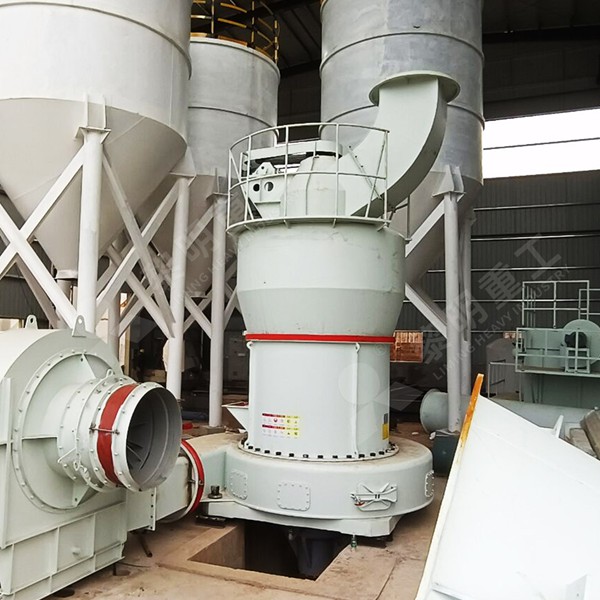
At the heart of its operation is a refined grinding mechanism. The system typically includes the mill mainframe, separator, air blower, jaw crusher, vibrating feeder, and dust collector. Large limestone lumps are first reduced by a jaw crusher and then evenly fed into the grinding chamber via a variable-frequency feeder. Inside, materials are ground between the grinding rollers and the ring. The ground powder is carried upward by the air flow to the classifier. Particles meeting the fineness requirement pass through the separator and are collected as final product, while oversized particles fall back for regrinding. This closed-circuit system, coupled with an efficient pulse dust collector, ensures high powder collection rates and minimal environmental dust emission, fully complying with stringent environmental standards.
What sets the 6R4525 apart is its design focus on durability and low maintenance. Key wear parts, such as the grinding rollers and ring, are manufactured from high-chromium or wear-resistant alloy materials, significantly extending service life and reducing downtime. The automatic electric control system simplifies operation, allowing for centralized monitoring and adjustment of feeding rate, grinding fineness, and internal temperature. This automation not only stabilizes product quality but also optimizes energy consumption, a critical factor in large-capacity operations.
The applications for this powerful mill are extensive. It is particularly dominant in limestone processing for power plant flue gas desulfurization (FGD), where large volumes of high-quality limestone powder are essential. It is equally effective in producing heavy calcium carbonate for plastics and paints, grinding gypsum for construction boards, and pulverizing various non-metallic ores. Its reliability and consistency make it a preferred choice for building new production lines or upgrading existing ones to achieve higher output and better product uniformity.
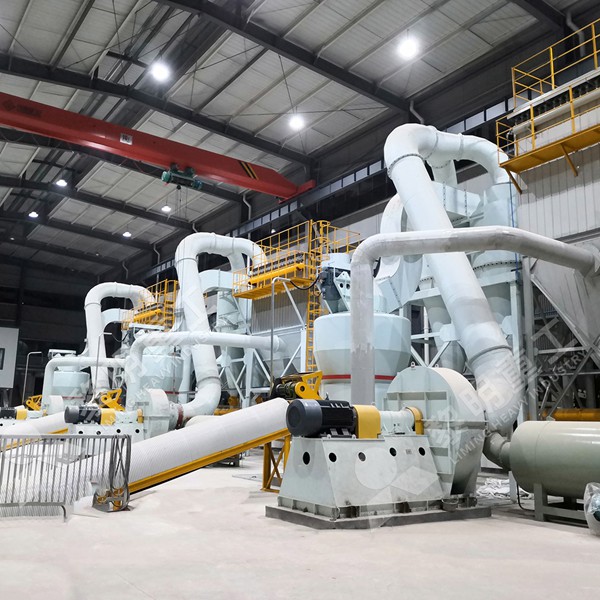
Liming Heavy Industry's philosophy of integrating "production, learning, and research" is evident in the 6R4525 Raymond Mill. It embodies the company's dedication to technological progress and customer-centric solutions. By offering a machine that balances massive capacity with precision, durability with efficiency, and performance with environmental responsibility, Liming provides a future-proof asset for any serious player in the mineral powder industry. The 6R4525 is more than just equipment; it is a strategic partner in scaling production and securing a competitive edge in the global market.
Frequently Asked Questions (FAQs)
- What is the primary application of the 6R4525 Large Capacity Raymond Mill?
The mill is primarily designed for large-scale grinding of non-metallic minerals like limestone, gypsum, calcium carbonate, and other materials with Mohs hardness below 7. It is extensively used in power plant desulfurization, construction materials manufacturing, and the chemical industry. - How does the fineness adjustment work on this mill?
The final product fineness is controlled by the built-in separator (classifier). By adjusting the speed of the separator's rotor, the cut-point for particle size can be changed, allowing operators to achieve a precise output ranging from 44μm to 613μm to meet specific project requirements. - What kind of maintenance does the grinding system require?
Regular maintenance focuses on wear parts like grinding rollers and rings. Thanks to their wear-resistant material, their service life is prolonged. The centralized lubrication system and easily accessible inspection doors simplify routine checks and part replacement, minimizing operational interruptions. - Is the grinding process environmentally friendly?
Yes. The system operates as a negative pressure, closed-circuit loop. It is equipped with a high-efficiency pulse dust collector that captures over 99% of airborne particles, ensuring dust emissions are well within national and international environmental protection standards. - Can the mill handle materials with some moisture?
The mill is designed for materials with humidity less than 6%. For feeding materials with higher surface moisture, an integrated drying function using hot air from a dedicated furnace can be arranged to ensure stable grinding efficiency and prevent clogging.


