Published: October 26, 2023
In the demanding world of industrial mineral processing, achieving a consistent, uniform particle size in limestone powder is a critical benchmark for product quality and process efficiency. For over three decades, Liming Heavy Industry Co., Ltd. has been at the forefront of grinding technology, developing a comprehensive portfolio of equipment engineered specifically to meet this challenge. From large-scale power plant desulfurization to high-precision filler production for plastics and paints, our solutions—including the LM Vertical Roller Mill, Raymond Mill, MTW European Type Grinding Mill, MW Micro Powder Mill, and Ball Mill—are designed to deliver precise particle size distribution, operational reliability, and energy efficiency. This article delves into the technological principles and applications of these systems, highlighting how modern engineering transforms raw limestone into a valuable, specification-grade powder.
Founded in 1987, Liming Heavy Industry has grown from a domestic machinery manufacturer into a global leader, with its headquarters and extensive production facilities in Zhengzhou's HI-TECH Industry Development Zone. Our philosophy is rooted in a steadfast commitment to scientific research and technological innovation. We operate on a "production, learning, and research" model, where a mature R&D team continuously targets the industry's technological frontier. This dedication is embodied in every piece of equipment we produce, ensuring they are not just tools, but integrated systems for precision grinding.
The quest for uniform particle size begins with understanding the application. For instance, limestone powder used for flue gas desulfurization (FGD) in power plants requires a specific fineness to maximize surface area and reactivity with sulfur oxides. Conversely, fillers for polymers or paper coatings demand ultra-fine, consistent particles to enhance material properties. Our equipment range is tailored to cover this entire spectrum.
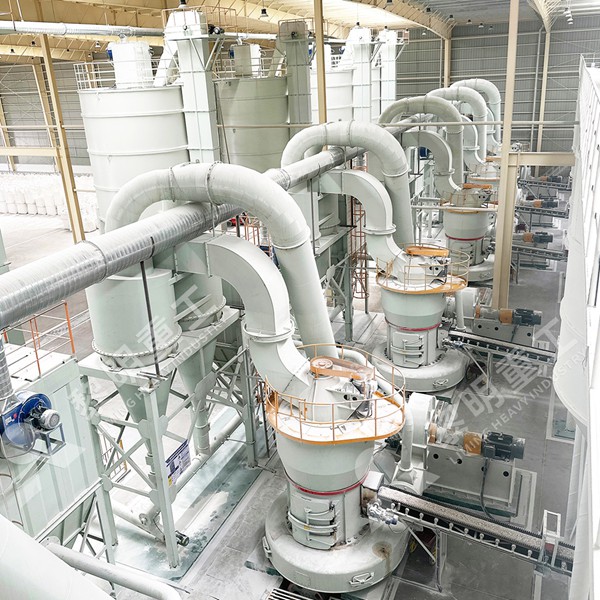 For general-purpose grinding with excellent uniformity in the medium-fineness range, the Raymond Mill remains a workhorse. Suitable for materials under Mohs hardness 7 and 6% humidity, it produces powder between 44μm and 613μm. Its robust design and simplicity make it ideal for processing limestone for construction materials and chemical precursors. Building upon this legacy, the MTW European Type Trapezium Mill represents a significant technological leap. As an upgrade to traditional pendulum mills, it incorporates patented technology for greater stability and productivity. Its closed-circuit grinding system—comprising a jaw crusher, vibrating feeder, mill, separator, and pulse dust collector—ensures a highly efficient process. Lump limestone is first crushed, then fed into the grinding chamber where rollers grind it against a ring. The airflow carries the powder to a separator; oversized particles fall back for regrinding, while qualified powder is collected. This internal circulation is key to achieving tight particle size control and energy savings, making it a premier choice for large-scale heavy calcium carbonate production and power plant desulfurization projects.
When the application calls for superfine powders, the MW Micro Powder Mill excels. Incorporating advanced Swedish grinding technology, it can produce powders as fine as d97 ≤ 5μm (approximately 2500 mesh). Its working principle involves a main shaft driving turnplates, with dozens of rollers rotating against a raceway ring. Material fed to the center is distributed under centrifugal force and ground repeatedly. Equipped with a high-efficiency pulse precipitator, it operates as a clean, environmentally friendly system perfect for producing high-value limestone fillers used in plastics, paints, and sealants.
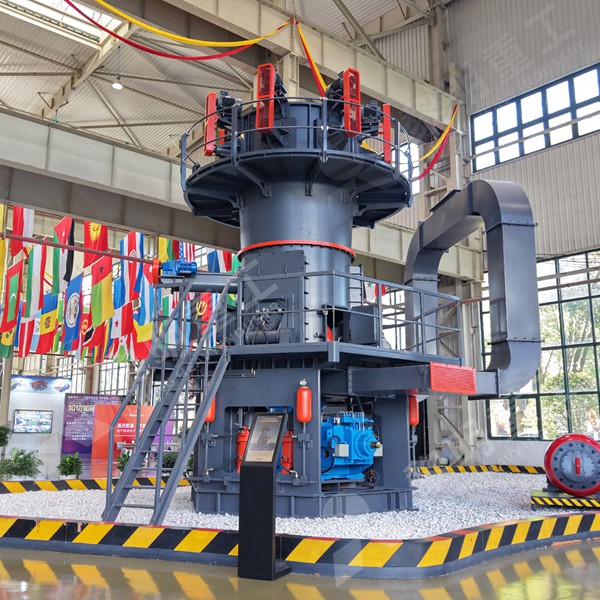
For massive production capacity where drying is also required, the LM Vertical Roller Mill is an integrated solution. It combines drying, grinding, powder selection, and conveying in a single unit. With capacities ranging from 10 to 400 tons per hour, it handles input sizes up to 55mm. The material bed grinding principle between rollers and a rotating table ensures low energy consumption per ton and excellent particle size uniformity. This makes it particularly effective for processing limestone in cement raw meal preparation and slag composite powder production.
 The Ball Mill, a classic in the industry, offers unparalleled versatility. It can grind limestone alongside other materials in wet or dry processes. As a horizontal rotating cylinder lined with special liners and filled with grinding media (steel balls), it reduces material through impact and attrition. While traditionally associated with broader particle distributions, modern Ball Mills from Liming, when paired with high-efficiency classifiers, can also produce consistently graded powders for applications in ceramics, construction chemicals, and beneficiation.
Ultimately, selecting the right equipment hinges on the desired fineness, capacity, moisture content, and overall system design. Liming Heavy Industry provides more than just machines; we offer complete technological solutions. Our engineers work closely with clients to analyze requirements and recommend the optimal grinding circuit, ensuring the final limestone powder product meets exact specifications for uniformity and quality, thereby driving efficiency and value in our clients' operations.
Frequently Asked Questions (FAQs)
- What is the primary advantage of the MTW European Type Mill over a traditional Raymond mill for limestone processing?
The MTW mill incorporates patented technological upgrades that enhance stability, increase productivity, and improve energy efficiency. Its curved air duct and internal powder recycling system create a more optimized airflow, leading to better classification and a more uniform final product with less energy consumption per ton. - Can the MW Micro Powder Mill handle materials other than limestone?
Absolutely. While excellent for ultra-fine limestone (calcium carbonate), the MW Mill is also designed for processing other non-flammable, non-explosive materials with Mohs hardness below 7, such as calcite, dolomite, kaolin, bentonite, and gypsum, for high-value industrial applications. - How does the LM Vertical Roller Mill achieve integrated drying and grinding?
The LM mill features a hot air inlet that introduces heated gas into the grinding chamber. As the material is ground on the rotating table, it is simultaneously suspended and dried by this upward hot airflow before being conveyed to the separator, eliminating the need for a separate dryer in many cases. - What factors determine the choice between a Ball Mill and a vertical roller mill like the LM series for a limestone grinding project?
Key factors include required production capacity, initial moisture of the limestone, desired fineness, and energy consumption goals. Vertical roller mills like the LM series generally offer higher energy efficiency, integrated drying, and a smaller footprint for large-capacity projects. Ball mills offer extreme versatility and can be part of more complex processing circuits. - Are Liming's grinding systems environmentally compliant?
Yes. All our modern grinding systems, especially the MTW, LM, and MW mills, are designed with integrated high-efficiency pulse jet bag dust collectors or precipitators. These systems ensure that dust emissions are controlled well within international environmental protection standards, creating a cleaner and safer workplace.


