Published on: October 26, 2023
In the realm of industrial mineral processing, achieving precise and adjustable fineness in limestone grinding is a critical requirement for sectors ranging from construction to environmental protection. LIMING HEAVY INDUSTRY CO., LTD., a pioneer in crushing and grinding equipment since 1987, addresses this need with its advanced Raymond Mill technology. This mill is engineered to deliver highly adjustable output fineness between 613μm and 44μm, catering to diverse specifications for non-flammable, non-explosive materials like limestone with humidity below 6%. Combining robust construction, energy-efficient operation, and a closed-loop system that minimizes dust emissions, this equipment stands as a cornerstone for producing high-quality limestone powder used in applications such as power plant desulfurization, heavy calcium carbonate production, and building materials manufacturing. Its design reflects decades of commitment to scientific research, precision manufacturing, and innovation, ensuring reliability and performance in large and medium-scale operations worldwide.
At the heart of LIMING HEAVY INDUSTRY's grinding solutions lies a deep-rooted philosophy of integrating research, development, and practical application. Founded over three decades ago, the company has evolved into a leader in domestic and international machinery manufacturing, with headquarters in Zhengzhou's HI-TECH Industry Development Zone and expansive facilities covering thousands of square meters. This growth is driven by a focus on "scientific research tackling key problems" and a "production, learning, and research" approach, leveraging a mature R&D team to push technological boundaries. The Raymond Mill exemplifies this ethos, incorporating advancements that enhance product competitiveness while adhering to modern management systems and environmental standards. By prioritizing innovation, LIMING ensures its equipment not only meets but exceeds industry demands for efficiency and sustainability.
The Raymond Mill's operational excellence stems from its sophisticated working principle, which optimizes every stage of the grinding process. The system begins with a jaw crusher reducing large limestone lumps to a manageable input size of 15-25mm. Materials are then fed uniformly into the grinding chamber via a vibrating feeder, where they are ground between rollers and a ring. As particles are pulverized, an air flow carries them upward to a separator; finer particles pass through to become finished product, while coarser ones fall back for regrinding. This closed-loop system, supported by an air blower and pulse dust collector, ensures minimal waste and compliance with environmental regulations. The result is a consistent, adjustable powder output that can be fine-tuned for specific industrial needs, from coarse aggregates to ultra-fine fillers.
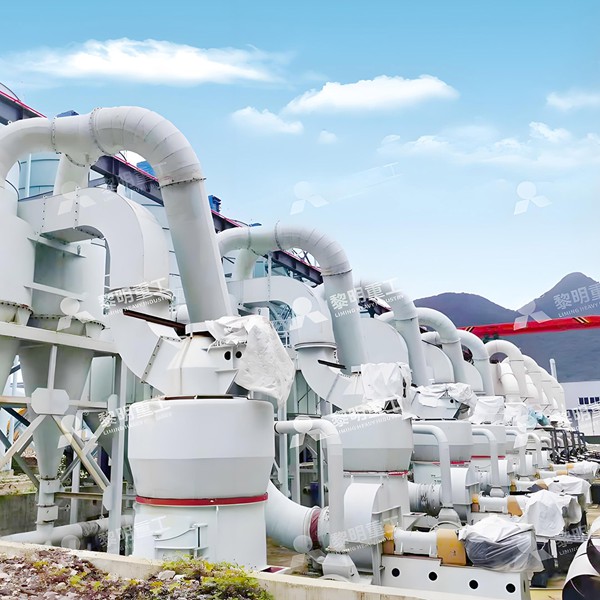
What sets this Raymond Mill apart is its versatility in handling limestone applications across multiple industries. In power plants, it plays a pivotal role in flue gas desulfurization by producing fine limestone powder that reacts with sulfur dioxide, reducing emissions and supporting cleaner energy production. For construction and chemicals, the mill generates calcium carbonate powders used in plastics, paints, and cement, where fineness directly impacts product quality. The equipment's capacity of 1.2-4.5T/H makes it suitable for both dedicated lines and integrated processing systems. Moreover, its design emphasizes durability and low maintenance, with components like grinding rings and rollers crafted for longevity under continuous operation. This adaptability ensures that users can rely on it for diverse projects, from small-scale mineral processing to large industrial complexes.
Beyond the Raymond Mill, LIMING HEAVY INDUSTRY offers a comprehensive portfolio of grinding solutions, each tailored to specific requirements. For instance, the MTW European Type Trapezium Mill serves as an upgraded version with higher productivity for large-scale limestone powder production, while the MW Micro Powder Mill excels in superfine grinding up to 5μm for specialized applications. However, the Raymond Mill remains a preferred choice for its balance of adjustability, efficiency, and cost-effectiveness in limestone processing. The company's commitment to innovation is evident in features like automated control systems and energy-saving designs, which reduce operational costs and enhance precision. By leveraging advanced Swedish grinding technology and in-house R&D, LIMING continuously refines its mills to meet evolving market trends, such as the growing demand for eco-friendly industrial equipment.
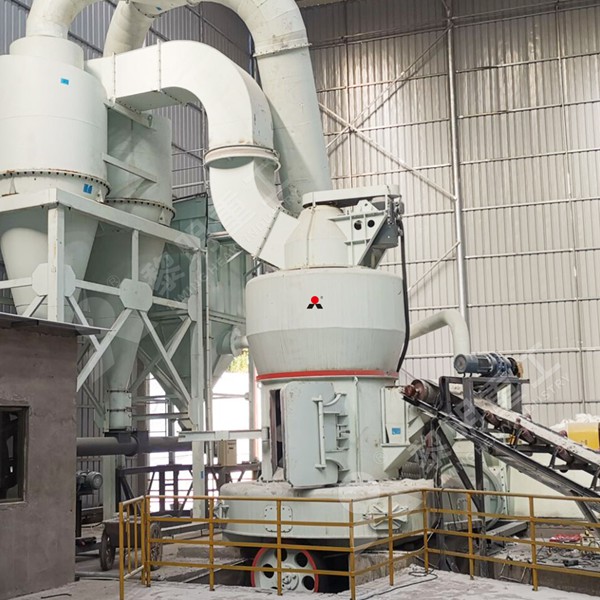
Looking ahead, the future of limestone grinding is intertwined with advancements in automation and sustainability. LIMING HEAVY INDUSTRY's Raymond Mill is poised to adapt to these trends through integrations with smart monitoring systems and enhanced dust collection technologies. The company's focus on "technological progress and technological improvement" ensures that its equipment will continue to support industries in achieving higher fineness control with reduced energy consumption. As global regulations tighten around emissions and material quality, this mill offers a reliable solution for producing consistent, high-grade limestone powder. For businesses seeking to optimize their grinding processes, investing in such adaptable machinery is not just an operational upgrade but a strategic move toward long-term competitiveness and environmental stewardship.
Frequently Asked Questions (FAQs)
1. What is the typical output fineness range of the Raymond Mill for limestone?
The mill produces powder with adjustable fineness between 613μm and 44μm, allowing customization for various industrial requirements.
2. Can this mill handle materials other than limestone?
Yes, it is suitable for processing non-flammable, non-explosive materials under 7 Mohs hardness and less than 6% humidity, including gypsum and calcium carbonate.
3. How does the closed-loop system benefit the grinding process?
The closed system recycles air flow and incorporates a pulse dust collector, minimizing waste, reducing dust emissions, and ensuring compliance with environmental standards.
4. What industries commonly use this equipment?
Key applications include power plant desulfurization, construction materials, chemical manufacturing, and non-metallic mineral processing.
5. Is the mill suitable for large-scale production?
With a capacity of 1.2-4.5T/H and robust design, it is ideal for medium to large operations, though LIMING also offers higher-capacity models like the MTW European Type Mill for expanded needs.


