Published: October 26, 2023
For industries requiring consistent, high-volume production of fine calcite powder in the 80 to 600 mesh range, the Raymond Roller Mill remains a cornerstone of efficient mineral processing. Combining decades of proven mechanical design with modern technological refinements, this mill offers a reliable solution for achieving precise fineness control, excellent product uniformity, and stable operation. Particularly suited for non-explosive, non-flammable materials with Mohs hardness under 7, such as calcite, it integrates grinding, classifying, and conveying into a cohesive system. This article delves into the operational principles, technical advantages, and specific applications of the Raymond Mill in calcite processing, highlighting its role in delivering high-quality fine powder for diverse industrial sectors.
At LIMING HEAVY INDUSTRY CO., LTD., our expertise, rooted in over three decades of manufacturing crushing and grinding equipment, informs the continuous development of our milling solutions. Founded in 1987 and now a leader in domestic and overseas machinery manufacturing, our commitment to scientific research, precision manufacturing, and technological innovation is embedded in every Raymond Mill we produce. Our facilities, spanning modern industrial zones in Zhengzhou, are dedicated to advancing product competitiveness through rigorous R&D, ensuring our equipment meets the evolving demands of the global market.
The Raymond Roller Mill operates on a well-established yet highly effective principle. Material, fed into the grinding chamber (size typically 15-25mm for calcite), is shoveled by the blades to the space between the grinding ring and rollers. Under centrifugal force, the rollers swing outward and press tightly against the ring. As the grinding ring rotates, the material is crushed and ground. The ground powder is then carried by the air flow from the blower into the classifier (separator) above the grinding chamber. Here, a critical separation occurs: oversized particles are rejected and returned for regrinding, while particles meeting the target fineness pass through and are collected as the final product via a cyclone collector or bag filter. This closed-circuit system ensures high classification efficiency and consistent output quality.
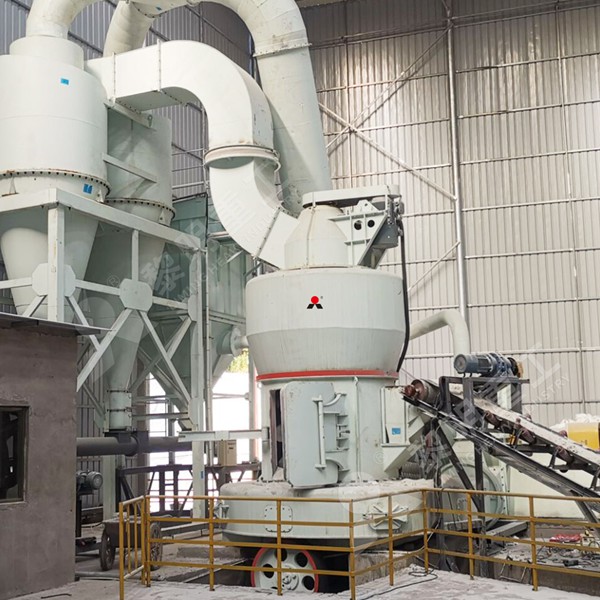
For calcite powder production, the Raymond Mill's capability to produce fineness between 613μm (approximately 25 mesh) and 44μm (approximately 325 mesh) covers a broad spectrum of industrial needs. However, through optimized adjustments to the classifier speed and grinding pressure, along with potential system modifications, the effective range can be extended to achieve products as fine as 600 mesh (~23μm). This makes it exceptionally versatile for calcite applications, which range from coarse fillers to fine functional powders used in plastics, paints, coatings, adhesives, and paper. The mill's integrated drying function is another key advantage when processing calcite with slight moisture content (less than 6%), allowing for simultaneous grinding and drying, which streamlines the production process.
Operational stability and environmental compliance are paramount in modern mineral processing. The Raymond Mill system is designed as a negative pressure, closed-loop circuit. Air circulates within the system, minimizing dust emissions. Furthermore, the integration of efficient pulse-jet bag dust collectors or other advanced filtration systems at the final exhaust point ensures that the entire production line complies with stringent environmental protection standards. This commitment to greener production aligns with LIMING HEAVY INDUSTRY's philosophy of technological improvement and sustainable development.
When compared to other fine grinding options, such as ball mills or more advanced micro-powder mills, the Raymond Mill offers a compelling balance of capacity, energy efficiency, and fineness range for calcite. While ball mills are highly versatile, they may be less energy-efficient for dedicated fine powder production in this specific range. On the other hand, ultra-fine grinding mills like the MW Micro Powder Mill are superior for producing powders finer than 1250 mesh but may have different capacity and cost considerations for the 80-600 mesh target. The Raymond Mill, therefore, occupies a strategic niche, offering robust, high-capacity (typically 1.2-4.5 T/H for standard models) production of fine to very fine calcite powder with relatively low operational complexity and maintenance requirements.
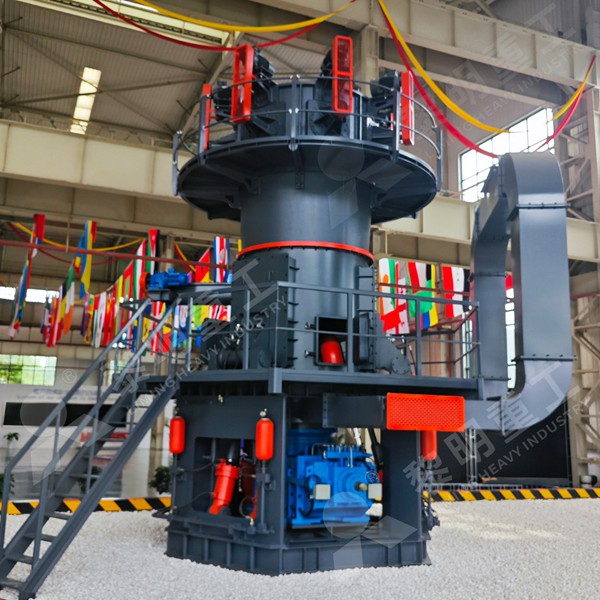
In conclusion, the Raymond Roller Mill from LIMING HEAVY INDUSTRY stands as a time-tested and continuously refined solution for producing 80-600 mesh calcite powder. Its mechanical reliability, efficient closed-circuit grinding and classifying system, integrated drying capability, and adherence to environmental norms make it a preferred choice for many manufacturers. By leveraging our extensive research and manufacturing prowess, we ensure that each mill delivers the performance, consistency, and durability required to be a productive asset in your mineral processing operations, helping you meet the quality demands of today's competitive markets.
Frequently Asked Questions (FAQ)
- What is the typical moisture content limit for calcite processed in a Raymond Mill?
The Raymond Mill is suitable for grinding materials with a moisture content generally below 6%. Its integrated hot air system can effectively dry and grind the material simultaneously. - Can the Raymond Mill achieve a fineness of 600 mesh for calcite consistently?
Yes, with proper system configuration, including a high-efficiency classifier and optimized grinding parameters, the Raymond Mill can consistently produce calcite powder in the 600 mesh (approx. 23μm) range. - How does the Raymond Mill ensure uniform particle size distribution?
The internal classifier (separator) continuously rejects coarse particles back to the grinding chamber for further size reduction. This closed-circuit operation ensures only particles meeting the target fineness exit the system, guaranteeing a uniform final product. - What are the main wear parts in a Raymond Mill grinding calcite, and what is their typical service life?
The primary wear parts are the grinding rollers and the grinding ring. Their service life depends on the abrasiveness of the feed material and operating hours. For calcite (Mohs hardness ~3), these parts offer extended durability, often lasting several thousand hours before requiring refurbishment or replacement. - Is the Raymond Mill system environmentally friendly regarding dust control?
Absolutely. The system operates under negative pressure in a closed loop. The final exhaust is equipped with high-efficiency dust collection equipment, such as pulse-jet bag filters, which capture over 99.9% of particulate matter, ensuring emissions meet strict environmental standards.


