Published on: October 26, 2023
In the realm of large-scale industrial mineral processing, the demand for high-capacity, efficient, and reliable grinding solutions is paramount. For producers targeting massive volumes of calcite powder—a critical raw material in plastics, paints, construction, and pharmaceuticals—traditional milling equipment often falls short in throughput, energy efficiency, or product consistency. Addressing this gap, Liming Heavy Industry has engineered a next-generation, high-capacity Raymond Mill system specifically optimized for large-scale calcite powder production. This advanced mill integrates decades of grinding expertise with modern technological innovations, delivering unparalleled processing capacity, superior fineness control ranging from coarse to fine powders, and robust operational stability. It represents a transformative solution for enterprises aiming to scale up production while maintaining stringent quality standards and reducing per-ton operational costs.
Founded in 1987, Liming Heavy Industry Co., Ltd. has established itself as a global leader in the design and manufacturing of large and medium-sized crushing and grinding equipment. With its headquarters and major production facilities spanning over 147,000 square meters in Zhengzhou's HI-TECH Industry Development Zone and Shangjie Industry Park, the company operates under a modern, integrated system of research, manufacturing, and sales. For over three decades, Liming has adhered to a philosophy of precision manufacturing, continuous innovation, and scientific management. This commitment is embodied in its core strategy of driving product competitiveness through dedicated R&D, technological advancement, and collaboration in production, learning, and research. The development of the high-capacity Calcite Raymond Mill is a direct result of this focused approach, leveraging a mature scientific research team to push the boundaries of industrial grinding technology.
The core of this solution is an evolution of the classic Raymond mill principle, re-engineered for monumental output. While standard Raymond mills are renowned for processing non-flammable, non-explosive materials with Mohs hardness below 7 and humidity under 6%, their capacity has traditionally been a limiting factor for mega-projects. Liming's high-capacity model shatters these limitations. The system is a sophisticated, closed-loop circuit comprising the grinding mill itself, a high-efficiency separator, an air blower, a jaw crusher for primary size reduction, a vibrating feeder, and integrated dust collection and powder conveying systems. Large calcite lumps are first reduced to a consistent feed size (typically 15-50mm) by the crusher. The material is then fed uniformly into the grinding chamber where the pivotal action occurs.
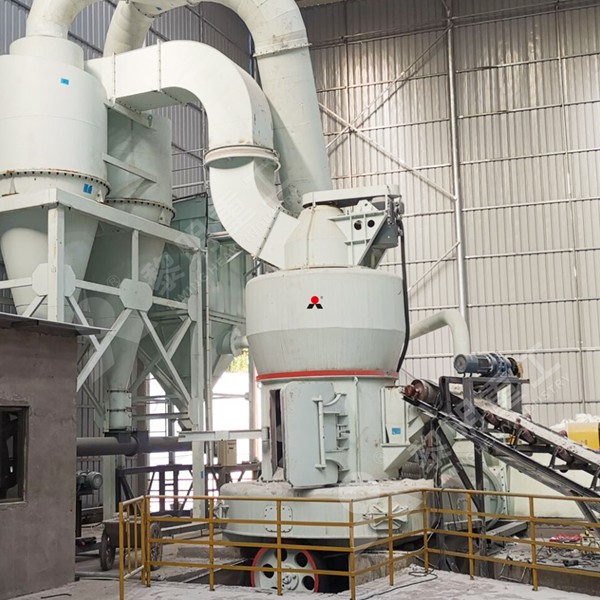
Inside the mill, multiple grinding rollers rotate against a stationary grinding ring. The calcite is fed into this gap and is ground through a combination of compression and shear forces. The ground particles are carried upward by the airflow generated by the system's blower into a high-precision separator. Here, a critical classification takes place: particles meeting the target fineness (adjustable within a wide range, e.g., 44μm to 613μm) pass through and are collected as the final product. Oversized particles are rejected by the separator and fall back into the grinding zone for further comminution. This internal recirculation ensures maximum efficiency and consistent product quality. The entire airflow is recycled within the closed system, and any residual dust is captured by a pulse-jet baghouse dust collector, ensuring the operation meets stringent environmental protection standards.
What truly sets this mill apart for calcite processing is its scale. Engineered with a larger grinding chamber, more robust rollers and rings, and a powerful, optimized air system, it achieves a throughput that is multiples of conventional Raymond mills. This makes it ideal for dedicated production lines requiring tens to hundreds of tons per hour of high-quality calcite powder. The mill's design emphasizes not just capacity but also operational durability and ease of maintenance. Key wear parts are manufactured from high-chromium or special alloy steels to withstand the abrasive nature of calcite, extending service life and reducing downtime. Furthermore, the integration of an automatic electric control system allows for centralized monitoring and adjustment of feeding rate, grinding pressure, and classifier speed, enabling operators to fine-tune the process for different fineness requirements with minimal manual intervention.
The applications for the powder produced are vast. In plastics and polymers, finely ground calcite acts as a functional filler and reinforcing agent. In paints and coatings, it provides opacity, improves rheology, and reduces costs. The construction industry consumes enormous quantities in sealants, adhesives, and as a raw material for cement. For such diverse end-uses, consistency is key. Liming's high-capacity Raymond Mill delivers this consistency batch after batch, thanks to its stable mechanical design and precise classification system. For companies looking to consolidate their position as major suppliers in the global calcium carbonate market, investing in such a high-throughput, reliable grinding platform is a strategic move that enhances competitiveness, ensures supply chain stability, and provides a clear path for future capacity expansion.
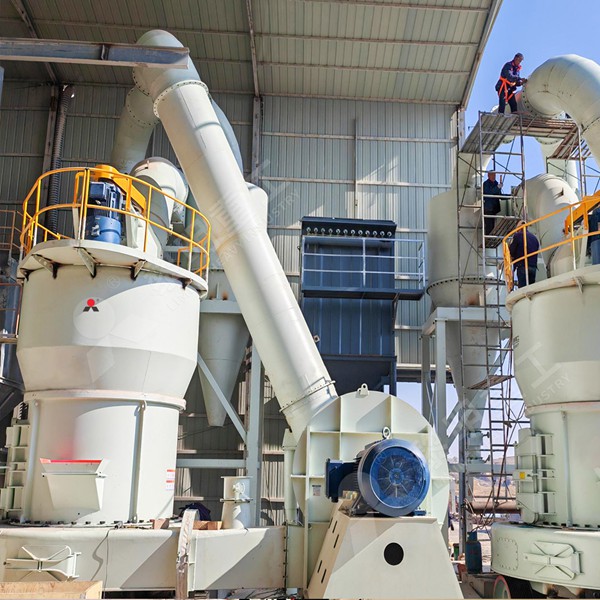
Liming Heavy Industry's commitment extends beyond delivering machinery. It provides comprehensive support, from plant layout and system design to installation guidance, operator training, and after-sales service. This holistic approach ensures that clients can achieve optimal performance from their investment from day one. In conclusion, the high-capacity Calcite Raymond Mill from Liming Heavy Industry represents the pinnacle of large-scale mineral grinding technology. It is a testament to decades of engineering excellence, offering an unmatched combination of scale, efficiency, reliability, and environmental responsibility for the modern mineral processing enterprise.
Frequently Asked Questions (FAQ)
1. What is the typical feed size for this high-capacity Calcite Raymond Mill?
The system is designed to handle calcite feed material with a size typically ranging from 15mm to 50mm. Primary crushing using an integrated jaw crusher is recommended to ensure a consistent and optimal feed size for the grinding chamber.
2. How fine can the finished calcite powder be adjusted to?
The mill's integrated high-efficiency separator allows for precise fineness control. The output can be adjusted within a wide range, generally from about 44 microns (325 mesh) up to 613 microns (approximately 30 mesh), catering to various industrial application requirements.
3. What makes this mill 'high-capacity' compared to a standard Raymond mill?
This model is specifically engineered with a larger grinding chamber, more powerful components, and an optimized airflow system. These enhancements significantly increase material throughput, making it capable of handling large-scale, continuous production demands far exceeding those of conventional Raymond mill setups.
4. How does the system ensure environmental compliance?
The grinding circuit is a fully closed-loop system equipped with a high-efficiency pulse-jet baghouse dust collector. This captures nearly all airborne particulates, ensuring that emissions comply with strict national and international environmental protection standards for particulate matter.
5. What are the key wear parts, and how is maintenance managed?
The primary wear parts are the grinding rollers and the grinding ring. These are constructed from special, durable alloys to withstand abrasion. The modular design facilitates easier inspection and replacement. Furthermore, the automated control system provides operational data that aids in predictive maintenance scheduling, minimizing unplanned downtime.


