Published on: October 26, 2023
This case study examines the successful deployment of a Raymond Mill system by Liming Heavy Industry in a large-scale, 100,000-ton-per-year heavy calcium carbonate (GCC) powder production project. It details the project's technical requirements, the selection rationale for the Raymond Mill, its integration into a complete processing line, and the operational outcomes achieved. The analysis highlights how the mill's reliability, adaptability to material characteristics, and efficient closed-circuit grinding system were instrumental in meeting stringent fineness and capacity targets while ensuring stable, continuous production for the end-user in the industrial fillers and coatings sector.
The client's objective was to establish a high-capacity production line dedicated to processing limestone into fine-ground calcium carbonate powder, primarily used as a functional filler. Key challenges included handling a consistent feed of medium-hardness limestone, achieving a tightly controlled product fineness between 200 to 400 mesh, and ensuring the entire process was enclosed and environmentally compliant to minimize dust emissions.
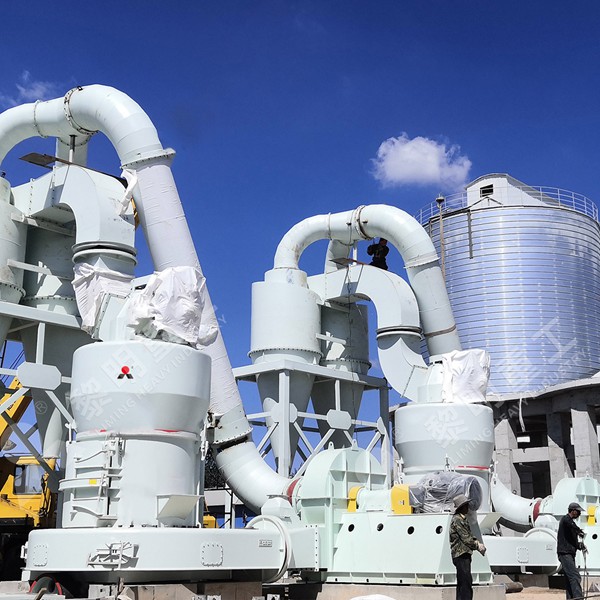
After a thorough technical review, Liming Heavy Industry recommended its Raymond Mill as the core grinding equipment. The decision was based on several factors. Firstly, the mill is specifically engineered for non-flammable, non-explosive minerals with Mohs hardness below 7, making it perfectly suited for limestone. Its grinding mechanism—where rollers rotate against a stationary ring to crush and grind the material—provides a consistent and controllable particle size distribution. Furthermore, the system's inherent design integrates drying, grinding, classification, and conveying into a single, streamlined unit, which simplifies layout and operation.
The complete system supplied was more than just a standalone mill. It constituted a turnkey grinding circuit. The raw limestone, crushed to under 25mm by a preceding jaw crusher, was fed via a vibrating feeder into the Raymond Mill. Inside the grinding chamber, the material was pulverized between the rollers and the grinding ring. The ground powder was then carried by the induced air flow from the system's blower to an integrated high-efficiency classifier. Here, a critical step occurred: oversized particles were rejected and returned for regrinding, while in-spec powder passed through. This closed-loop classification is central to achieving precise fineness control and high energy efficiency, as only the target product is collected.
Operational results confirmed the technical selection. The Raymond Mill system consistently delivered the required 4.5 T/H output, comfortably scaling to meet the annual 100,000-ton target. Product fineness was easily adjustable within the specified range by modifying the classifier's speed, offering the client flexibility for different product grades. The system's stability was a standout feature, enabling continuous 24/7 operation with minimal unplanned downtime, which is paramount for large-scale industrial production.
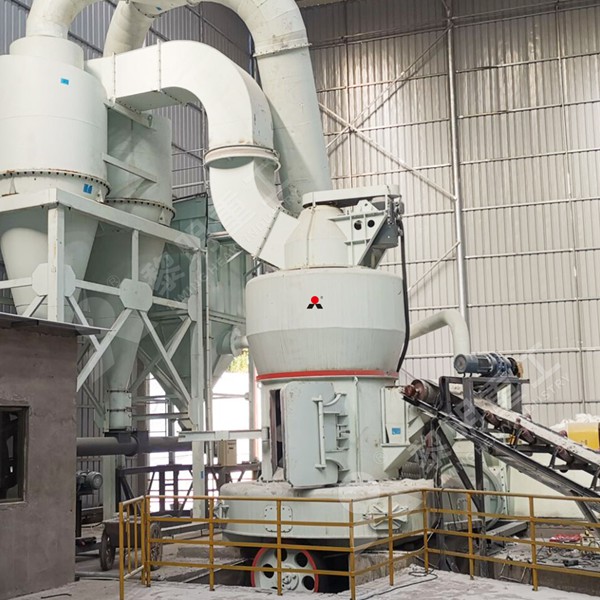
From an environmental and maintenance perspective, the project benefited greatly from the mill's enclosed negative-pressure design. The entire grinding and conveying process occurs within sealed ducts, with a pulse-jet baghouse dust collector ensuring that emissions are far below regulatory limits. This not only protects the workplace but also maximizes product yield. Maintenance routines are straightforward, focusing on the wear parts like grinding rolls and rings, which are designed for easy access and replacement, keeping long-term operating costs predictable.
In conclusion, this 100,000-ton project serves as a robust validation of the Raymond Mill's capabilities in heavy calcium carbonate production. By combining proven grinding principles with a modern, system-level approach that includes precise classification and dust collection, Liming Heavy Industry provided a solution that balanced high productivity with product quality and operational reliability. The success underscores the importance of selecting mature, purpose-built technology for large-volume mineral processing applications, where performance consistency and total cost of ownership are decisive factors.
Frequently Asked Questions (FAQ)
- What is the primary advantage of a Raymond Mill over a basic ball mill for calcium carbonate processing?
Raymond Mills utilize a vertical grinding mechanism with integrated air classification, allowing for immediate particle size separation and more energy-efficient production of fine powders in specific ranges, whereas ball mills are better for broader or coarser grinding. - How is product fineness controlled in this Raymond Mill system?
Fineness is precisely regulated by adjusting the rotational speed of the built-in turbine classifier. Faster speeds allow only finer particles to pass, resulting in a finer product, and vice versa. - Can this system handle materials with higher moisture content?
The standard Raymond Mill can process materials with humidity up to 6%. For wetter feed, Liming Heavy Industry can integrate a hot air generator into the system to provide concurrent drying during the grinding process. - What are the key wear parts, and what is their typical service life?
The main wear components are the grinding rollers and the grinding ring. Their service life depends on material abrasiveness but typically ranges from several hundred to over a thousand hours of operation before requiring refurbishment or replacement. - Is the system automated, and what level of operational manpower is required?
The grinding line can be equipped with full PLC-based automation for centralized control, monitoring key parameters like pressure and motor load. For a stable line, primary operator tasks involve monitoring, routine inspection, and managing feed rates.


