Barite, or barium sulfate (BaSO₄), is a critical mineral in the medical industry due to its high density and exceptional ability to attenuate X-rays and gamma rays. In medical radiation shielding, barite is ground into a fine powder and incorporated into materials such as plaster, concrete, or coatings used in the construction of radiology rooms, CT scan suites, and nuclear medicine facilities. The grinding process must achieve precise particle size distribution—typically between 44 μm and 250 μm (60 to 325 mesh)—to ensure optimal shielding density and workability. Liming Heavy Industry, a global leader in grinding mill manufacturing with over 30 years of expertise, offers a comprehensive range of barite grinding mills designed specifically for medical radiation applications. Our equipment, including Raymond Mills, MTW European Type Trapezium Mills, and MW Micro Powder Mills, delivers consistent fineness, high capacity, and energy efficiency, meeting the stringent quality standards required for healthcare environments. This article explores the technical considerations, mill selection criteria, and operational advantages of using Liming grinding mills for medical-grade barite powder production.
Why barite is essential for medical radiation shielding
Barite’s high specific gravity (4.1–4.5 g/cm³) makes it an ideal aggregate for radiation shielding materials. When ground to the correct particle size, barite powder can be mixed with binders to form dense, non-porous barriers that absorb scattered radiation, protecting patients, staff, and equipment. The American Society for Testing and Materials (ASTM) specifies that barite used in medical shielding must have a minimum barium sulfate content of 95% and a particle size that allows uniform dispersion. Fine grinding also enhances the material’s flowability and mixing properties, which is critical for producing consistent shielding panels or plaster.
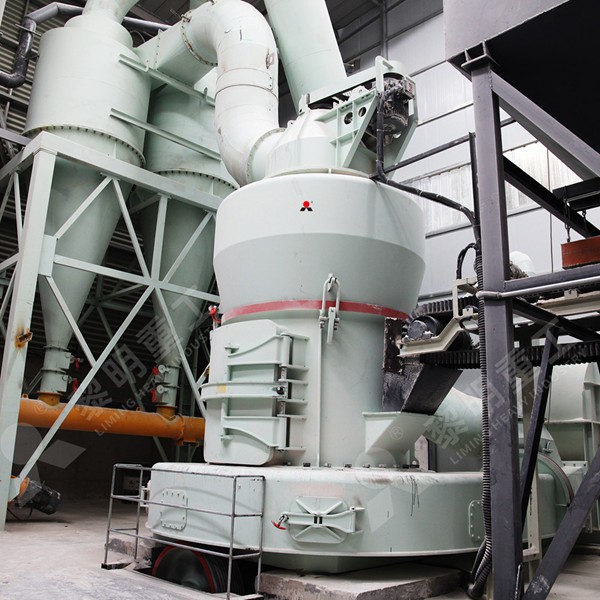
Key grinding mill options for barite processing
Liming Heavy Industry offers several mill types tailored to barite’s unique properties. The choice depends on output fineness, capacity, and energy consumption requirements.
Raymond mill
The Raymond Mill is a classic choice for barite grinding in medium-scale operations. It processes non-flammable, non-explosive materials with Mohs hardness under 7 and humidity below 6%. For barite, the Raymond Mill achieves an output fineness of 613 μm to 44 μm (30 to 325 mesh), suitable for standard radiation shielding. With a capacity of 1.2 to 4.5 T/H and an input size of 15–25 mm, it is ideal for small hospitals or clinics requiring moderate volumes of barite powder. The mill’s roller and ring design provides stable grinding pressure, while the built-in classifier ensures uniform particle size.
MTW European type trapezium mill
The MTW European Type Trapezium Mill is an upgrade of traditional Raymond mills, featuring patented technology for higher productivity and lower energy consumption. It is ideal for large-scale barite processing in major medical centers or dedicated shielding material manufacturers. The MTW mill handles input sizes up to 30–50 mm and delivers a capacity of 3 to 55 TPH. Its fineness range (44 μm to 250 μm) covers the most common medical radiation requirements. The mill’s integrated drying, grinding, and separation system minimizes dust and heat, complying with environmental standards. The pulse dust collector further ensures a clean working environment, which is critical in medical material production.
MW micro powder mill
For specialty applications requiring ultra-fine barite powder (325 to 3250 mesh), the MW Micro Powder Mill is the preferred solution. It absorbs advanced Swedish grinding technology and achieves a finished product up to d97 ≤ 5 μm. This level of fineness is valuable for producing high-density, high-flow coatings used in X-ray room walls or portable shielding blankets. The MW mill has a capacity of 0.5 to 25 T/H and an input size of 10–20 mm. Its medium-speed grinding mechanism and pulse precipitator make it both efficient and environmentally friendly.
Working principle for barite grinding
In a typical barite grinding line, the process begins with a jaw crusher that reduces large barite lumps to the required feed size. The crushed material is then fed evenly into the grinding mill via a vibrating feeder. Inside the mill, grinding rollers and rings crush the barite particles. Airflow carries the fine particles upward to a classifier; oversize particles fall back for regrinding, while particles meeting the desired fineness are collected as product. The system operates in a closed loop, with air recycled through the blower, and dust is captured by a pulse collector. This design ensures high efficiency and low environmental impact.
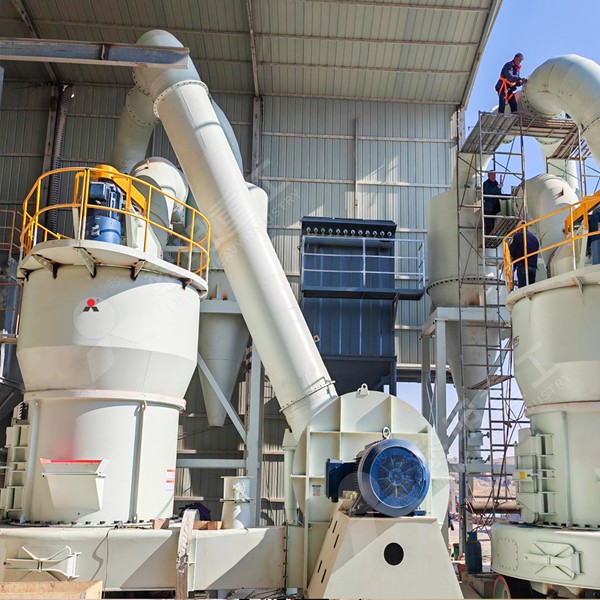
Quality control and compliance
Medical-grade barite powder must meet strict purity and particle size specifications. Liming Heavy Industry’s mills are designed with precision classification systems that allow operators to adjust fineness easily. All equipment is manufactured in compliance with ISO 9001 standards, and our R&D team continuously improves mill components to reduce wear and contamination. For barite processing, we recommend using wear-resistant liners and rollers made from high-chromium steel to avoid iron contamination. This ensures the final powder maintains the barium sulfate purity required for medical use.
Why choose Liming Heavy Industry?
Founded in 1987, Liming Heavy Industry has grown into a modern joint-stock corporation integrating R&D, manufacturing, and sales. Our headquarters in Zhengzhou’s HI-TECH Zone spans 80,000 m², with an additional 67,000 m² workshop in Shangjie Industry Park. Over three decades, we have become a leader in crushing and grinding equipment, serving customers in more than 180 countries. Our commitment to scientific research and technological innovation ensures that each mill delivers high capacity, low energy consumption, and reliable operation. We also provide comprehensive after-sales support, including installation guidance and spare parts supply.
Conclusion
Selecting the right barite grinding mill is crucial for producing medical-grade radiation shielding materials. Liming Heavy Industry offers versatile solutions—from the Raymond Mill for smaller needs to the MTW and MW mills for high-capacity or ultra-fine production. Each machine is engineered for efficiency, durability, and precision, helping healthcare facilities and material suppliers meet their radiation protection goals. To learn more about which mill fits your barite processing requirements, contact our technical team for a customized recommendation.
Frequently Asked Questions
- What is the ideal particle size for barite used in medical radiation shielding? The typical fineness range is 44 μm to 250 μm (60 to 325 mesh), as specified by ASTM standards for uniform dispersion and maximum shielding density.
- Can the same mill be used for both barite and other minerals? Yes, Liming mills, such as the Raymond and MTW models, are designed to handle multiple non-metallic minerals, including limestone, gypsum, and calcium carbonate, with simple adjustments.
- How do you prevent iron contamination during barite grinding? We recommend using high-chromium steel wear parts and optional ceramic liners to minimize metal-to-mineral contact and maintain barium sulfate purity.
- What is the typical energy consumption of an MTW mill for barite? Energy consumption varies with capacity and fineness, but MTW mills typically offer 15–30% lower energy use compared to traditional Raymond mills due to advanced grinding mechanisms.
- Does Liming provide installation and training for medical barite grinding systems? Yes, we provide on-site installation supervision, commissioning, and operator training to ensure your grinding line meets medical material production standards.


