Published: October 4, 2023
Barite, a naturally occurring barium sulfate mineral, has long been recognized for its high density and chemical inertness, making it a critical component in various industrial applications, including oil drilling, paint production, and radiation shielding. However, one of its most underappreciated yet highly effective uses lies in the realm of soundproofing. When ground to specific fineness levels, barite powder acts as a dense filler in acoustic panels, barriers, and coatings, effectively dampening sound transmission by increasing mass and reducing vibration. The key to unlocking this potential lies in the grinding equipment used to process barite. Liming Heavy Industry, a leader in crushing and grinding technology since 1987, offers a comprehensive range of barite grinding mills designed to produce high-quality powders tailored for soundproofing applications. From the robust Raymond Mill to the advanced MTW European Type Trapezium Mill and the ultra-fine MW Micro Powder Mill, Liming’s solutions ensure precise particle size distribution, consistent output, and energy-efficient operations. This article explores how these mills can transform raw barite into a versatile acoustic material, addressing the technical requirements and operational benefits for manufacturers in the soundproofing industry.
The Role of Barite in Soundproofing
Soundproofing materials rely on principles of mass, damping, and absorption to reduce noise transmission. Barite excels in this context due to its high specific gravity (4.2–4.5 g/cm³), which allows for thinner yet heavier acoustic barriers. When processed into fine powders, barite can be compounded with polymers like PVC or polyurethane to create sound-deadening sheets, coatings, or tiles. The particle fineness directly influences the material’s packing density and acoustic performance. For instance, a particle size of 100–400 mesh (approximately 38–150 μm) is commonly required for standard panels, while micro-fine grades below 10 μm are used in specialized films and paints. This variability demands grinding equipment that offers adjustable fineness control, high throughput, and reliable operation—all hallmarks of Liming Heavy Industry’s mill portfolio.
Liming’s Barite Grinding Mills: Technical Comparison
Raymond Mill for Standard Soundproofing Grades
The Raymond Mill remains a workhorse for barite processing, particularly when producing powders in the 80–400 mesh range. With a capacity of 1.2–4.5 T/H and an input size of 15–25 mm, this mill is ideal for small to medium-scale operations. Its grinding mechanism, which uses rollers and rings to crush materials, ensures that barite is ground with minimal over-grinding while maintaining a consistent particle shape. The built-in classifier allows for fineness adjustment, making it suitable for bulk acoustic filler production. For soundproofing manufacturers requiring a cost-effective entry point, the Raymond Mill offers simplicity and reliability. However, its relatively lower throughput compared to more advanced mills may limit its use in high-volume production lines.
MTW European Type Trapezium Mill for High-Capacity Demands
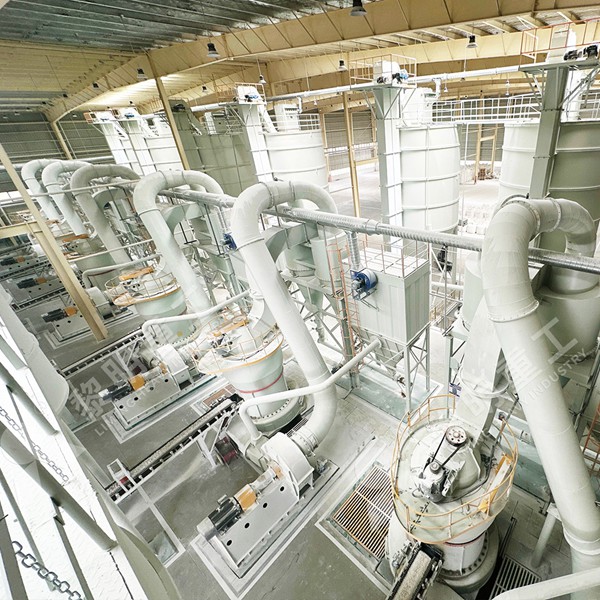
For larger-scale barite grinding operations, the MTW European Type Trapezium Mill stands out. This mill, an upgrade of traditional pendulum mills, features patented technology that enhances productivity and energy efficiency. With a capacity range of 3–55 T/H and an input size of 30–50 mm, it can handle substantial volumes of barite while maintaining a fineness of 80–325 mesh. The mill’s design incorporates a bevel gear drive system, which reduces energy consumption by up to 30% compared to conventional mills. Additionally, its pulse dust collector complies with environmental standards, a critical factor for manufacturers seeking sustainable production methods. The closed-loop airflow system minimizes dust emissions, ensuring a cleaner workspace. For soundproofing applications, the MTW mill’s ability to produce uniform particles with controlled moisture content makes it a preferred choice for producing heavy-duty acoustic panels and barriers.
MW Micro Powder Mill for Ultra-Fine Particle Requirements
When soundproofing demands micro-fine barite powders—such as for acoustic coatings or high-performance films—the MW Micro Powder Mill delivers exceptional results. This medium-speed micro-grinding mill, inspired by Swedish technology, can achieve a final fineness of d97 ≤ 5 μm, with an adjustable range between 325 and 3250 mesh. Its capacity of 0.5–25 T/H and input size of 10–20 mm make it suitable for specialized production runs. The mill’s working principle involves rotating turnplates that drive rollers against a ring raceway, generating intense shearing and compression forces. This process ensures that barite is ground to a true micro-fine state without excessive heat buildup. The integrated pulse precipitator further enhances eco-friendliness by capturing airborne particles. In soundproofing, ultra-fine barite powders improve the dispersion properties in coatings, creating thinner, more flexible layers that still deliver excellent noise reduction.
Operational Advantages for Soundproofing Production
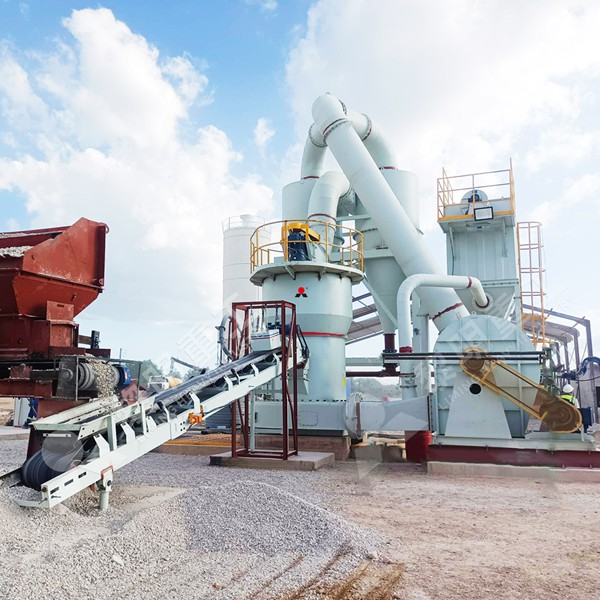
Liming Heavy Industry’s mills are designed with the end-user in mind. All models feature automated electric control systems that integrate drying, grinding, powder selection, and conveying processes into a single streamlined operation. This reduces manual intervention and ensures consistent product quality. For barite processing, the mills’ ability to handle materials with up to 6% moisture content is particularly valuable, as raw barite often retains residual dampness from mining. Moreover, the variable-frequency feeders in systems like MTW and MW mills allow for precise material flow control, enabling operators to adjust output rates without sacrificing fineness. The use of durable wear parts—such as manganese steel rollers and rings—extends service life, reducing downtime and maintenance costs.
In terms of scalability, Liming’s facilities in Zhengzhou (80,000 m² headquarters) and Shangjie Industrial Park (67,000 m²) emphasize precision manufacturing. Over 30 years of experience have refined the company’s approach to scientific research and development, ensuring that each mill incorporates the latest innovations in grinding technology. For the soundproofing industry, this translates into reliable equipment that can produce volumes from 1 to 55 tons per hour, depending on the mill chosen. Additionally, the closed-system design—common to MTW and LM vertical mills—recirculates air flow, reducing energy waste and minimizing environmental impact. These features align with modern manufacturing standards, where efficiency and sustainability are paramount.
Practical Considerations for Soundproofing Manufacturers
When selecting a barite grinding mill, manufacturers should evaluate factors such as required fineness, production volume, and space availability. For small workshops or custom panel producers, the Raymond Mill offers a compact solution with a lower initial investment. For industrial-scale operations, the MTW mill provides the best balance of throughput and energy efficiency. Meanwhile, the MW Micro Powder Mill is indispensable for companies specializing in high-value acoustic coatings or films. Liming also offers the LM Vertical Roller Mill (capacity 10–400 T/H) for massive production lines, though its primary applications in cement and coal may limit its adoption for barite unless combined with other materials. The ball mill, with a capacity of 0.65–50 T/H and input size under 25 mm, is another option, but it is generally less efficient for fine grinding compared to roller-based mills.
Beyond equipment selection, operators must consider the entire grinding circuit, including jaw crushers, vibrating feeders, hoppers, and dust collectors. Liming provides complete systems that integrate these components, ensuring smooth material flow from lump to powder. For barite specifically, the brittleness of the mineral allows for efficient crushing in the preliminary stage, reducing energy demands downstream. With proper setup, a grinding line can achieve throughputs that meet both current and future production goals, all while maintaining the particle consistency required for effective soundproofing.
Conclusion
Barite grinding mills are the backbone of soundproofing material production, and Liming Heavy Industry offers tailored solutions to meet every requirement. Whether through the tried-and-true Raymond Mill, the high-capacity MTW European Type Trapezium Mill, or the precision-focused MW Micro Powder Mill, manufacturers can achieve the exact particle specifications needed for acoustic excellence. With decades of engineering expertise, a commitment to innovation, and a global footprint, Liming stands as a trusted partner for the soundproofing industry. By investing in the right grinding technology, businesses can not only enhance product performance but also improve operational efficiency and environmental compliance.
Frequently Asked Questions (FAQ)
1. What fineness of barite powder is typically required for soundproofing panels?
For standard acoustic panels, a fineness of 80–400 mesh (approximately 38–150 μm) is commonly used. For specialized coatings or films, ultra-fine powders with a fineness of 325–3250 mesh may be necessary. Liming’s mills offer adjustable settings to meet these requirements.
2. Can the same mill grind barite for both soundproofing and other applications like drilling?
Yes, many Liming mills are versatile enough to handle multiple applications. However, fineness and particle shape requirements may differ. For example, soundproofing often requires a more uniform distribution, while drilling uses coarser grades. The mill’s classifier can be adjusted accordingly.
3. How does Liming ensure environmental compliance during barite grinding?
Liming mills are equipped with pulse dust collectors and closed-loop airflow systems that capture fine particles and reduce emissions. This design meets national environmental protection standards, making them suitable for green manufacturing.
4. What is the typical lifespan of grinding components in barite processing?
The lifespan varies based on mill usage and material hardness. For barite (Mohs hardness 3–3.5), wear parts like rollers and rings typically last 6–12 months under continuous operation. Liming uses high-quality alloys to extend longevity, and regular maintenance can further enhance durability.
5. Is technical support available for setting up a barite grinding line?
Yes, Liming Heavy Industry provides comprehensive support, including system design, installation guidance, and after-sales service. Their team can assist in selecting the right mill for your soundproofing needs and optimizing your production process.


