Published on October 26, 2023
In the paper industry, barite (barium sulfate) plays a critical role as a filler and coating pigment, enhancing the brightness, opacity, printability, and smoothness of paper products. To achieve the required ultra-fine particle size—typically between 325 mesh and 3250 mesh—a dedicated barite micro grinding mill is essential. Liming Heavy Industry, a globally recognized leader in grinding mill technology since 1987, offers the MW Micro Powder Mill as the ideal solution for paper manufacturers. This mill delivers exceptionally fine barite powder (down to d97 ≤ 5μm), ensuring consistent quality and high production efficiency. With a capacity ranging from 0.5 to 25 T/H, an adjustable fineness control, and an advanced pulse dust collector system, the MW Micro Powder Mill meets both the stringent quality demands of the paper sector and modern environmental protection standards. This article provides a comprehensive technical deep-dive into how Liming's barite micro grinding mill optimizes paper production, covering working principles, key features, application considerations, and frequently asked questions.
Why Barite Matters in Paper Manufacturing
Barite is valued in papermaking for its high specific gravity (around 4.2–4.5 g/cm³), chemical inertness, and whiteness. As a filler, it improves sheet density, reduces porosity, and enhances opacity without significantly increasing weight. As a coating pigment, it provides a smooth, glossy surface ideal for high-quality printing. However, to unlock these benefits, barite must be ground to a fine, uniform particle size distribution. Coarse particles can cause defects such as uneven coatings or reduced sheet strength. This is where the MW Micro Powder Mill excels, offering precise control over the grinding process to produce a consistent superfine product.
Liming Heavy Industry: A Legacy of Grinding Excellence
Founded in 1987, Liming Heavy Industry Co., Ltd. has evolved into a modern joint-stock enterprise integrating research, manufacturing, and sales. Our headquarters, located in the HI-TECH Industry Development Zone of Zhengzhou, occupies 80,000 m², while our Shangjie Industry Park workshop extends over 67,000 m². Over three decades, we have adhered to modern scientific management, precision manufacturing, and continuous innovation. Our scientific research team focuses on technological progress, tackling key problems to enhance product competitiveness. Among our product portfolio—which includes LM Vertical Roller Mills, Raymond Mills, MTW European Type Trapezium Mills, and Ball Mills—the MW Micro Powder Mill stands out as the premier choice for superfine barite grinding in the paper industry.
Technical Specifications of the MW Micro Powder Mill
Designed specifically for ultra-fine powder processing, the MW Micro Powder Mill incorporates advanced Swedish grinding technology. Its key technical parameters include:
- Capacity: 0.5–25 T/H
- Input Size: 10–20 mm
- Finished Product Fineness: Adjustable from 325 mesh to 3250 mesh (d97 ≤ 5μm)
- Application: Calcium carbonate, gypsum, barite, non-metallic ores, power plant desulfurization, pulverized coal preparation
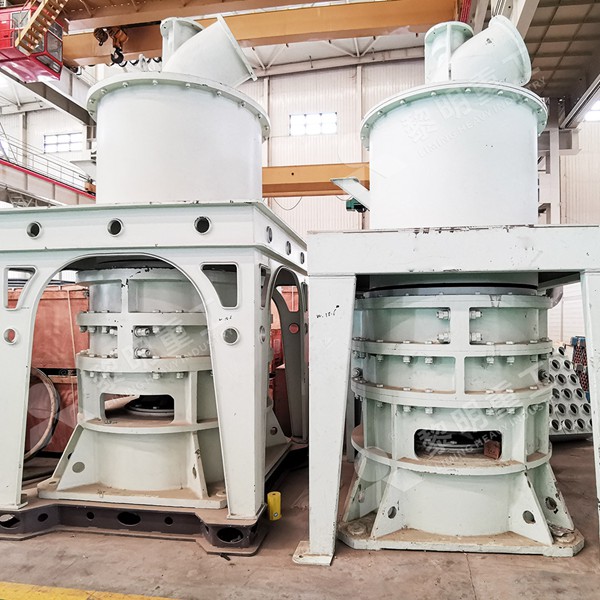
Working Principle: Precision and Efficiency
The MW Micro Powder Mill operates on a medium-speed grinding principle that ensures both high efficiency and product uniformity. Here is a step-by-step breakdown:
- Crushing and Feeding: Raw barite (with a maximum input size of 20 mm) is first crushed by a hammer crusher. The crushed material is then transported into a hopper by an elevator. A vibrating feeder evenly and continuously feeds the material into the central part of the upper turnplate.
- Grinding Action: The motor drives the main shaft and every turnplate through a reducer. The reducer drives dozens of rollers to rotate against the raceway of the ring via pins. Under centrifugal force, the material falls from the central part of the turnplate and moves to the raceway of the ring, where it is crushed into powder between the rollers and the ring.
- Classification: An integrated classifier (separator) ensures that only particles meeting the desired fineness pass through. Coarse particles are returned to the grinding zone for further reduction.
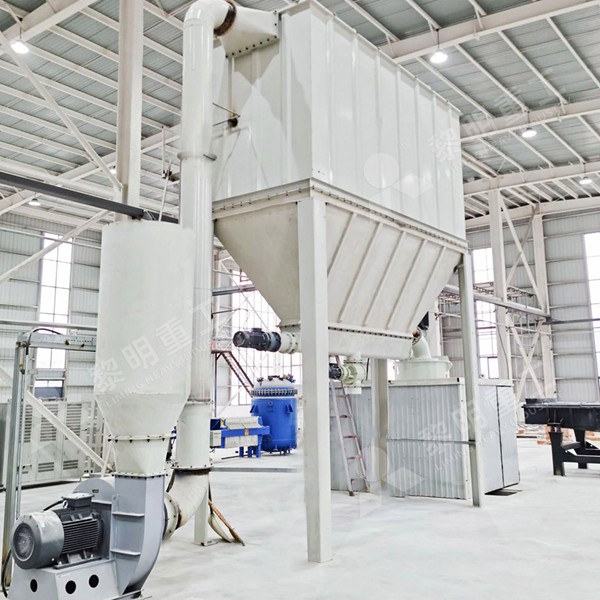
- Collection: Fine powder is carried by the airflow to a pulse dust collector, where it is separated from the air and collected as finished product. The clean air is recycled through the blower, forming a closed-loop system that minimizes dust emissions.
This closed-loop design, combined with the pulse precipitator, ensures the operation is environmentally friendly—a critical advantage for paper mills subject to strict emission regulations.
Key Advantages for Barite Paper Processing
When applied to barite grinding for paper production, the MW Micro Powder Mill offers several distinct benefits:
- Ultra-Fine Particle Size Control: The ability to adjust fineness from 325 mesh up to 3250 mesh allows paper manufacturers to tailor barite properties for specific end-uses—whether for high-opacity newsprint or glossy coated paper.
- High Throughput: With a capacity range of 0.5 to 25 T/H, the mill can match the production scale of medium to large paper mills.
- Energy Efficiency: The medium-speed design consumes less energy per ton compared to traditional ball mills, reducing operational costs.
- Low Maintenance: Robust components and automated control systems minimize downtime. The grinding rollers and ring are made of wear-resistant materials, extending service life.
- Environmental Compliance: The pulse dust collector captures over 99% of fine particles, ensuring clean exhaust air and compliance with environmental standards.
Integration with Other Grinding Solutions
While the MW Micro Powder Mill is the primary choice for superfine barite, Liming Heavy Industry also provides complementary equipment. For example, an MTW European Type Trapezium Mill can be used for pre-grinding coarser barite (input size 30–50 mm) to produce a feed suitable for the MW mill. Alternatively, a Ball Mill can be employed for coarser grinding applications (e.g., 200–400 mesh) if the paper product does not require ultra-fine barite. However, for paper grades demanding the highest brightness and smoothness, the MW Micro Powder Mill remains unmatched.
Application Case Study: Barite in Coated Paper
Consider a hypothetical scenario: a paper manufacturer producing high-gloss coated paper for magazines. They require barite powder with a particle size of 95% passing 10 microns (d97 ≤ 10μm). Using the MW Micro Powder Mill set to a fineness of 600 mesh (approximately 20 microns), they can achieve a consistent product brightness greater than 90% ISO. The mill's adjustable classifier ensures that oversize particles are recirculated, maintaining quality. The pulse dust collector captures all fines, preventing contamination of the workshop. The result is a high-quality coating that enhances print sharpness and reduces ink consumption.
Conclusion
For paper manufacturers seeking to improve product quality through finely ground barite, the MW Micro Powder Mill from Liming Heavy Industry offers a reliable, efficient, and environmentally friendly solution. With its adjustable fineness, robust construction, and proven performance in non-metallic mineral processing, it enables mills to produce consistent, high-value paper products. Coupled with our decades of experience and commitment to innovation, Liming Heavy Industry stands as a trusted partner in the global grinding equipment market.
Frequently Asked Questions (FAQ)
1. What is the typical fineness range for barite used in paper?
For paper filling, barite is typically ground to between 325 and 600 mesh (20–44 microns). For coating applications, a finer grind of 1250 to 3250 mesh (1–10 microns) is preferred to achieve high gloss and opacity. The MW Micro Powder Mill can cover the full range.
2. Can the MW Micro Powder Mill handle barite with high moisture content?
The mill is designed to process materials with less than 6% moisture. For barite, which is naturally low in moisture, this is not an issue. Drying measures may be required for very wet feeds, but standard barite supplies are suitable.
3. What is the maintenance frequency for the grinding rollers and ring?
The wear life depends on the abrasiveness of barite and operating hours. Typically, the grinding rollers and ring require inspection every 500–1000 hours and may need replacement after 2000–4000 hours. Liming provides wear parts as spares to minimize downtime.
4. Is the MW Micro Powder Mill suitable for small-scale paper mills?
Yes. The mill's capacity range of 0.5–25 T/H includes smaller throughputs suitable for pilot plants or small-scale production. It can be scaled up by adding more units or by selecting a higher-capacity model.
5. Does the mill require a dedicated dust collection system?
The MW Micro Powder Mill is equipped with an integrated pulse dust collector as standard. This ensures that the grinding process is contained and that emissions meet environmental regulations. No additional external baghouse is typically needed.


