Barite, or barium sulfate, is a critical mineral in the friction material industry, where its high density, chemical inertness, and thermal stability enable consistent braking performance and wear resistance in automotive and industrial applications. As a key filler in brake pads, clutch facings, and other friction composites, barite must be ground to precise fineness levels—typically between 200 mesh and 1250 mesh—to ensure uniform dispersion and optimal friction coefficient. Our company, Liming Heavy Industry, founded in 1987, has established itself as a leader in large and medium-scale grinding equipment, offering a comprehensive range of mills specifically engineered to process barite for friction material production. Our modern manufacturing base spans over 80,000 m² in Zhengzhou’s HI-TECH Zone and an additional 67,000 m² workshop in Shangjie, housing state-of-the-art machinery and a dedicated scientific team that drives continuous innovation. From Raymond mills to vertical roller mills, ball mills to micro powder mills, our solutions provide high throughput, energy efficiency, and exact particle size control, making them ideal for friction material manufacturers who demand reliability and precision. This article presents a detailed overview of our barite grinding mill offerings, their working principles, and how they address the unique requirements of the friction material sector.
Barite’s role in friction materials is multifaceted: it acts as a space filler to reduce cost, stabilizes friction under high temperature, dampens noise, and improves wear resistance. Achieving these benefits requires grinding equipment that can consistently produce fine, narrow-distribution powders without contamination. Liming Heavy Industry meets this challenge through four core mill types, each designed for specific capacity and fineness needs.
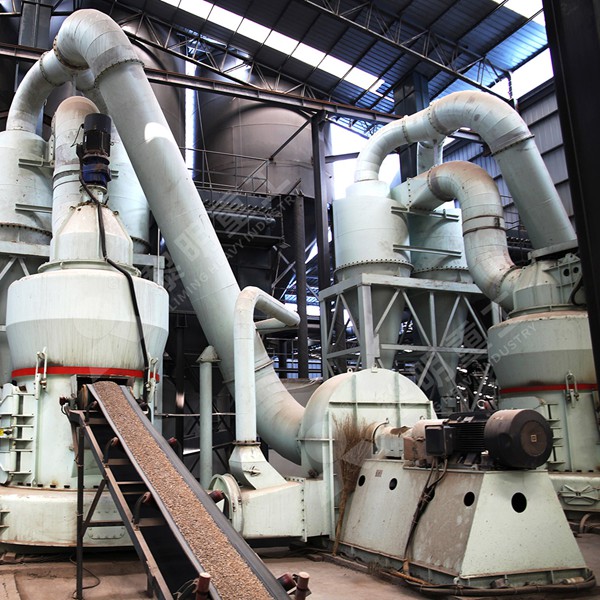
Raymond Mill for Barite Filler Processing
Our classic Raymond mill is a time-tested solution for barite grinding in friction material applications. It processes non-flammable, non-explosive materials with Mohs hardness under 7 and humidity below 6%, making it suitable for standard barite grades. The output fineness ranges from 613 μm (approx. 30 mesh) down to 44 μm (325 mesh), which covers the bulk of friction filler requirements. With a capacity of 1.2 to 4.5 tons per hour and feed size of 15-25 mm, this mill is ideal for small to medium production lines. Key features include a robust grinding roller and ring assembly, automatic classifier for adjustable fineness, and a dust-free pulse collector system that meets environmental standards.
For friction material manufacturers that prioritize cost-effectiveness and simplicity, the Raymond mill offers a proven process flow: barite lumps are crushed by a jaw crusher, fed via a vibrating feeder, ground between rollers and ring, and classified by a separator. The coarse particles return for regrinding, while fine powder is collected. This closed-loop system ensures minimal waste and consistent quality—essential for brake pad formulations.
MTW European Type Trapezium Mill for High-Capacity Barite Grinding
As an upgrade to traditional pendulum mills, the MTW European Type Trapezium mill combines patented technology with superior performance for large-scale barite powder production. Its capacity ranges from 3 to 55 tons per hour, with feed size up to 30-50 mm, making it the go-to choice for friction material plants that need bulk supply. The mill integrates drying, grinding, and powder selection in one unit, powered by a variable-frequency belt feeder for precise material introduction. The trapezium-shaped roller and ring design increase grinding efficiency by 30% compared to conventional Raymond mills, while the bevel gear transmission ensures smooth operation.
In friction material manufacturing, consistent fineness between 100 and 800 mesh is critical for achieving stable friction coefficients. MTW’s dynamic separator allows fineness adjustment from 1.6 mm down to 0.045 mm, enabling producers to tailor barite properties to specific pad formulations. Additionally, the pulse dust collector and sealed system prevent dust leakage, aligning with global workplace safety norms. For industries like automotive brake pad production, where contamination can cause performance failure, this mill’s closed-circuit design is a significant advantage.
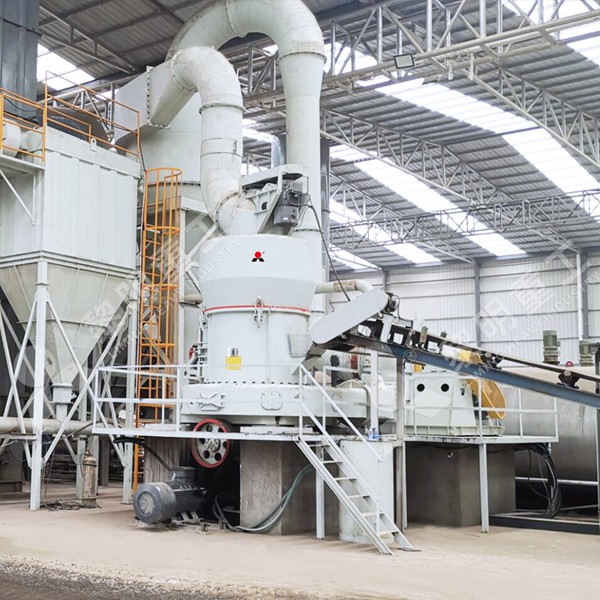
LM Vertical Roller Mill for Energy-Efficient Barite Grinding
Our LM Vertical Roller Mill represents the forefront of energy-saving grinding technology, particularly suited for non-metallic minerals like barite. With capacity from 10 to 400 tons per hour and feed size up to 55 mm, this mill is designed for high-volume friction material operations. It incorporates a unique milling device that integrates drying, grinding, and classification, reducing the overall system complexity. The automatic electric control system enables remote monitoring and adjustment, ensuring consistent product quality with minimal human intervention.
For barite used in heavy-duty friction materials such as train brakes or industrial clutches, the LM mill achieves fineness ranges from 200 to 1250 mesh, with D97 values as low as 5 μm. The roller and table design reduces energy consumption by up to 40% compared to ball mills, a critical factor for manufacturers aiming to lower production costs. Furthermore, the mill’s low noise level and vibration—achieved through advanced damping technology—create a safer workplace. Liming Heavy Industry’s 30-plus years of experience in vertical mill design ensure that the LM series handles abrasive barite with minimal wear, extending maintenance intervals and reducing downtime.
MW Micro Powder Mill for Ultra-Fine Barite in High-End Friction Applications
For friction material manufacturers targeting premium products, such as ceramic brake pads or low-metal formulations, ultra-fine barite powder (d97 ≤ 5 μm) is often required. Our MW Micro Powder Mill, based on Swedish grinding technology, delivers this capability with capacities from 0.5 to 25 tons per hour and feed size of 10-20 mm. The mill uses a multi-roller mechanism driven by a reducer, where dozens of rollers rotate against a ring raceway to crush material into fine particles. Air classification ensures that only particles below the set fineness (325 to 3250 mesh) exit the system, while oversized material is reground.
This mill’s pulse precipitator eliminates dust emissions, making it environmentally friendly—a key selling point for friction material plants seeking green certifications. Barite ground to 5-10 microns provides exceptional thermal stability and filler homogeneity, enhancing brake pad fade resistance and reducing disc wear. The MW series is particularly popular in regions with stringent emission regulations, such as Europe and North America, where our equipment is exported extensively.
Ball Mill for Coarse Barite Grinding and Batch Operations
Our Ball Mill remains a versatile choice for barite grinding, especially when coarse particles (around 100-200 mesh) are needed for certain friction material formulations. With capacity from 0.65 to 50 tons per hour and feed size ≤25 mm, the ball mill uses steel balls within a rotating horizontal barrel to impact and grind materials. The grinding chamber features ladder and ripple liners, with steel ball specifications adjustable for different fineness targets. While less energy-efficient than vertical mills for fine grinding, the ball mill excels in robustness and simplicity, making it ideal for smaller batch production or pilot stage testing.
For friction material R&D labs that need to experiment with barite blends, the ball mill offers easy cleaning and quick changeover between grades. Its reliability in handling wet or dry grinding also expands its utility for combined barite and other mineral processing. Liming Heavy Industry provides full ball mill systems including discharge boards, gear transmission, and optional dust collectors, ensuring a complete solution for barite grinding.
Working Principle Summary and Applications in Friction Materials
Across all our mill types, the fundamental principle remains: raw barite is crushed, fed into the grinding chamber, ground between mechanical elements (rollers/rings, balls, or table/roller), classified by an air separator, and collected as finished powder. The closed-loop system recirculates air and particles, maximizing yield and minimizing energy loss. In friction material production, this translates to high-quality filler that meets ASTM or ISO specifications for density (4.0-4.2 g/cm³), particle size distribution, and moisture content.
Our mills are used in numerous friction material factories worldwide, processing barite alongside other additives like graphite, aramid fibers, and phenolic resins. The uniformity of our ground barite ensures that each brake pad batch exhibits consistent friction properties, reducing scrap rates and improving product reliability. Liming Heavy Industry’s commitment to scientific research and technological improvement has led to innovations like wear-resistant materials for grinding components, extending service life even when processing abrasive barite.
Why Liming Heavy Industry for Barite Grinding Equipment?
Founded in 1987, our company has grown into a modern joint-stock corporation integrating research, manufacturing, and sales. With an 80,000 m² headquarters and 67,000 m² workshop, we manufacture everything from small Raymond mills to massive LM vertical mills. Our adherence to modern scientific management and precision manufacturing ensures each machine meets stringent quality standards. Moreover, our mature scientific team continuously tackles key technical problems, aiming for the technological frontier of the industry. This has made us a leader in domestic and overseas machinery manufacturing, with products exported to more than 140 countries.
Choosing the right barite grinding mill depends on your specific production scale, fineness requirements, and energy considerations. Our experts can help configure a customized system, including jaw crushers, elevators, feeders, and dust collectors, to match your friction material line. Contact Liming Heavy Industry for a consultation—we are ready to support your barite grinding needs with decades of professional experience.
FAQ: Barite Grinding Mill for Friction Material
1. What fineness of barite powder is typically required for friction material applications?
Most friction material formulations require barite powder between 200 mesh (74 μm) and 1250 mesh (10 μm), depending on the product type. For standard brake pads, 325-800 mesh is common. For high-performance or ceramic pads, ultra-fine grades down to d97 ≤ 5 μm may be needed.
2. Can your mills handle barite with high moisture content?
All our mills are designed with drying systems that can handle barite with up to 10% surface moisture, provided the material is non-sticky. For highly moist feed, our LM Vertical Roller Mill integrates drying within the grinding process using hot air, eliminating the need for separate dryers.
3. What is the typical capacity range for barite grinding mills at your factory?
Our mills cover capacities from 0.5 tons per hour (MW Micro Powder Mill) up to 400 tons per hour (LM Vertical Roller Mill). For friction material manufacturing, we recommend the MTW European Mill (3-55 TPH) or Raymond Mill (1.2-4.5 TPH) for most medium-scale operations.
4. Do you provide complete grinding lines including classifying and dust collection systems?
Yes. We supply turnkey grinding systems that include crushers, hoppers, feeders, the mill itself, dynamic separators, pulse dust collectors, pipework, powder collectors, and electric control cabinets. All systems are designed for clean, continuous operation complying with environmental standards.
5. How long is the delivery time for a barite grinding mill, and do you offer installation support?
Delivery times depend on the model and order complexity. Standard Raymond mills ship within 20-30 working days, while larger LM or MTW mills may require 40-50 working days. We offer worldwide installation supervision, commissioning, and training services through our global service network.


