Published: October 26, 2023
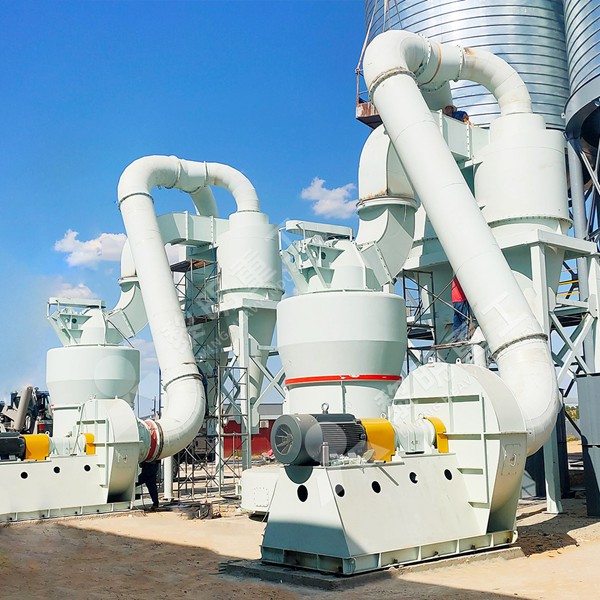
In the manufacturing of brake linings, barite (barium sulfate) plays a critical role as a functional filler that enhances friction stability, heat resistance, and wear durability. The quality of barite powder—specifically its fineness, particle size distribution, and purity—directly influences the performance and safety of brake pads and linings. This article provides a comprehensive overview of how advanced barite grinding mills, particularly those from Liming Heavy Industry, are engineered to meet the stringent requirements of brake lining production. By leveraging decades of milling expertise and innovative technologies, Liming offers tailored solutions—from Raymond mills to vertical roller mills and micro powder mills—that ensure consistent, high-yield processing of barite for automotive and industrial friction materials.
Why Barite Matters in Brake Linings
Barite is widely used in brake linings due to its high density (4.2–4.5 g/cm³) and chemical inertness. In friction composites, barite powder acts as a space filler that improves heat dissipation, reduces noise, and stabilizes the coefficient of friction during braking. Typically, manufacturers require barite powder with a fineness between 200 mesh and 325 mesh (44–74 microns), though superfine grades up to 1250 mesh or finer are increasingly demanded for high-performance pads. Achieving these specifications reliably and cost-effectively requires grinding equipment that offers precise control, high throughput, and low contamination risk.
Liming Heavy Industry: A Trusted Name in Grinding Technology
Founded in 1987, Liming Heavy Industry Co., Ltd. has grown into a global leader in the design and manufacture of crushing and grinding machinery. With headquarters at the Hi-Tech Industry Development Zone of Zhengzhou (covering 80,000 m²) and a dedicated workshop in Shangjie Industry Park (67,000 m²), the company has built a reputation for innovation, precision manufacturing, and robust after-sales support. Over the past three decades, Liming has integrated modern scientific management with R&D-driven strategies, focusing on improving product competitiveness through continuous technological advancement. Their product portfolio includes several mill types ideally suited for barite grinding in brake lining applications.
Barite Grinding Solutions for Brake Linings
1. Raymond Mill for Standard Barite Powder (200–325 mesh)
Model Recommendation: Raymond Mill (YGM series)
Key Specs: Capacity 1.2–4.5 T/H, Input size 15–25 mm, Output fineness 613–44 μm
Ideal for: Brake lining plants requiring consistent medium-fineness barite powder
Liming’s Raymond mill is a classic choice for barite processing in friction materials. It handles materials with Mohs hardness below 7 and humidity under 6%, making it perfect for barite. The mill’s grinding roller and ring design ensure uniform particle distribution, while the built-in classifier allows adjustment of final fineness. For brake linings, operators often set the Raymond mill to produce 250–325 mesh powder, which provides an optimal balance between heat resistance and cost efficiency.
Why it works for brake linings:
- Low energy consumption per ton of barite processed
- Stable output with minimal downtime
- Easy to integrate with existing drying or feeding systems
2. MTW European Type Trapezium Mill for High-Volume Production
Model Recommendation: MTW European Type Trapezium Mill
Key Specs: Capacity 3–55 T/H, Input size 30–50 mm, Output fineness adjustable
Ideal for: Large-scale brake lining manufacturers needing consistent 200–400 mesh barite
The MTW mill is Liming’s upgrade of traditional Raymond and pendulum mills, incorporating patented technology for higher capacity and environmental performance. It is particularly suited for limestone desulfurization in power plants, heavy calcium carbonate processing, and non-metallic mineral powder making—including barite for brake linings. The mill operates in a closed system with a pulse dust collector, meeting strict environmental standards. For brake lining production, the MTW mill can achieve throughputs of 10–20 T/H at 325 mesh, significantly reducing processing costs for high-volume suppliers.
Working principle: Big lump materials are crushed by a jaw crusher to required size, then fed evenly via a variable-frequency belt feeder into the mill. Materials are ground between ring and rollers, and particles that pass the separator are collected as finished product. The closed-loop air system recycles airflow, enhancing energy efficiency.
3. MW Micro Powder Mill for Superfine Barite (325–3250 mesh)
Model Recommendation: MW Micro Powder Mill (medium speed micro-grinding mill)
Key Specs: Capacity 0.5–25 T/H, Input size 10–20 mm, Fineness up to d97 ≤ 5 μm (325–3250 mesh)
Ideal for: Premium brake lining applications requiring ultra-fine barite for enhanced friction stability
For high-end brake linings where noise reduction and wear life are critical, superfine barite powder (e.g., 1250 mesh or finer) is essential. Liming’s MW Micro Powder Mill, incorporating advanced Swedish grinding technology, delivers this level of fineness. The mill’s rotating turnplate drives dozens of rollers to raceway rings, grinding barite into ultra-fine particles. The entire system is equipped with a pulse precipitator for green production. This mill is especially valuable for manufacturers that export brake linings to markets with strict regulations on friction material composition.
4. LM Vertical Roller Mill for All-in-One Processing
Model Recommendation: LM Vertical Roller Mill
Key Specs: Capacity 10–400 T/H, Input size 30–55 mm, Integrated drying, grinding, and classifying
Ideal for: Large integrated brake lining plants that process barite along with other minerals
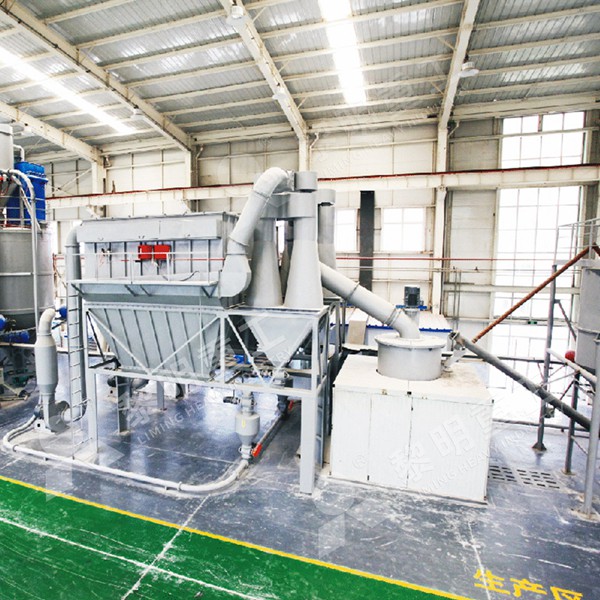
The LM vertical mill is Liming’s flagship product for large-scale operations. It combines drying, grinding, powder selection, and conveying in a single unit. For barite grinding, this means reduced equipment footprint and lower capital expenditure. The mill’s automatic electric control system ensures consistent product quality, while the high-capacity output suits operations that need to produce barite powder for multiple friction material lines simultaneously. Common applications include non-metallic minerals, coal, and slag, making it a versatile choice for diversified mineral processing.
Comparative Guide: Selecting the Right Mill for Brake Lining Barite
| Mill Type | Best Mesh Range | Capacity | Typical Use Case |
|---|---|---|---|
| Raymond Mill | 200–325 mesh | 1.2–4.5 T/H | Small to medium brake lining shops |
| MTW Trapezium Mill | 200–400 mesh | 3–55 T/H | High-volume standardized production |
| MW Micro Powder Mill | 325–3250 mesh | 0.5–25 T/H | Premium or specialty brake linings |
| LM Vertical Roller Mill | 200–600 mesh | 10–400 T/H | Integrated large-scale mineral processing |
Quality Control and Compliance
All Liming grinding mills are manufactured under strict quality assurance protocols. For barite used in brake linings, Liming’s equipment ensures minimal iron contamination (critical for preventing corrosion in brake systems) and uniform particle size distribution (essential for consistent friction properties). The company’s R&D team continuously refines mill designs to meet evolving industry standards, such as SAE J866 and ISO 15488 for friction materials.
Customer Support and Global Reach
Liming Heavy Industry provides comprehensive services including site evaluation, mill selection, installation supervision, and operator training. With over 30 years of global experience, the company supports brake lining manufacturers in more than 160 countries. Spare parts and technical support are available through regional offices, ensuring minimal production interruptions.
Conclusion
Brake lining manufacturers cannot afford to compromise on barite quality. By selecting the right grinding mill—whether Raymond, MTW, MW Micro Powder, or LM Vertical Mill—they can achieve the precise powder characteristics needed for safe, durable, and high-performance friction materials. Liming Heavy Industry’s proven track record, technical expertise, and diverse product range make it a reliable partner for barite processing in the braking industry.
Frequently Asked Questions (FAQs)
Q1: What is the ideal barite powder fineness for brake linings?
A: Most brake lining formulas require barite powder between 200 and 325 mesh (44–74 microns). For high-performance or premium pads, finer grades such as 600 mesh or 1250 mesh may be used to improve heat stability and reduce wear.
Q2: Can Liming mills handle barite with moisture content above 6%?
A: Standard Raymond and MTW mills are designed for materials with less than 6% humidity. If the barite is wet (e.g., from washing), a drying step before grinding or an integrated drying system (as in the LM Vertical Mill) is recommended.
Q3: What is the energy consumption per ton for grinding barite in a Raymond mill?
A: Energy consumption varies by fineness and capacity, but typically ranges from 25–40 kWh per ton for 325 mesh production. The MTW and LM mills offer better energy efficiency at higher throughputs.
Q4: How do I prevent iron contamination in barite powder for brake linings?
A: Use mills with ceramic or high-chrome alloy grinding components. Liming’s MW Micro Powder Mill and MTW series offer wear-resistant liners that minimize iron pick-up. Regular inspection of grinding parts is also advised.
Q5: Do you provide after-sales support for mills installed abroad?
Yes, Liming Heavy Industry has a global network of service engineers and distributors. We provide remote troubleshooting, on-site maintenance, and spare parts supply for all our mills, including those used in brake lining production.


