Published: October 26, 2023
In the field of medical imaging and nuclear safety, barite powder plays a critical role as a primary material for radiation shielding due to its high density and effective attenuation of X-rays and gamma rays. The production of high-quality barite powder requires precise grinding technology to achieve optimal particle size distribution and purity. Liming Heavy Industry, with over three decades of expertise in manufacturing crushing and grinding equipment, offers a suite of advanced grinding mills specifically tailored for barite processing. Our machines, including the MTW European Type Trapezium Mill, LM Vertical Roller Mill, and MW Micro Powder Mill, are designed to deliver consistent fineness, high capacity, and energy efficiency, ensuring that your barite-based shielding materials meet strict industry standards. This article explores the technical considerations, grinding solutions, and application benefits of using Liming's barite grinding mills for X-ray shielding, providing a comprehensive resource for engineers, manufacturers, and procurement specialists.
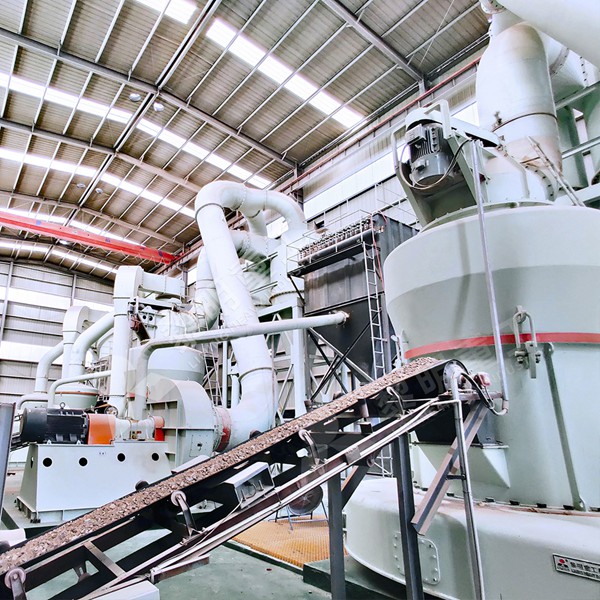
Why Barite for X-Ray Shielding?
Barite (barium sulfate, BaSO4) is renowned for its high specific gravity of approximately 4.5 g/cm³, making it an excellent filler for radiation-shielding composites. When finely ground, barite powder can be incorporated into concrete, plaster, or polymers to create barriers that absorb or scatter X-rays, effectively protecting personnel and patients in medical facilities, laboratories, and industrial radiography sites. The effectiveness of barite shielding depends heavily on the fineness and purity of the powder—particles below 45 microns (325 mesh) are typically required to ensure uniform dispersion and maximum attenuation. Liming Heavy Industry's grinding mills are engineered to produce barite powder with fineness ranging from 613 μm to 5 μm, accommodating the most demanding shielding specifications.
Barite Grinding Technology from Liming Heavy Industry
MTW European Type Trapezium Mill: The Industry Standard for Barite
The MTW European Type Trapezium Mill is our flagship product for barite grinding. This mill is an upgrade of traditional Raymond mills and pendulum mills, incorporating patented technology for superior performance. With a capacity of 3 to 55 tons per hour and an input size of 30-50 mm, the MTW mill is ideal for large-scale barite processing. Its working principle involves crushing barite lumps with a jaw crusher, then feeding them into the mill via a variable-frequency belt feeder. Inside, material is ground between the ring and rollers, and the air flow carries fine particles to a separator. Oversized particles return for re-grinding, while the final product is collected in a pulse dust collector, ensuring a clean, closed-loop system that meets environmental standards. This process yields barite powder with excellent uniformity, critical for achieving consistent shielding density in X-ray barriers.
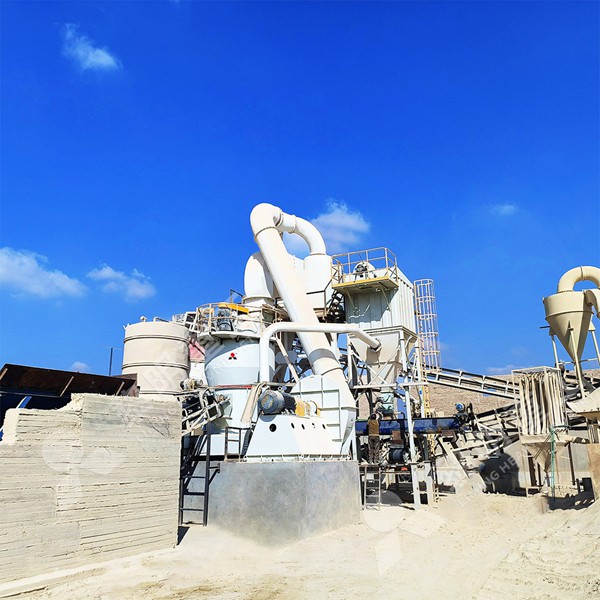
LM Vertical Roller Mill: High-Capacity Barite Production
For customers requiring ultra-high throughput, the LM Vertical Roller Mill offers capacities from 10 to 400 tons per hour, with an input size of 30-55 mm. This mill integrates drying, grinding, powder selection, and conveying into a single unit, reducing system complexity and energy consumption. Its new milling device and automatic electric control system ensure stable operation, even when processing barite with varying moisture content. The LM vertical mill is particularly suitable for non-metallic mineral processing, including barite, and produces a fineness that can be adjusted to meet the specific requirements of X-ray shielding applications, such as 200 mesh, 325 mesh, or finer grades.
MW Micro Powder Mill: Ultra-Fine Barite for Advanced Shielding
When ultra-fine barite powder is needed—for instance, in high-performance polymer composites for medical imaging rooms—the MW Micro Powder Mill is the optimal choice. This mill, which incorporates advanced Swedish grinding technology, achieves a finished product fineness of d97 ≤ 5 μm (325 to 3250 mesh). With a capacity of 0.5 to 25 tons per hour and an input size of 10-20 mm, the MW mill uses multiple rollers rotating against a raceway ring to produce micro-level particles. Equipped with a pulse precipitator, the process is environmentally friendly. Ultra-fine barite powder enhances the homogeneity of shielding materials, reducing voids and improving X-ray absorption efficiency.
Integrated System for Barite Processing
Liming Heavy Industry provides complete turnkey solutions for barite grinding. A typical barite processing line includes a jaw crusher for primary crushing, a bucket elevator for material transport, a vibrating feeder for controlled feed, the grinding mill itself, a classifier or separator for particle size control, a pulse dust collector for emission compliance, and a powder collector for final product packaging. Our system is designed as a closed loop: air from the separator is recycled through the air blower, minimizing waste and energy loss. This integrated approach ensures that barite powder is consistently produced with the correct fineness and purity, ready for incorporation into X-ray shielding materials.
Applications in X-Ray Shielding
Barite powder from Liming mills is used in several shielding applications:
- Medical Imaging Rooms: Barite-enriched plaster or concrete walls reduce scatter radiation, protecting technicians and patients.
- Nuclear Facilities: High-density barite blocks are used for containment walls and storage containers.
- Industrial Radiography: Barite-filled polymers create portable shields for on-site testing.
- Dental Clinics: Thin barite coatings on room partitions ensure safety without sacrificing space.
The versatility of barite means that the grinding mill must be capable of handling different particle size demands. Our Raymond Mill, with a fineness range of 613 μm to 44 μm, and Ball Mill, which processes materials up to 25 mm input size, offer additional flexibility for smaller-scale productions or specific particle size requirements.
Advantages of Choosing Liming Heavy Industry
With a history dating back to 1987, Liming Heavy Industry has established itself as a leader in crushing and grinding equipment. Our headquarters in Zhengzhou covers 80,000 m², with an additional workshop of 67,000 m², enabling us to manufacture large and medium-sized machines with precision. We adhere to modern scientific management and a strategy of research-driven development, focusing on 'scientific research, technological progress, and production-learning-research integration.' This commitment ensures that our barite grinding mills are at the forefront of innovation, offering: high capacity, energy efficiency, environmental compliance, and durability. Our mature scientific research team continuously aims at the technological frontier, improving our products to meet evolving industry standards.
Conclusion
Barite grinding for X-ray shielding requires mills that combine reliability, precision, and flexibility. Liming Heavy Industry's product lineup—including the MTW, LM, MW, Raymond, and Ball mills—provides scalable solutions for any production volume, from small laboratories to large industrial plants. By choosing Liming, you invest in equipment backed by over 30 years of manufacturing excellence and a team dedicated to advancing grinding technology. Whether you need coarse barite for concrete aggregates or ultra-fine powder for composite barriers, our mills deliver the consistency and quality essential for effective radiation protection.
Frequently Asked Questions (FAQ)
- Q: What particle size of barite powder is best for X-ray shielding?
A: Typically, barite powder for X-ray shielding requires a fineness of 200 to 325 mesh (74-44 microns) for concrete or plaster applications. For polymer composites, ultra-fine grades up to 3250 mesh (approx. 5 microns) are recommended to ensure uniform dispersion and maximum attenuation. - Q: Can the MTW European Type Trapezium Mill handle barite with high moisture content?
A: Yes, the MTW mill includes an integrated drying system that can handle barite with some moisture. However, for optimal performance, we recommend pre-drying wet barite to a moisture level below 6%, as specified for Raymond mills. The LM vertical mill offers superior drying capacity for higher moisture feeds. - Q: How does Liming Heavy Industry ensure the environmental compliance of its barite grinding process?
A: Our mills are equipped with pulse dust collectors and operate in a closed-loop air recirculation system. This design minimizes dust emissions and meets national environmental protection standards, making production greener and safer. - Q: What is the typical maintenance schedule for a barite grinding mill?
A: Regular maintenance includes checking roller and ring wear every 500-1000 operating hours, lubricating bearings monthly, and inspecting the separator and dust collector filters quarterly. Liming provides detailed manuals and optional service contracts to support your operations. - Q: Can Liming Heavy Industry provide a customized barite grinding solution for my project?
A: Absolutely. We offer tailored solutions based on your capacity, fineness, and material characteristics. Our engineering team will work with you to design a complete line, from crushing to packaging, ensuring that your X-ray shielding requirements are met efficiently.


