Published: October 26, 2023
Investing in grinding equipment for calcite processing is a significant decision that directly impacts operational efficiency, product quality, and long-term profitability. To mitigate risk and ensure the selected machinery perfectly aligns with your specific material characteristics and production goals, Liming Heavy Industry offers a comprehensive, no-obligation Calcite Sample Testing Service. This professional service allows potential clients to submit their raw calcite samples to our state-of-the-art research and development center, where our engineers conduct real-world grinding tests using our advanced mill models. The process provides definitive data on throughput, energy consumption, final particle size distribution, and wear characteristics, delivering an empirical foundation for your investment decision and enabling our technical team to recommend the optimal equipment configuration.
At the core of this service is Liming Heavy Industry's commitment to "scientific research tackling key problems" and a "production, learning and research" philosophy. Founded in 1987, our company has evolved into a leader in crushing and grinding technology, operating from an 80,000 m² headquarters in the HI-TECH Industry Development Zone of Zhengzhou and a 67,000 m² workshop in Shangjie Industry Park. Our mature scientific research team is dedicated to developing and innovating at the technological frontier. The sample testing service is a direct application of this ethos, transforming theoretical specifications into tangible, material-specific performance reports.
The testing procedure is meticulous and collaborative. Upon receiving your calcite sample, our laboratory specialists first conduct a preliminary analysis of its chemical composition, moisture content, hardness (Mohs scale), and initial particle size. Based on these parameters and your target fineness (e.g., for coated paper, plastics, or paint applications), our engineers select the most suitable grinding mill prototypes for trial. For instance, a sample destined for ultra-fine products (d97 ≤ 5μm) would be processed in our MW Micro Powder Mill, which absorbs advanced Swedish technology for superfine processing. For high-capacity production of coated-grade calcium carbonate, the MTW European Type Grinding Mill, with its patented technology and commitment to large-scale powder making, becomes the prime candidate.
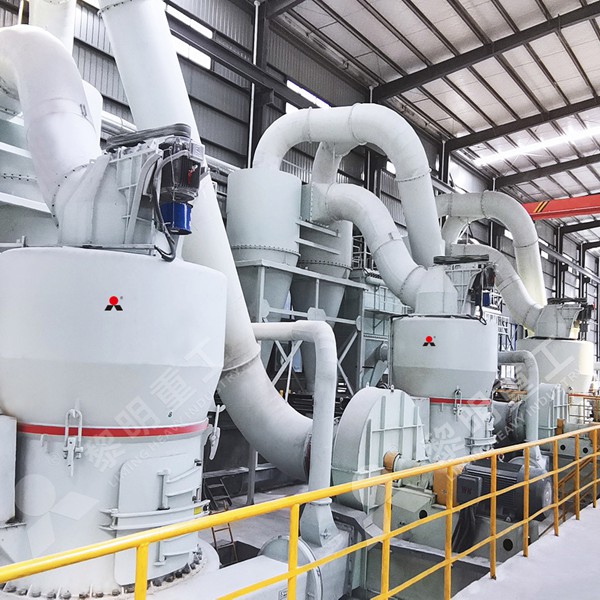
During the test, key operational data is logged in real-time. This includes specific energy consumption (kWh/t), which is critical for evaluating the operational cost-effectiveness of mills like the LM Vertical Roller Mill known for its integrated drying and grinding efficiency. The grinding stability and product uniformity are assessed, showcasing the precision of systems like the Raymond Mill, renowned for handling non-explosive materials under 7 Mohs hardness. The final product is then analyzed using laser particle size analyzers to generate a detailed fineness curve, confirming whether the output meets the required range, such as the 613μm to 44μm spectrum of a Raymond Mill or the 325-3250 mesh adjustable range of the MW Micro Powder Mill.
Beyond mere numbers, the service provides a practical demonstration of working principles. Clients gain insights into how their material behaves in a closed-system grinding loop like the MTW mill's, where material is ground between ring and rollers and classified by an internal separator. They can understand the impact-grinding action of a Ball Mill, where steel balls cascade onto the material, a method suitable for a wider variety of ores. This hands-on evidence is invaluable, moving beyond catalog promises to demonstrable performance.
The delivered test report is a comprehensive document that serves as a technical blueprint. It correlates your sample's results with the full-scale performance expectations of our equipment range, with capacities spanning from 0.5 T/H to over 400 T/H. It addresses critical factors such as system layout, potential auxiliary equipment (like crushers or feeders), and environmental compliance, noting that our mills are equipped with pulse dust collectors meeting national standards. This empowers you to make a purchase decision with confidence, knowing precisely how the machine will perform, thus avoiding costly mismatches and ensuring a rapid return on investment.
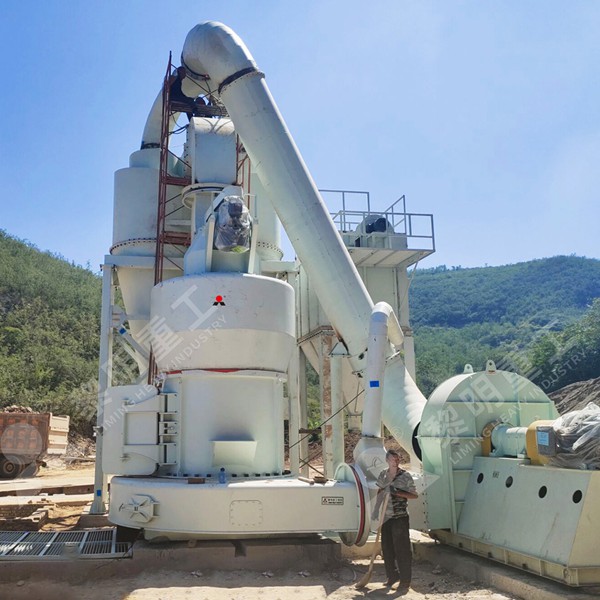
Ultimately, the Calcite Sample Testing Service is more than a preliminary step; it is a partnership in planning. It reflects Liming Heavy Industry's role as a solution provider rather than just a manufacturer. By leveraging our 30 years of precision manufacturing and scientific management, we help you de-risk your capital expenditure, optimize your process flow from the outset, and lay the groundwork for a productive, long-term operation in the competitive non-metallic mineral sector.
Frequently Asked Questions (FAQs)
- How much calcite sample is required for testing, and how long does the process take?
Typically, we require 50-100 kg of representative raw calcite material. The complete testing and reporting process usually takes between 10 to 15 working days from sample receipt. - Is there a cost associated with the sample testing service?
The basic sample testing service is offered free of charge for serious potential clients. We view it as an essential investment in ensuring customer success and the correct application of our technology. - Can you test for parameters beyond fineness and capacity, such as abrasiveness or whiteness retention?
Absolutely. Our testing can include analysis of wear on grinding elements to predict maintenance cycles, as well as monitoring chemical contamination or color change to ensure product quality meets your market specifications. - What if my production scale is between two mill model capacities?
Our engineers use the test data to model scaled-up performance and can recommend the optimal model, often suggesting a slightly larger capacity to allow for future production growth or operating the equipment at its most efficient, rather than maximum, load. - Do you provide recommendations on the entire processing line, not just the grinding mill?
Yes. Based on the sample characteristics and target output, our technical proposal can include recommendations for a complete system, such as the necessary jaw crusher, vibrating feeder, elevator, and dust collection system to create a turnkey solution.


