Published: October 26, 2023
Meeting the stringent demands of modern industries for ultra-fine, high-purity calcite powder requires advanced grinding technology and deep application expertise. This article explores the technical challenges of processing special-grade calcite and presents tailored milling solutions from Liming Heavy Industry, a leader in grinding equipment manufacturing with over three decades of innovation. We will examine how specific mill configurations—from high-capacity vertical roller mills to precision micro-powder systems—address unique particle size distribution, whiteness retention, and production efficiency requirements for applications ranging from high-end polymers and paints to pharmaceuticals and food additives.
Special calcite powder, characterized by its exceptional brightness, controlled particle morphology, and ultra-fine particle size distribution (often below 10μm or even 5μm), is a critical raw material in premium industrial applications. Traditional grinding methods often fall short, causing contamination, excessive heat generation that degrades whiteness, or inconsistent fineness. The challenge lies not only in achieving the target fineness but also in maintaining the crystalline structure, minimizing iron contamination, and ensuring a cost-effective, scalable production process. Liming Heavy Industry approaches this challenge through a philosophy of application-specific engineering, where the grinding system is selected and optimized based on the final product specification, desired capacity, and overall operational economics.
For large-scale production of calcite powder in the 325 to 800 mesh range, the LM Vertical Roller Mill stands out. Its integrated drying, grinding, classifying, and conveying system is engineered for efficiency. The material bed grinding principle minimizes metal-to-metal contact, significantly reducing wear and the associated risk of iron contamination—a crucial factor for preserving calcite's natural whiteness. The mill's ability to handle feed sizes up to 55mm and integrate a hot air stream allows it to process calcite with higher moisture content directly, streamlining the production line. Its high single-machine capacity (up to 400 T/H) makes it an ideal cornerstone for mega-projects requiring consistent, high-volume output of quality ground calcite.
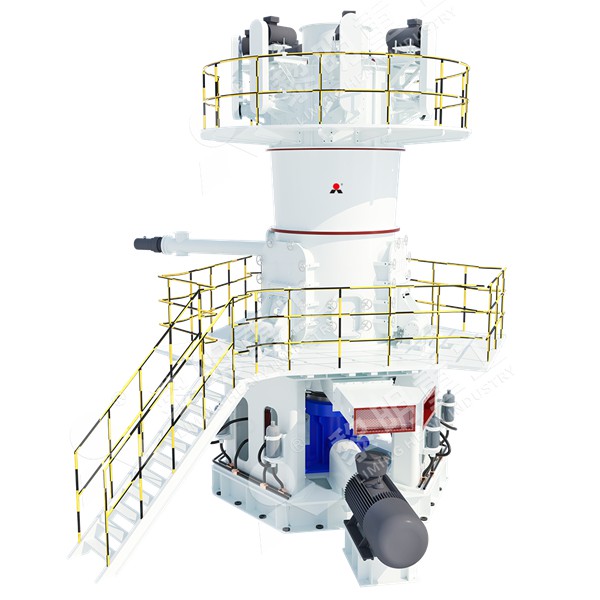
When the requirement shifts to finer powders between 44μm and 613μm (approximately 325 to 400 mesh), the classic Raymond Mill and its advanced successor, the MTW European Type Grinding Mill, offer robust solutions. The MTW mill, in particular, incorporates patented curved air duct technology and an internal efficient powder separator. This design enhances classification accuracy, ensuring that only particles meeting the fineness target escape the grinding zone. The result is a tighter particle size distribution and improved energy efficiency compared to traditional pendulum mills. Its commitment to environmental standards with an integrated pulse dust collector makes it a sustainable choice for modern mineral processing facilities focused on calcite.
The pinnacle of technology for producing ultra-fine and nano-sized calcite powder is the MW Micro Powder Mill. This system is engineered for superfine grinding, capable of achieving a final product fineness up to d97 ≤ 5μm (approx. 2500 mesh). It absorbs advanced grinding technology and utilizes a multi-layer grinding ring and roller design. The grinding elements operate at medium speed, applying both extrusion and shear forces to the calcite crystals. This method promotes a more uniform particle shape and minimizes over-grinding. The completely closed negative pressure circulation system prevents dust leakage and ensures a clean working environment, which is paramount for high-purity applications like pharmaceuticals or food-grade calcium carbonate.
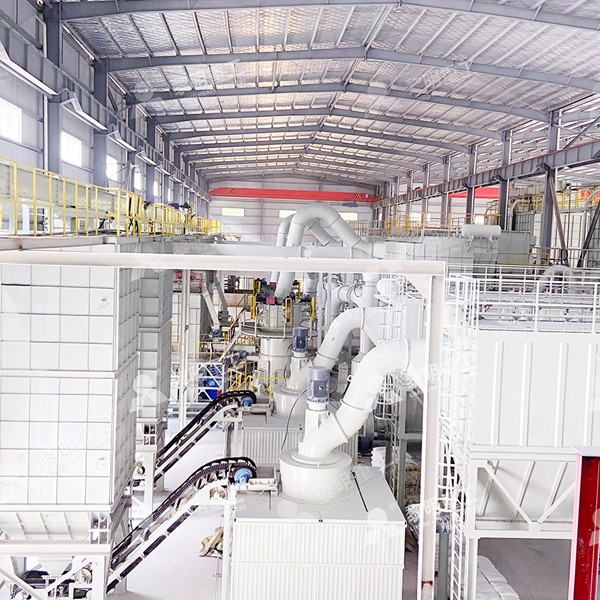
Beyond the core grinding unit, Liming Heavy Industry emphasizes the importance of a holistic system approach. A complete grinding line includes precision feeding systems (like variable-frequency belt feeders), pre-crushing units (jaw crushers), efficient classification, and advanced dust collection. The synergy between these components determines the final product's quality and the system's stability. For special calcite, the choice of liner and grinding media material in mills like the Ball Mill (used for certain pre-grinding or mixing stages) is critical to avoid contamination. Liming's engineering team provides comprehensive support, from laboratory testing of raw calcite samples to plant layout design and automation integration, ensuring the delivered solution is not just equipment, but a guaranteed production process.
In conclusion, navigating the complex requirements for special calcite powder demands a partner with both technological breadth and application depth. Liming Heavy Industry, with its portfolio spanning from high-capacity vertical mills to ultra-fine micro-powder grinders, provides this essential expertise. By carefully matching the grinding technology to the specific fineness, purity, and capacity goals, producers can achieve a competitive edge in the high-value calcite market, ensuring their product meets the exacting standards of tomorrow's advanced materials.
FAQ
Q1: What is the primary advantage of using the LM Vertical Roller Mill for calcite over traditional ball mills?
A1: The LM Vertical Roller Mill utilizes a material bed grinding principle, which offers significantly higher energy efficiency, lower wear rates (reducing iron contamination risk), and integrated drying capability for moist feed materials, leading to better overall product whiteness and lower operational costs.
Q2: Can the MW Micro Powder Mill achieve a consistent D97 below 5 microns for calcite?
A2: Yes, the MW Micro Powder Mill is specifically designed for superfine processing. With its advanced Swedish-inspired grinding technology and precise internal classifier, it can reliably produce calcite powder with a fineness up to d97 ≤ 5μm, and the fineness is easily adjustable within a wide range.
Q3: How does your equipment address the issue of product contamination during ultra-fine grinding?
A3> We address contamination through multiple strategies: using wear-resistant materials for grinding components, designing mills with minimal metal-to-metal contact (like the LM mill), implementing fully enclosed negative pressure systems (like the MW mill), and offering ceramic or special alloy liners for critical applications to preserve material purity.
Q4: Do you provide testing services for calcite samples before recommending a solution?
A4: Absolutely. We strongly recommend and provide comprehensive laboratory analysis and grinding tests. This allows us to analyze your specific calcite characteristics and determine the optimal mill type, configuration, and expected performance metrics (output, fineness, energy consumption) for your project.
Q5: What kind of after-sales support and training accompanies your grinding systems?
A5: Our support includes detailed installation supervision, comprehensive operational and maintenance training for your technical team, a global supply network for genuine spare parts, and remote diagnostic support. We are committed to ensuring the long-term productivity and reliability of your investment.


