Published on: October 26, 2023
For calcite grinding operations, selecting the optimal milling equipment is crucial for achieving desired fineness, throughput, and operational economy. This article provides a professional comparison between Raymond Mills (including their modern successors like the MTW European Type Grinding Mill) and traditional Ball Mills, focusing on their efficiency, suitability, and technological advancements for processing calcite. Based on decades of engineering expertise at Liming Heavy Industry, we analyze key parameters such as energy consumption, particle size distribution, system footprint, and overall grinding circuit design to guide users toward a more informed and profitable decision.
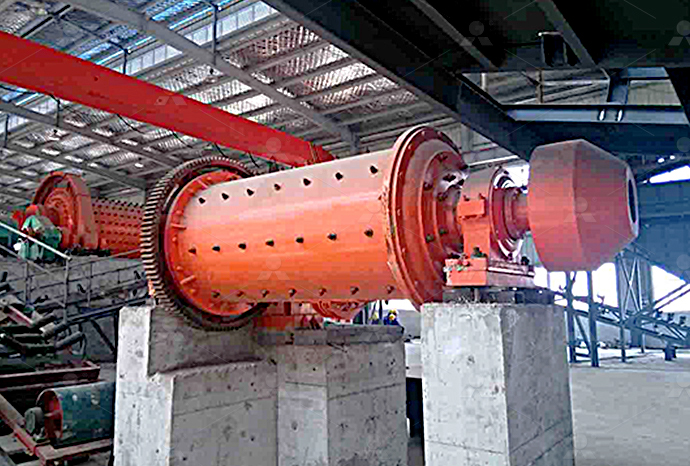
The fundamental difference lies in the grinding mechanism. A Ball Mill, a cornerstone in mineral processing, operates on the principle of impact and attrition. The rotating chamber, partially filled with steel balls, lifts and cascades the grinding media onto the calcite feed, reducing its size through repeated collisions. This robust method is versatile but often characterized by higher energy consumption per ton of product, especially for finer grinding ranges. A significant portion of the input energy is converted into heat and noise rather than effective size reduction.
In contrast, Raymond Mill technology, particularly as evolved in Liming Heavy Industry's MTW European Type Trapezium Mill, employs a roller-race milling principle. Calcite fed into the grinding zone is crushed and ground between rotating rollers and a stationary bull ring. The integrated dynamic classifier immediately separates fine particles, which are conveyed by airflow to the collector, while coarse particles fall back for regrinding. This inherent air-swept, closed-circuit operation within a single unit makes it exceptionally efficient for mid-range fineness applications common with calcite (e.g., 200-400 mesh). The energy is directly applied to the grinding bed, minimizing losses.
For calcite specifically, several efficiency factors favor advanced Raymond mill designs. Energy Efficiency: The MTW European Type Grinding Mill incorporates curved air duct, internal efficient powder separator, and low-resistance cyclone powder collector, leading to a system that typically consumes 30-50% less power than a ball mill producing comparable calcite powder. Product Fineness & Control: While ball mills can achieve very fine grades, they may require prolonged grinding times. Raymond-type mills like the MTW or the superfine MW Micro Powder Mill offer precise and rapid adjustment of fineness between 44μm (325 mesh) and sub-5μm levels through external classifier speed regulation, with a narrower particle size distribution—a critical quality parameter for coated calcite in plastics and paints.
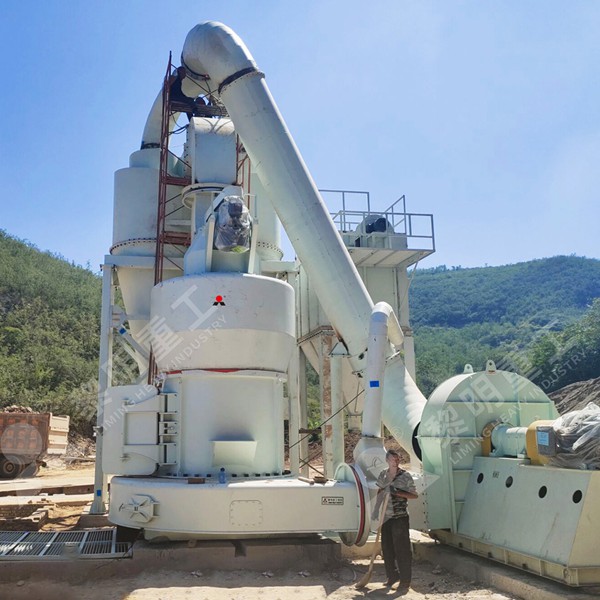
System Footprint & Drying Capability: Raymond mill systems are inherently vertical and compact, integrating grinding, drying (with hot air), classifying, and conveying. This is a major advantage when grinding calcite with slight moisture. Ball mill circuits are often more extensive, requiring separate drying, grinding, and classification equipment, resulting in a larger plant footprint. Wear & Maintenance: In a ball mill, wear of liners and balls is continuous and can introduce iron contamination, affecting the whiteness of calcite. Modern Raymond mills use advanced wear-resistant materials for rollers and rings, and the grinding elements do not directly contact, reducing metallic contamination and extending service intervals.
Liming Heavy Industry's technological progression—from the traditional Raymond Mill to the MTW European Type Grinding Mill and the ultra-fine MW Micro Powder Mill—represents a focused response to these efficiency demands. The MTW mill, with its patented technology, planetary gear reducer, and modular blade-type powder selector, is engineered for large-scale, energy-efficient production of non-metallic minerals like calcite. It effectively bridges the gap between the capacity of a ball mill and the precision of specialized fine grinders.
In conclusion, for new calcite grinding projects targeting fineness up to 2500 mesh, the choice leans decisively towards advanced Raymond mill technology (MTW or MW series) for its superior specific energy efficiency, lower capital and operating costs, compact design, and excellent product quality control. The traditional ball mill remains a reliable, high-capacity workhorse for applications where extreme fineness is not the primary goal, or where simultaneous grinding of mixed materials is required. As a leader in grinding technology, Liming Heavy Industry recommends a thorough analysis of the target product specification, capacity, and total cost of ownership to select the most efficient and profitable solution for your specific calcite processing needs.
FAQ
Q1: What is the typical fineness range achievable for calcite using an MTW European Type Grinding Mill compared to a Ball Mill?
A1: The MTW Mill is highly efficient for producing calcite powder in the range of 44μm (325 mesh) to 0.045mm (3250 mesh). A ball mill can achieve similar and even finer fineness but often requires longer grinding times and higher energy input, especially beyond 600 mesh, making it less efficient for dedicated fine calcite production.
Q2: Can Raymond-type mills handle moist calcite feed?
A2: Yes, modern mills like the MTW series integrate a drying function. Hot air from the hot air generator flows into the grinding chamber, effectively drying and grinding slightly moist calcite (typically below 6-10% moisture) simultaneously, simplifying the process flow.
Q3: Which mill type is more suitable for producing high-brightness, low-iron-contamination calcite powder?
A3: Advanced Raymond-type mills like the MTW or MW series are preferable. Their grinding mechanism (roller-ring) minimizes metal-to-metal contact compared to the steel-ball collisions in a ball mill, significantly reducing the risk of iron contamination and helping preserve the natural whiteness of calcite.
Q4: How does the system footprint compare between the two solutions for a 20 TPH calcite grinding plant?
A4: A complete MTW European Type Grinding Mill system, with its vertical, integrated design, will have a significantly smaller footprint than a conventional ball mill circuit of equivalent capacity, which requires a horizontal mill, separate classifier, conveyor system, and often a separate dryer.
Q5: For producing coarse calcite fillers (e.g., 100-200 mesh), is a ball mill still a viable option?
A5: For coarse grinding at high capacities, a ball mill can be a robust and straightforward choice. However, even in this range, the overall electrical efficiency, lower wear rate, and faster product switching capability of modern Raymond-type mills often provide a more economical and flexible long-term solution.


