Published: October 26, 2023
For mining and industrial operators across South America seeking reliable and economical solutions for calcite processing, selecting the right grinding equipment is a critical business decision. This article provides a professional analysis of cost-effective grinding technologies tailored to the region's diverse operational landscapes, from the high-altitude mines of the Andes to large-scale industrial plants in Brazil and Argentina. We will explore key technical considerations, including energy efficiency, adaptability to local power grids, maintenance simplicity, and particle size control, which are paramount for profitability in competitive markets. Drawing on decades of engineering expertise, we examine specific mill designs—from robust vertical roller mills to precision micro-grinding systems—that deliver optimal performance for calcite applications while minimizing total cost of ownership, making them ideal partners for South America's growing construction, plastics, and chemical industries.
The South American calcite market is characterized by a wide range of end-use requirements, from coarse fillers in construction to ultra-fine powders for high-value plastics and paints. This diversity demands a flexible approach to grinding technology. A one-size-fits-all solution is rarely the most cost-effective. Therefore, understanding the full spectrum of available milling principles is the first step toward an efficient operation. Factors such as the required fineness (from 44μm for basic fillers down to 5μm for specialty applications), desired capacity, moisture content of the feed material, and local availability of technical support all play a decisive role in machine selection. The goal is to match the mill's capabilities precisely with the production target, avoiding both under-performance and the unnecessary capital and operational expense of an overpowered system.
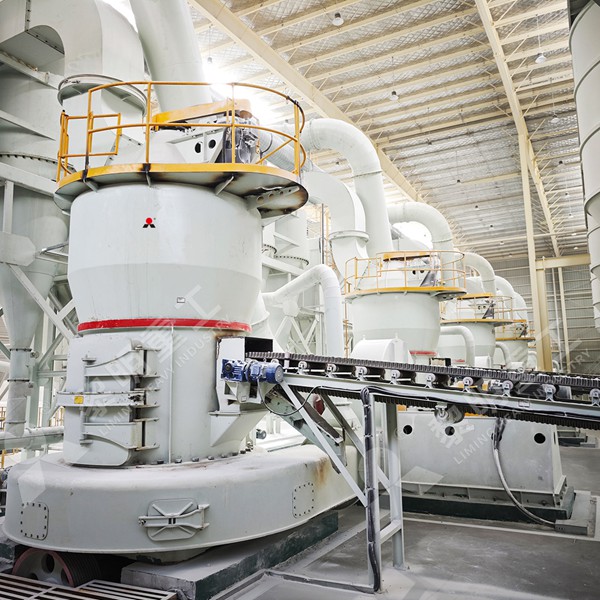
For high-capacity production lines, such as those supplying ground calcium carbonate (GCC) to large paper mills or PVC manufacturers, the LM Vertical Roller Mill presents a compelling case. Its integrated design combines drying, grinding, classification, and conveying into a single, compact unit. This is particularly advantageous for calcite, which may contain some residual moisture. The mill's ability to handle input sizes up to 55mm and deliver throughputs from 10 to 400 tons per hour makes it suitable for large-scale, centralized processing hubs. Its grinding mechanism, where rollers press against a rotating table, is inherently more energy-efficient than traditional ball milling for fine to medium-fine products, directly translating to lower operational costs—a key concern given the varying energy prices across the continent.
When the application calls for producing powders in the traditional 80 to 400 mesh range (approximately 180μm to 40μm), the modernized Raymond Mill (MTW European Type Grinding Mill) remains a cornerstone of cost-effective processing. As an evolution of the classic pendulum mill, the MTW series incorporates patented technology like curved air ducts and an internal cone-shaped powder classifier. This enhances airflow and separation efficiency, leading to higher productivity and a more consistent product fineness. Its system, often comprising a jaw crusher, vibrating feeder, mill, and pulse dust collector, forms a complete, closed-circuit grinding line that minimizes dust emission. This design is robust, relatively simple to maintain, and well-suited for the steady production of calcite powders used in agriculture, rubber, and general construction materials.
For producers aiming at the high-value-added market segment requiring superfine or ultra-fine calcite powders (fineness up to 3250 mesh or 5μm), the MW Micro Powder Mill is engineered for precision and efficiency. Utilizing advanced grinding roll technology, it applies force to the material bed on a stationary ring raceway. This method is highly effective for achieving narrow particle size distributions. The mill's system is equipped with a high-efficiency turbine classifier that ensures precise top-cut control. Furthermore, its integration with a pulse dust collector makes the entire production process clean and environmentally compliant—an increasingly important factor for South American industries facing stricter environmental regulations. Its moderate capacity range (0.5-25 T/H) makes it ideal for specialized, high-margin production lines.
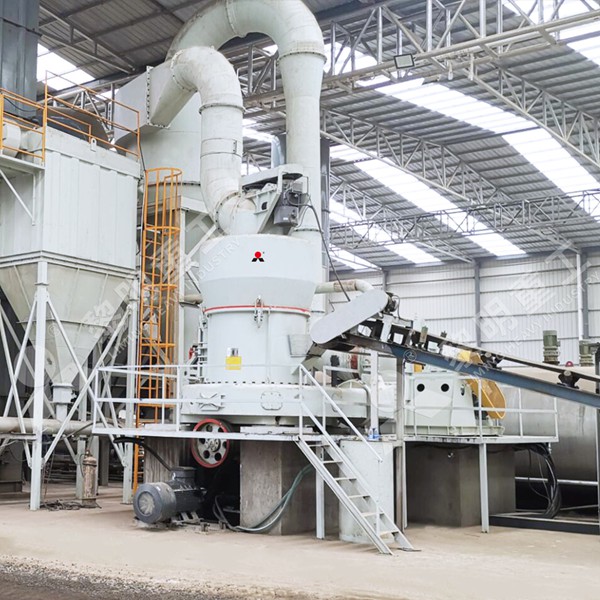
Beyond the machine itself, long-term cost-effectiveness is inextricably linked to reliability and service. The challenging operating conditions, from the humidity of the Amazon basin to the aridity of the Atacama, demand equipment built with durability in mind. A modern joint-stock corporation with integrated R&D, manufacturing, and sales ensures that technological advancements in material science, bearing design, and wear protection are continuously incorporated. For South American clients, this translates to mills with extended service intervals, readily available wear parts, and designs that facilitate easy inspection and maintenance. Choosing a supplier with a proven track record and a commitment to scientific research tackling key problems means investing in a grinding solution that will sustain productivity and protect your bottom line for years to come.
Ultimately, the most cost-effective calcite grinding machine for a South American operation is the one that aligns technical performance with specific business objectives. It must balance initial investment with operational expenditure, deliver consistent product quality to meet customer specifications, and operate reliably with local support infrastructure. By carefully evaluating the capabilities of vertical roller mills for large-scale efficiency, European-type mills for versatile mid-range fineness, and micro powder mills for ultra-fine specialty products, operators can make an informed decision that drives growth and competitiveness in this dynamic regional market.
Frequently Asked Questions (FAQ)
1. What is the primary advantage of a vertical roller mill for calcite grinding in large-scale operations?
The primary advantage is its high energy efficiency and integrated functionality. It combines drying, grinding, and classification in one unit, significantly reducing power consumption per ton of output compared to traditional ball mills, which is crucial for managing operational costs.
2. Can the MTW European Type Mill handle moist calcite feedstock?
While the MTW mill itself is best for grinding materials with lower moisture content, it is typically part of a system that can include pre-drying equipment. For consistently moist feed, the LM Vertical Roller Mill with its integrated hot air drying capability is often the more suitable and cost-effective choice.
3. How fine a powder can the MW Micro Powder Mill produce from calcite?
The MW Micro Powder Mill is specifically designed for superfine and ultra-fine processing. It can consistently produce calcite powder with a fineness up to d97 ≤ 5μm (approximately 3250 mesh), making it ideal for high-end applications in plastics, paints, and coatings.
4. How important is the dust collection system in a calcite grinding plant?
It is critically important for operational safety, environmental compliance, and product yield. Modern pulse-jet dust collectors, like those integrated into our systems, ensure a clean working environment, prevent product loss, and help plants meet increasingly stringent environmental standards across South America.
5. What kind of after-sales support is typically crucial for grinding mills in remote South American locations?
Access to comprehensive technical documentation, remote troubleshooting support, and a reliable supply chain for critical wear parts (like grinding rolls and rings) are essential. A supplier with a strong global logistics network and potential local partnerships can drastically reduce downtime, ensuring continuous production.


