Published: October 26, 2023
In the demanding landscape of industrial mineral processing, particularly for applications in food, pharmaceuticals, and high-purity additives, equipment that delivers consistent fineness, operational hygiene, and material integrity is paramount. Liming Heavy Industry Co., Ltd. addresses this critical need with its advanced Raymond Mill technology, engineered specifically for processing calcite to meet stringent USA FDA (Food and Drug Administration) standards. By integrating precision grinding mechanisms with closed-system, contaminant-minimizing designs and employing food-grade construction materials, our Raymond Mill ensures the produced calcite powder achieves the purity, particle size distribution, and chemical stability required for sensitive end-use applications. This article explores the technical adaptations, operational principles, and quality assurance protocols that make our milling solutions a reliable partner for global producers targeting regulated markets.
Founded in 1987, Liming Heavy Industry has evolved into a leader in the manufacturing of large and medium-sized crushing and grinding equipment. With headquarters in the HI-TECH Industry Development Zone of Zhengzhou and a second major workshop in Shangjie Industry Park, our facilities span over 147,000 square meters dedicated to research, precision manufacturing, and sales. Our corporate philosophy centers on scientific innovation and technological advancement, driving us to develop equipment that not only meets but anticipates industry challenges. For calcite processing, this commitment translates into mills designed with a clear understanding of regulatory compliance and end-product safety.
The core challenge in producing FDA-compliant calcite powder lies in preventing contamination throughout the grinding process. Foreign particles, metallic wear debris, or uncontrolled heat can compromise the material's purity. Our Raymond Mill for calcite is constructed with this in mind. Critical contact parts in the grinding chamber, such as the grinding ring and rollers, can be lined with high-chromium or stainless-steel alloys that resist abrasion and minimize metallic shedding. The system is designed as a fully enclosed negative pressure circuit, meaning that from the moment raw calcite (with a feed size of 15-25mm) enters the mill until the finished powder is collected, it is contained within a sealed environment.
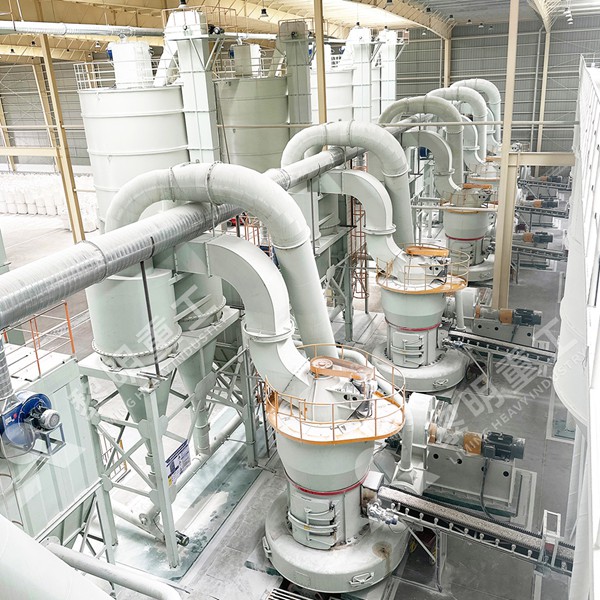
This closed-loop system is pivotal. The ground material is carried by an air flow to a high-efficiency separator. Particles that do not meet the target fineness (adjustable between 44μm and 613μm) are rejected and returned for regrinding, ensuring uniformity. The air then passes through a secondary, high-efficiency pulse dust collector before being recirculated. This internal recycling drastically reduces the risk of external environmental contaminants entering the product stream. Furthermore, the system's ability to handle materials with less than 6% humidity without the need for external drying minimizes thermal degradation, preserving calcite's natural properties.
Our dedication to "scientific research tackling key problems" is evident in the mill's operational stability and ease of cleaning. Surfaces are smooth and accessible, designed for sanitation protocols. For applications requiring the highest purity levels, such as pharmaceutical-grade calcium carbonate, the mill can be configured with specialized seals and polished internal surfaces to prevent powder accumulation and facilitate thorough cleaning between batches. The automatic electric control system allows for precise monitoring and adjustment of grinding parameters, ensuring every batch conforms to specified quality metrics, a fundamental requirement for FDA audit trails.
While our Raymond Mill is a robust solution for fine to medium-fine calcite powder, Liming Heavy Industry's portfolio offers complementary technologies for different fineness requirements. For instance, our MW Micro Powder Mill, which incorporates advanced Swedish grinding technology, can produce superfine calcite powder up to d97 ≤ 5μm (3250 mesh), ideal for high-value additives where ultra-fineness is critical. Conversely, for larger-scale production of coarser grades, the MTW European Type Grinding Mill offers higher throughput. The selection of the appropriate mill—Raymond, MTW, or MW—depends on the target particle size, capacity (from 1.2-4.5 T/H for the Raymond Mill up to 55 TPH for the MTW), and specific project logistics.
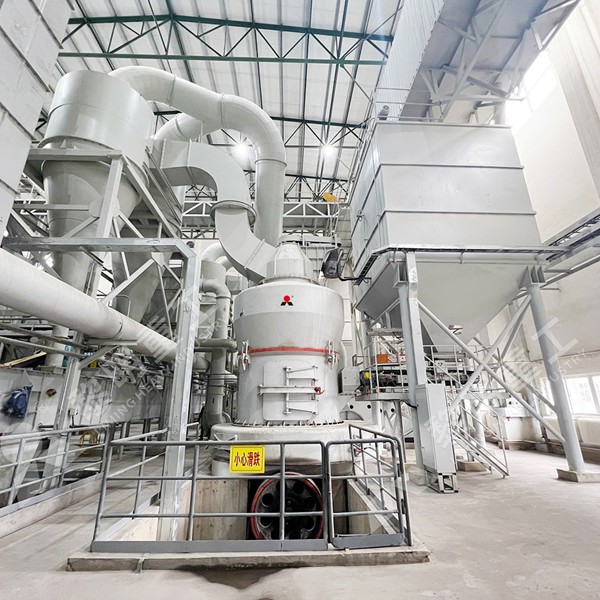
Ultimately, achieving FDA compliance is a holistic process that extends beyond the milling machine itself. It encompasses raw material sourcing, plant environment, packaging, and documentation. Liming Heavy Industry's role is to provide the core grinding equipment engineered to support this compliance. Our Raymond Mill acts as a controlled, reliable, and clean processing center that protects the integrity of the calcite. By preventing contamination, ensuring consistent particle size, and operating with energy efficiency, it forms the technological backbone for producers aiming to access the stringent US market and other regulated industries worldwide.
Frequently Asked Questions (FAQ)
Q1: What specific features of your Raymond Mill help it process calcite for FDA-regulated applications?
A1: Key features include the option for food-grade alloy contact parts, a fully enclosed negative pressure grinding system that prevents external contamination, a high-efficiency pulse dust collector, and a design that facilitates thorough cleaning and sanitation between production runs.
Q2: Can your Raymond Mill achieve the very fine particle sizes sometimes required for pharmaceutical-grade calcium carbonate?
A2: Our standard Raymond Mill produces powder in the range of 44μm to 613μm. For superfine requirements below 5μm (3250 mesh), we recommend our MW Micro Powder Mill, which is specifically designed for such high-fineness applications while maintaining a closed, clean system.
Q3: How does the closed-system design contribute to product purity and environmental safety?
A3: The closed-loop, negative pressure system ensures that air and powder are constantly recirculated within sealed ducts and collectors. This minimizes dust emission to meet environmental standards and, more importantly, prevents ambient pollutants from entering the grinding chamber and contaminating the product.
Q4: Is the mill suitable for processing other non-metallic minerals for food or pharmaceutical use?
A4: Absolutely. While this article focuses on calcite, the mill's design principles make it equally suitable for grinding other non-flammable, non-explosive materials like gypsum, talc, and certain food-grade minerals, provided the material hardness is below 7 Mohs and humidity is under 6%.
Q5: What kind of technical support do you provide to ensure the mill is integrated correctly into a compliant production line?
A5: We provide comprehensive support, from initial consultation and process design to installation guidance and operator training. Our team can advise on auxiliary equipment integration (like feeders and collectors) and best practices for operational hygiene to support our clients' quality assurance and regulatory compliance goals.


