Published: October 26, 2023
In the pursuit of sustainable mineral processing, Liming Heavy Industry introduces a paradigm shift in calcite comminution: our advanced grinding mills integrated with intelligent frequency conversion drive systems. This article delves into the engineering excellence behind our energy-efficient solutions, specifically the MTW European Type Trapezium Mill and MW Micro Powder Mill, optimized for calcite applications. By leveraging variable frequency drives (VFDs), these systems achieve precise control over motor speed and torque, directly translating to remarkable reductions in specific energy consumption—often exceeding 30% compared to conventional fixed-speed drives—while maintaining superior product fineness between 5μm to 44μm. The synergy of robust mechanical design from our 30+ years of manufacturing expertise and smart electro-mechanical control not only lowers operational costs but also minimizes the carbon footprint of non-metallic mineral processing plants, aligning with global industrial sustainability goals.
At the core of our energy-efficient philosophy is the integration of frequency conversion technology into the mill's drive system. Traditional grinding mills operate at a constant speed, often resulting in significant energy wastage during partial load conditions or when processing materials with varying hardness. Our solution replaces this inflexible approach with a sophisticated AC drive that dynamically adjusts the motor's rotational speed to match the exact real-time demands of the grinding process. For calcite, a material with a Mohs hardness of 3, this means the mill can operate at an optimized, lower speed during standard processing, drastically reducing no-load losses and mechanical wear. The drive system provides soft-start capabilities, eliminating high inrush currents that strain electrical infrastructure and further contribute to energy savings over the equipment's lifecycle.
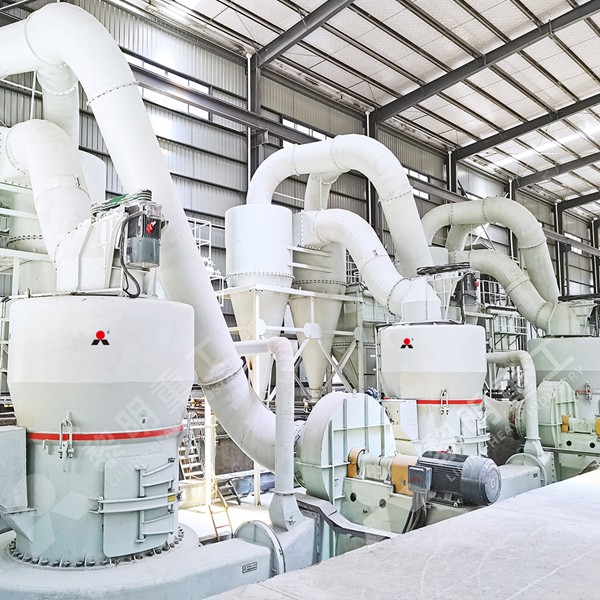
Our flagship MTW European Type Trapezium Mill exemplifies this technology in large-scale calcite powder production. The system's workflow begins with crushed calcite fed via a variable-frequency belt feeder, whose speed is synchronized with the main mill drive. This ensures a consistent, optimal feed rate that prevents mill overload or underutilization. Inside the grinding chamber, the material is ground between the rollers and ring. The integrated frequency converter continuously monitors the motor load. If the feed calcite becomes slightly harder or denser, the system intelligently adjusts power output to maintain stable grinding pressure and product fineness, avoiding wasteful power spikes. The closed-circuit airflow system, powered by a similarly VFD-controlled blower, recycles air with minimal heat loss, enhancing the overall thermal efficiency of the drying-grinding process common in calcite preparation.
For ultra-fine calcite powders (d97 ≤ 5μm), our MW Micro Powder Mill, incorporating advanced Swedish grinding technology, pairs its precision mechanical design with a dedicated frequency conversion drive. The grinding fineness is directly correlated to the rotational speed of the turnplate and rollers. Operators can program the drive to maintain a specific speed with extreme accuracy, ensuring the final product's particle size distribution remains consistent batch after batch. This level of control is paramount for high-value calcite applications in plastics, paints, and coatings. Furthermore, the energy savings are particularly pronounced in this fine-grinding regime, where traditional mills expend disproportionate energy on overcoming particle agglomeration forces.
The benefits extend beyond mere energy metrics. The reduced mechanical stress from controlled acceleration and deceleration cycles significantly extends the service life of critical components like grinding rollers, shafts, and gears. This translates to lower maintenance costs, reduced downtime, and higher overall equipment effectiveness (OEE). Our mills are designed as complete systems at our 80,000 m² Zhengzhou R&D and production facility. Every component, from the jaw crusher in the preparatory stage to the pulse dust collector, is selected and engineered to work in harmony with the central frequency-controlled grinding mill, creating a seamless, efficient, and eco-friendly production line.
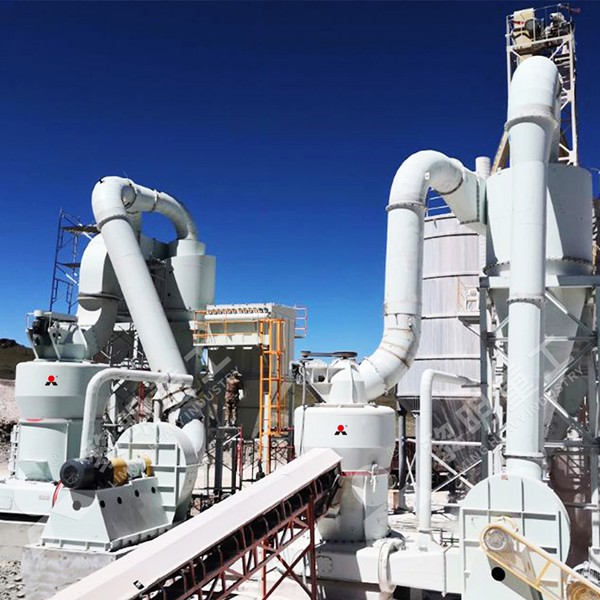
Liming Heavy Industry's commitment to "scientific research tackling key problems" drives our continuous innovation in this field. Our in-house research team focuses on developing even more sophisticated drive algorithms that can predict and adapt to material characteristics, pushing the boundaries of grinding efficiency. By choosing our energy-efficient calcite grinding mills, customers invest not just in equipment, but in a future-proof technology platform that delivers relentless performance, operational economy, and a tangible contribution to environmental stewardship in the non-metallic minerals industry.
Frequently Asked Questions (FAQs)
- How does the frequency conversion drive contribute to energy savings in calcite grinding?
The drive adjusts the motor's speed and torque to match the real-time load and material conditions. This eliminates energy waste associated with running at fixed, full speed during lighter loads, typically saving 20-35% on electrical consumption compared to non-VFD systems. - Can your mills handle variations in calcite feed size or moisture content?
Yes. The intelligent control system, coupled with the variable-frequency feeder, automatically compensates for reasonable variations. The grinding parameters can be adjusted via the control panel to maintain consistent output fineness and throughput. - What is the typical fineness range achievable for calcite with your MW Micro Powder Mill?
The MW Mill is engineered for superfine processing, producing calcite powder with a fineness that can be precisely adjusted within a range of 325 mesh to 3250 mesh (approximately 44μm down to 5μm). - Does the system require specialized maintenance for the frequency conversion components?
The VFD units are industrial-grade, housed in protected electrical cabinets. They require minimal maintenance, primarily ensuring clean and cool operating conditions. Our technical documentation provides full guidance, and our global service network offers support. - Is the entire grinding process enclosed to meet environmental standards?
Absolutely. Our systems are designed as negative-pressure, closed-loop circuits. They are equipped with high-efficiency pulse dust collectors that capture over 99.9% of particulate matter, ensuring emissions comply with stringent international environmental regulations.


