Published on: October 26, 2023
In the demanding field of non-metallic mineral processing, achieving high-purity, fine calcite powder while maintaining impeccable environmental and operational standards presents a significant challenge. Liming Heavy Industry Co., Ltd. addresses this challenge head-on with its advanced Dust-free Calcite Raymond Mill, engineered around a sophisticated closed-circuit grinding system. This solution integrates precision milling, intelligent air classification, and comprehensive dust containment to deliver consistent product quality, superior energy efficiency, and a truly clean production environment, making it an ideal choice for modern, responsible mineral processing operations.
For over three decades, Liming Heavy Industry has stood at the forefront of crushing and grinding technology. Founded in 1987 and headquartered in the HI-TECH Industry Development Zone of Zhengzhou, our corporate philosophy is built on a triad of rigorous scientific research, precision manufacturing, and continuous innovation. This dedication is embodied in our Raymond Mill series, specifically optimized for materials like calcite—a mineral prized for its whiteness and chemical purity in industries ranging from plastics and paints to pharmaceuticals.
The core of our solution is the intelligent re-engineering of the traditional Raymond mill principle into a fully integrated, closed-circuit system. The process begins with calibrated calcite feed (15-25mm), which is introduced into the grinding chamber. Here, rollers exert controlled pressure against a rotating ring, pulverizing the material through a combination of impact and compression. The defining feature of our system is what happens next: the ground particles are carried by a circulating air stream generated by an industrial air blower into a high-efficiency separator.
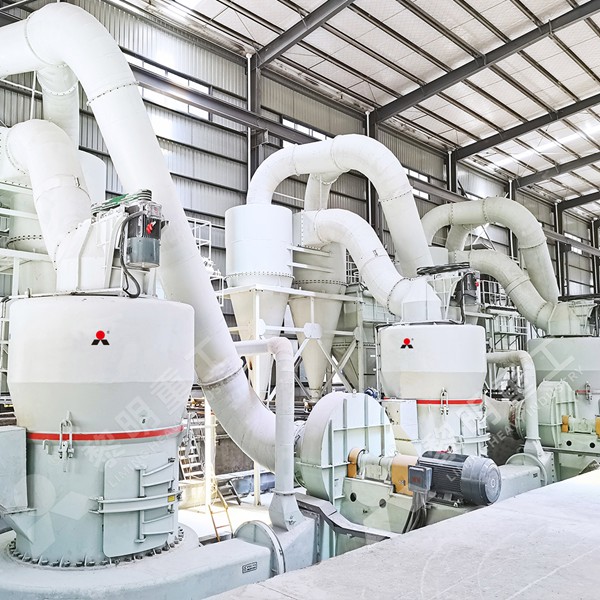
This separator acts as the brain of the operation. It precisely classifies particles based on size and weight. Finer particles that meet the target fineness (adjustable between 44μm and 613μm) are allowed to pass through to the final collection cyclones. Coarser particles are rejected by the separator's dynamic vanes and gravity, funneled back to the mill for regrinding. This closed-loop grinding and classification cycle ensures unparalleled consistency in the final product's particle size distribution, a critical factor for calcite's performance as a filler or coating agent.
The "dust-free" claim is realized through a multi-layered containment strategy. The entire milling and air-flow system is maintained under negative pressure, preventing any powder leakage at processing points. The heart of dust collection is a high-capacity pulse-jet baghouse dust collector. This unit continuously filters the circulating air, capturing any fugitive particles before the cleaned air is recirculated back to the blower. This not only guarantees a clean workshop environment that meets stringent international emission standards but also maximizes material yield by reclaiming product-quality fines.
Operational efficiency is another cornerstone of the design. The closed-circuit system minimizes over-grinding, directly translating to lower energy consumption per ton of product. The integrated automatic control system allows for real-time monitoring and adjustment of key parameters like feed rate, grinding pressure, and classifier speed, ensuring optimal performance with minimal manual intervention. This results in a stable, continuous operation ideal for large-scale calcite powder production, with capacities scalable to meet specific project needs.
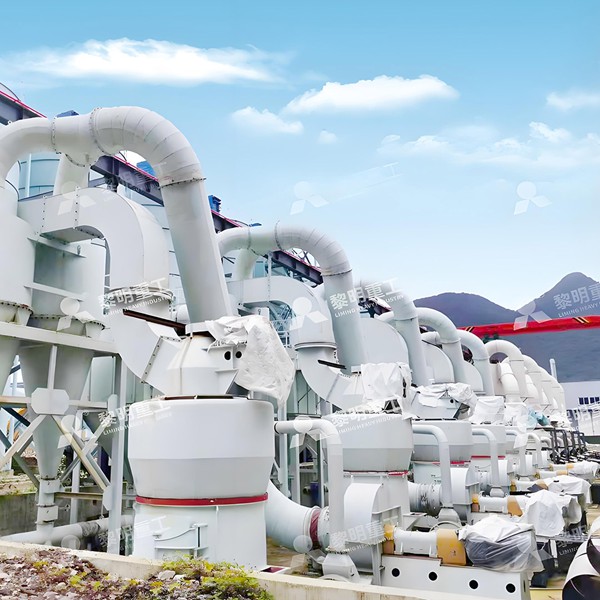
Beyond calcite, this robust system is exceptionally versatile. It is suitable for grinding any non-flammable, non-explosive material with a Mohs hardness below 7 and moisture content under 6%, including gypsum, talc, kaolin, and various industrial minerals. The commitment of Liming Heavy Industry to "scientific research tackling key problems" ensures that this equipment is not just a tool but a evolving platform, incorporating advancements in material science, dynamics, and automation to deliver lasting value to our clients worldwide.
Frequently Asked Questions (FAQ)
1. What is the primary advantage of a closed-circuit grinding system in this Raymond mill?
The primary advantage is superior control over product fineness and consistency. The integrated separator continuously recycles oversized particles back to the grinding chamber, eliminating the issue of over-grinding some material while under-grinding others, resulting in a tighter, more uniform particle size distribution.
2. How does the system achieve its 'dust-free' operation?
Dust-free operation is achieved through a sealed system maintained under negative pressure, combined with a high-efficiency pulse-jet baghouse dust collector. This collector captures virtually all airborne particles, ensuring no powder escapes into the workshop and that the exhaust meets strict environmental regulations.
3. Can the fineness of the final calcite powder be adjusted?
Yes. The fineness is easily adjustable within a range of approximately 44μm (325 mesh) to 613μm. This is typically done by adjusting the speed of the classifier inside the separator, allowing operators to produce different product grades for various applications without stopping the mill.
4. What level of automation does this grinding system offer?
The system features an integrated automatic electric control panel that allows for centralized monitoring and control of the main motor, feeder, blower, and classifier. It enables stable operation, remote adjustment of key parameters, and provides basic fault diagnosis for improved operational safety and efficiency.
5. Is this mill suitable for materials other than calcite?
Absolutely. This Raymond mill is designed for a wide range of non-metallic minerals with Mohs hardness below 7, such as limestone, gypsum, barite, fluorite, and activated clay. Its performance is particularly effective in applications requiring moderate fineness and high whiteness retention.


