Published: October 26, 2023
For industries requiring consistent, high-volume production of fine calcite powder, selecting a grinding mill engineered for stability, efficiency, and reliability is paramount. Liming Heavy Industry's Raymond Mill technology, refined over decades of manufacturing expertise, stands out as a robust solution specifically optimized for continuous calcite processing. By integrating precision engineering with a closed-circuit grinding system, our mills deliver uniform particle size distribution between 613μm and 44μm, ensuring stable output quality that meets stringent application requirements in plastics, paints, coatings, and construction materials. This article explores the technical design, operational principles, and performance advantages that make our Raymond Mill a cornerstone for uninterrupted, high-yield calcite production lines.
At the heart of Liming Heavy Industry's approach is a commitment to scientific research and technological innovation, established since our founding in 1987. With major facilities spanning over 80,000 m² in Zhengzhou's HI-TECH Industry Development Zone, our focus on precision manufacturing and R&D has positioned us as a leader in grinding equipment. For calcite grinding, this translates into machinery built not just for capacity but for operational consistency. The Raymond Mill's design centers on a durable grinding ring and roller assembly that operates under a controlled mechanical force, minimizing vibration and wear even under 24/7 running conditions. This mechanical stability is the first pillar of continuous production, reducing unplanned downtime and maintenance interventions.

The working principle of our Raymond Mill fosters a self-contained, efficient grinding environment ideal for calcite. The system comprises the mill, classifier, blower, crusher, feeder, and dust collector. Large calcite lumps are first reduced by a jaw crusher, then evenly fed into the grinding chamber. Here, materials are ground between the rotating rollers and stationary ring. The ground powder is carried by the air flow to the classifier, where oversized particles are separated and returned for regrinding, while qualified fine powder passes through as final product. This closed-loop air system, paired with a pulse dust collector, ensures high collection efficiency and a clean workspace, aligning with environmental standards. The automation of this process, managed by an electric control system, allows for steady throughput and fineness adjustment without constant manual oversight.
What truly distinguishes our mill for calcite applications is its tailored performance characteristics. Calcite, with a Mohs hardness around 3, is non-abrasive but requires precise fineness control for market value. Our Raymond Mill achieves this through an adjustable classifier speed, which directly dictates the particle size cut point. Operators can fine-tune the output from coarse fillers (44-100 mesh) to finer grades (200-400 mesh) to suit different customer specifications. The mill's ability to handle materials with up to 6% humidity without clogging is another critical feature, as naturally mined calcite often contains residual moisture. The integrated grinding and drying action ensures a stable, free-flowing powder even with slight feed variations.
Stability is further guaranteed by the mill's robust construction and intelligent design features. Key wear parts, such as grinding rollers and rings, are cast from high-chromium or manganese steel alloys, offering extended service life when processing non-explosive, non-flammable materials like calcite. The centralized lubrication system provides automatic, regular greasing to critical bearing points, preventing overheating and failure. Moreover, the mill's foundation is designed to absorb operational loads, maintaining alignment and smooth rotation. For continuous production scenarios, this engineering focus translates to predictable maintenance schedules and stable power consumption, maximizing overall equipment effectiveness (OEE).
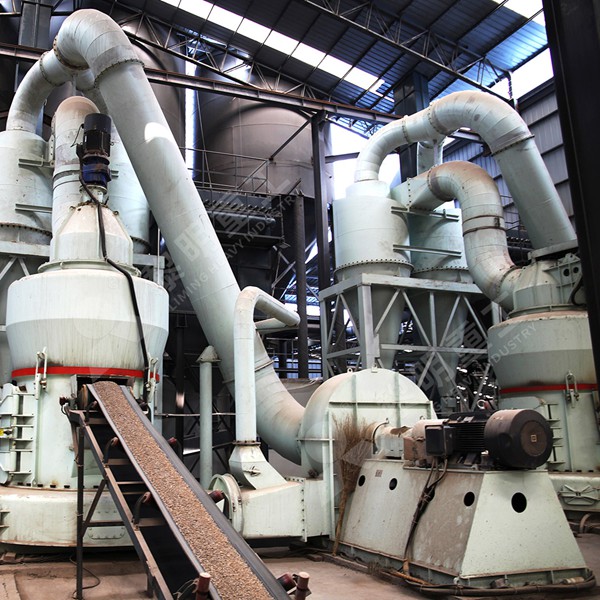
Beyond the mill itself, Liming Heavy Industry views stability through the lens of the complete production line. We offer integrated system support, ensuring that auxiliary equipment—from the initial jaw crusher to the final powder collector—is harmonized with the mill's capacity and flow rate. This systems engineering approach prevents bottlenecks and ensures that the 1.2-4.5 T/H capacity of the Raymond Mill is fully utilized in a continuous calcite operation. Our technical team provides comprehensive support on system layout and process optimization, leveraging decades of experience in non-metallic mineral processing.
In conclusion, for enterprises seeking a dependable partner for continuous calcite powder production, Liming Heavy Industry's Raymond Mill presents a proven, stable, and efficient solution. Its combination of rugged construction, precise classification, automated control, and environmentally conscious design forms a reliable backbone for modern mineral processing facilities. By investing in this technology, producers secure not just a machine, but a commitment to consistent product quality, operational uptime, and long-term productivity in the competitive ground calcium carbonate market.
Frequently Asked Questions (FAQs)
1. What is the typical fineness range achievable for calcite with your Raymond Mill?
Our Raymond Mill can produce calcite powder with a fineness ranging from approximately 44μm (325 mesh) to 613μm (30 mesh). The fineness can be precisely adjusted by modifying the speed of the integrated classifier to meet specific application requirements.
2. How does the mill handle variations in feed material size or moisture?
The system is designed with a preliminary jaw crusher and a variable-frequency vibrating feeder that ensures a consistent feed size to the grinding chamber. The grinding process generates heat, which can handle moisture content up to 6%, effectively drying the material during milling for stable operation.
3. What are the key maintenance points for ensuring continuous operation?
Regular inspection and replacement of grinding rollers and rings are essential, though their high-alloy construction offers long life. The centralized lubrication system should be monitored, and the classifier blades should be checked for wear. The pulse dust collector's filters require periodic cleaning or replacement to maintain system airflow and efficiency.
4. Is the system environmentally friendly regarding dust emission?
Yes. The grinding system is a closed-circuit design equipped with a high-efficiency pulse jet dust collector. This ensures that air recirculated within the system is cleaned, and any vented air complies with national environmental protection standards, minimizing plant dust emission.
5. Can the same Raymond Mill be used for materials other than calcite?
Absolutely. While optimized for calcite, this Raymond Mill is suitable for grinding any non-flammable, non-explosive material with a Mohs hardness below 7 and humidity under 6%, such as gypsum, talc, barite, feldspar, and activated carbon for various industrial applications.


