Published: October 26, 2023
For calcite processing operations seeking to maximize uptime and simplify maintenance, Liming Heavy Industry's advanced Raymond Mill design offers a compelling solution. By integrating strategic engineering focused on rapid, safe access to quick-wear parts like grinding rolls and rings, this mill significantly reduces downtime for routine replacements. Coupled with robust construction, precise fineness control for outputs between 44μm and 613μm, and a system inherently suitable for non-explosive materials like calcite under 7 Mohs hardness, it delivers reliable performance with minimal operational complexity. This article explores the design philosophy, key features, and operational benefits that make this mill a low-maintenance workhorse for the non-metallic mineral industry.
At the heart of Liming Heavy Industry's approach is a commitment to "scientific research tackling key problems" and "technological progress." This philosophy is directly applied to the Raymond Mill's design, specifically targeting the historical challenge of maintenance accessibility. In traditional grinding systems, replacing worn grinding components can be a time-consuming and labor-intensive process, often requiring partial disassembly. Our engineers have reconfigured the mill's internal layout and external access points, allowing technicians to reach critical wear parts through dedicated inspection hatches and panels. This thoughtful design minimizes the tools and time required for servicing, translating directly into higher operational availability for processing calcite and similar materials.
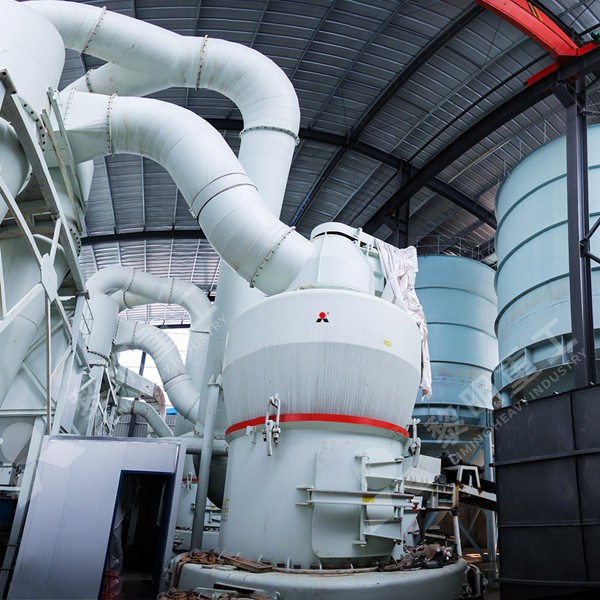
The mill's performance is perfectly matched to the demands of calcite processing. It efficiently handles feed sizes up to 25mm, grinding them to a consistent fineness that can be adjusted to meet diverse application needs, from coarse fillers to finer powder grades. The grinding mechanism—where material is ground between the rotating rollers and the stationary ring—is both effective and energy-efficient. The integrated automatic electric control system ensures stable operation, while the closed-circuit airflow system, with its high-efficiency cyclone separator and pulse dust collector, maintains a clean working environment and captures product efficiently, supporting compliance with environmental standards.
Durability is engineered into every component. While quick-wear parts are designed for accessible replacement, they are also manufactured from high-quality, abrasion-resistant alloys to extend service life, especially when processing moderately abrasive minerals like calcite. The mill's overall structure is built to withstand continuous operation, a testament to Liming's over three decades of experience in manufacturing medium and large-scale grinding equipment. The company's modern facilities, covering over 80,000 square meters in Zhengzhou's HI-TECH Industry Development Zone, are equipped for precision manufacturing, ensuring every mill meets rigorous quality benchmarks before shipment.
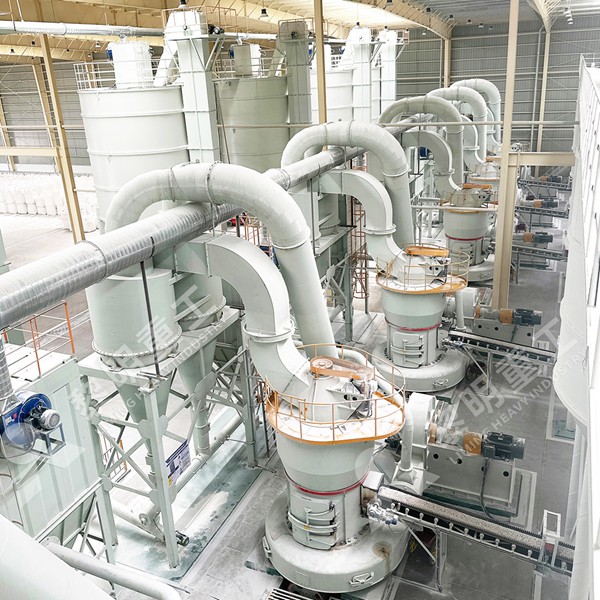
Operational simplicity further underscores the low-maintenance promise. The system's workflow is logical and integrated: material is crushed, fed evenly into the grinding chamber via a vibrating feeder, classified, and collected. The separation process is highly efficient; oversized particles are returned for regrinding, ensuring optimal particle size distribution. This closed-loop system not only improves yield but also contains dust, aligning with modern industrial hygiene and safety protocols. For operations focused on calcium carbonate, gypsum, or other non-metallic minerals, this Raymond Mill provides a balanced solution that prioritizes both performance and practicality, reducing the total cost of ownership through smarter maintenance design rather than just initial cost savings.
Ultimately, choosing a grinding solution is about long-term reliability and operational efficiency. Liming Heavy Industry's Raymond Mill for calcite addresses these needs by directly confronting the main source of unplanned downtime: maintenance. By making quick-wear parts genuinely quick to access and replace, the design empowers plant managers to maintain peak productivity with predictable service intervals. Combined with proven grinding technology, effective fineness control, and a commitment to innovation rooted in scientific research, this mill stands as a strategic asset for any operation seeking to streamline its mineral processing workflow and enhance its bottom line through improved equipment availability and reduced maintenance labor.
Frequently Asked Questions (FAQ)
- What is the primary advantage of this Raymond Mill's design for calcite processing?
The core advantage is the engineered ease of access to quick-wear parts like grinding rollers and rings. This design drastically reduces downtime for routine maintenance and part replacement, maximizing production uptime for continuous calcite grinding operations. - What fineness range can be achieved when grinding calcite with this mill?
The mill can produce calcite powder with a fineness ranging from approximately 44 microns (325 mesh) up to 613 microns, allowing operators to adjust the output to meet specific customer or application requirements. - How does the mill's system ensure environmental compliance?
It operates as a closed-circuit system equipped with a high-efficiency pulse-jet dust collector. This setup effectively contains dust within the processing loop, minimizing emissions and ensuring the work environment meets modern industrial environmental protection standards. - Is this mill suitable for materials other than calcite?
Yes. While optimized for calcite, it is suitable for grinding any non-flammable, non-explosive material with a Mohs hardness under 7 and moisture content below 6%, including gypsum, talc, barite, and various other non-metallic minerals. - What kind of feed size does the mill require for optimal operation?
The mill is designed to handle a feed size of up to 25mm. For optimal efficiency and to protect the grinding components, it is recommended that raw calcite be pre-crushed to within this size range before being fed into the mill's system.


